
Project team
- Habitat Studio Architects
- Kristian Van Der Beek
Product Suppliers
A canal-side family home shaped by orientation, privacy and a beautifully choreographed sense of arrival.
A Gold Coast home designed for light, landscape & water
When a young family relocated from Sydney to the Gold Coast in search of a lifestyle shift, they expected their new home to reflect that sense of breathing room. What they didn’t expect was the restraint of Habitat Studio’s design.
“Initially when we gave them the plan, it was completely not what they were expecting at all,” says architect Wayne Greenland of Habitat Studio. They’d imagined a mansion stretched from boundary to boundary; instead, they received an elegant, low-slung home that pulls back from the edges, opening itself generously to light, landscape and water.
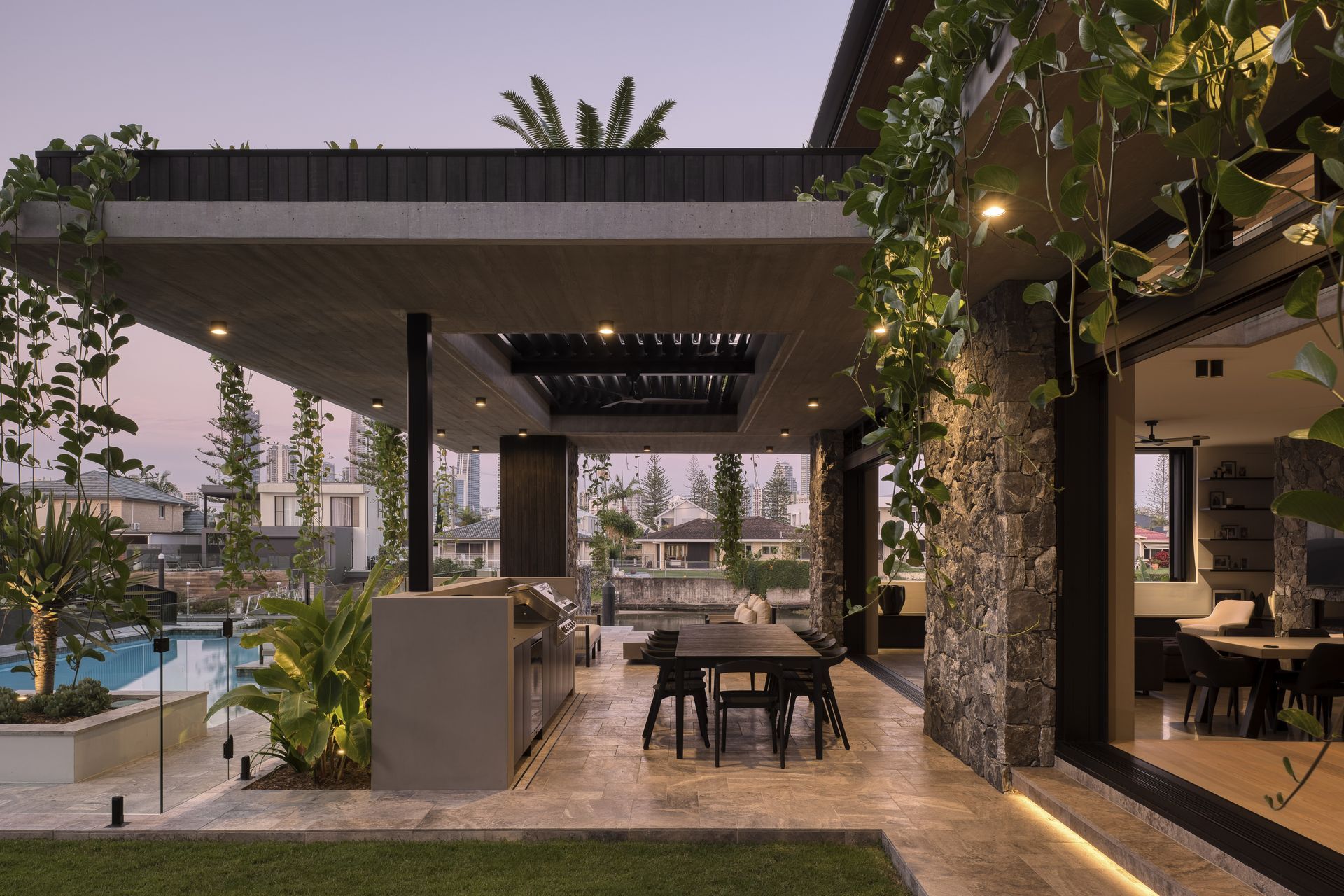
Set in a quiet, canal-side pocket just west of Surfers Paradise’s skyline, the home sits within one of the Gold Coast’s characteristic networks of waterways. It’s a setting that lends itself naturally to outdoor living and a seamless relationship between inside and out, and orienting the home to this environment became the conceptual anchor for the entire design.
A controlled arrival
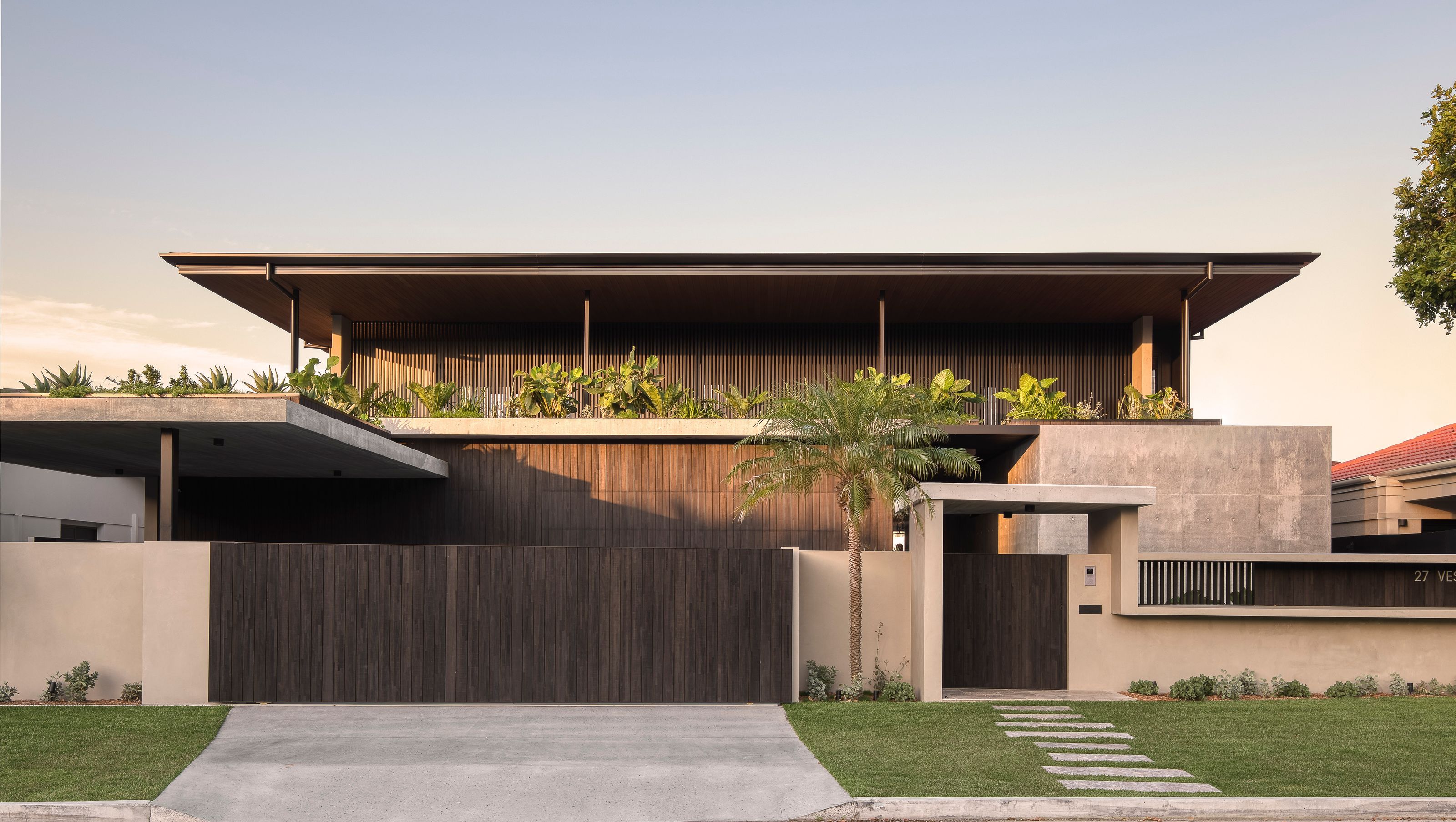
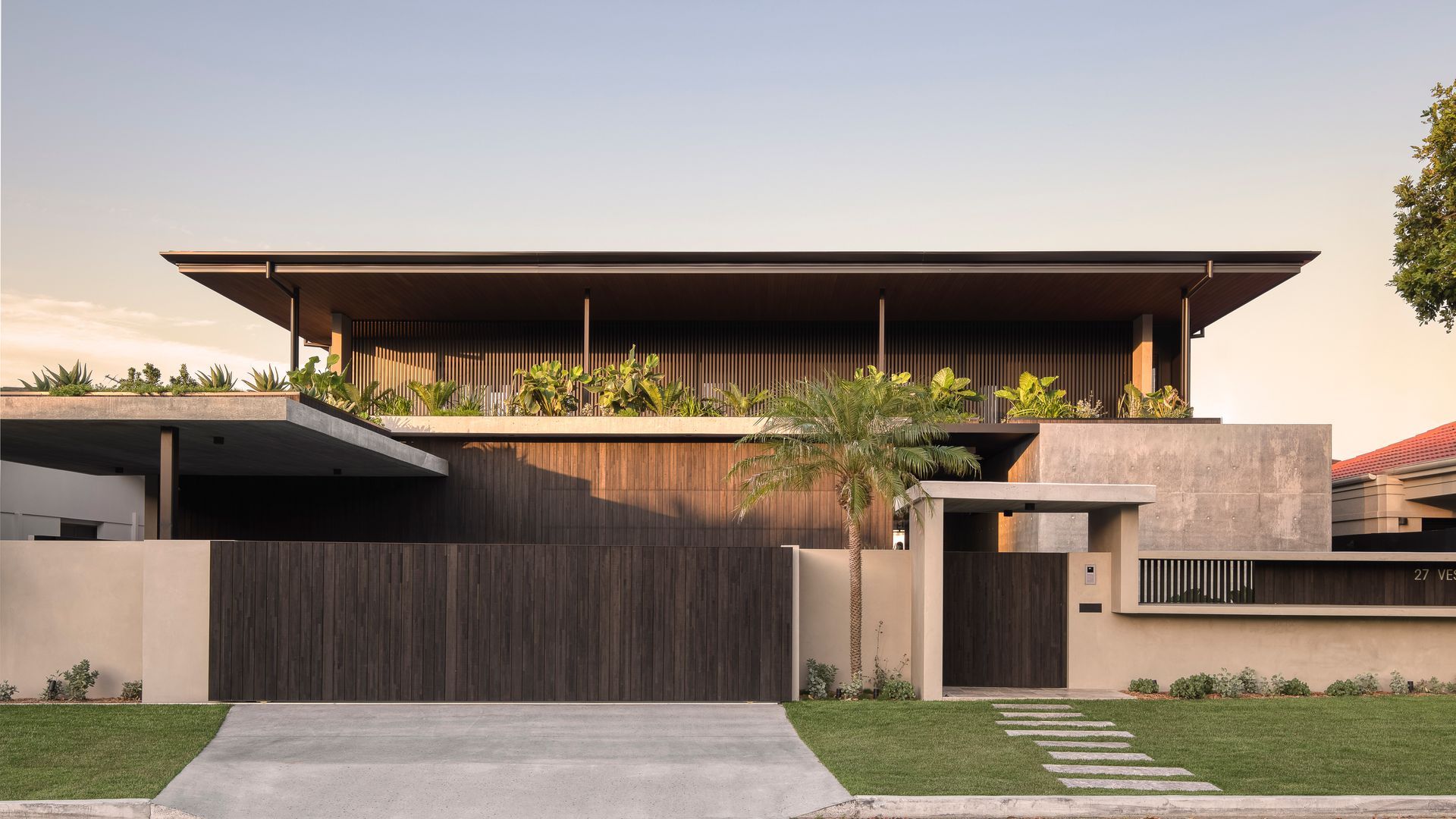
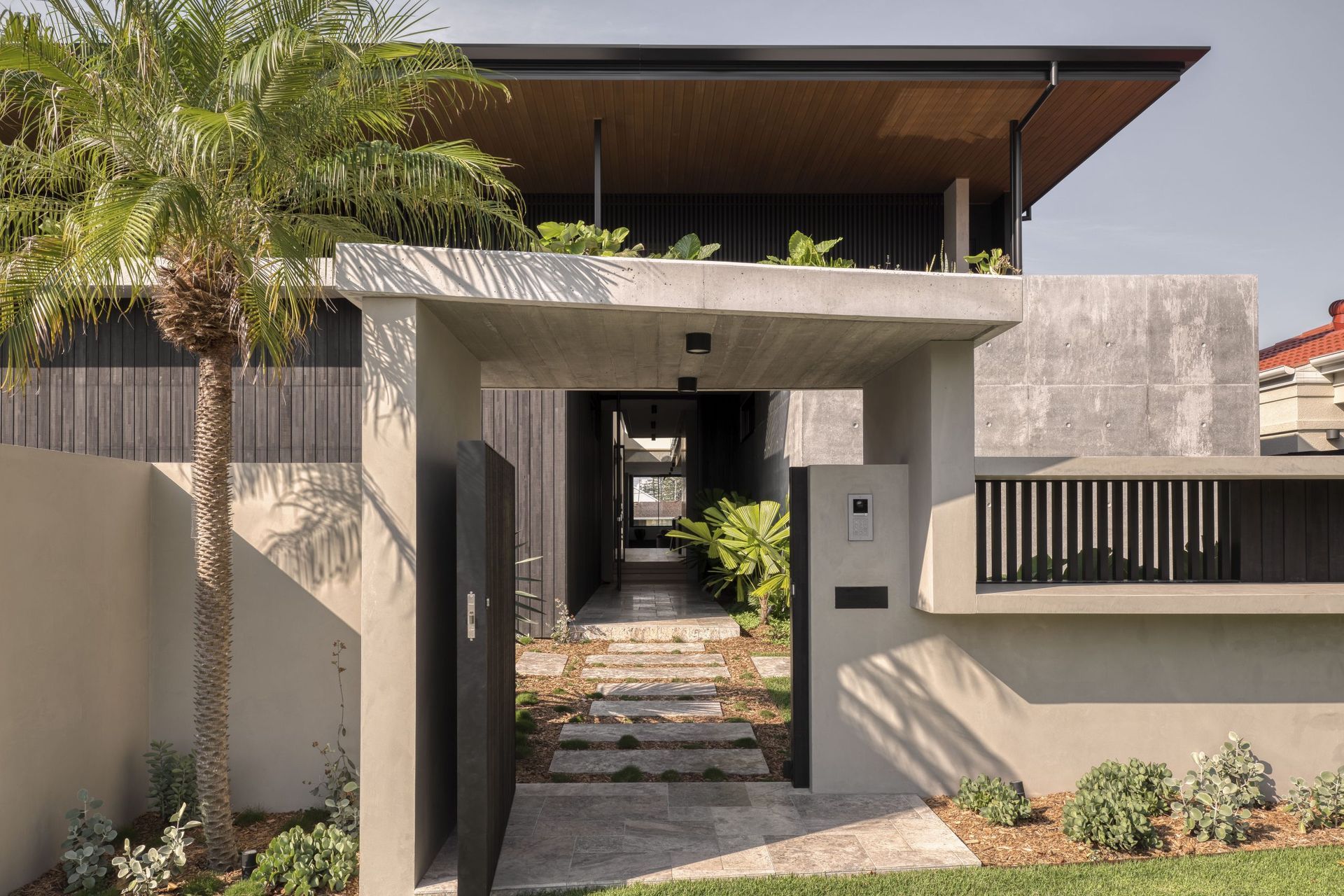
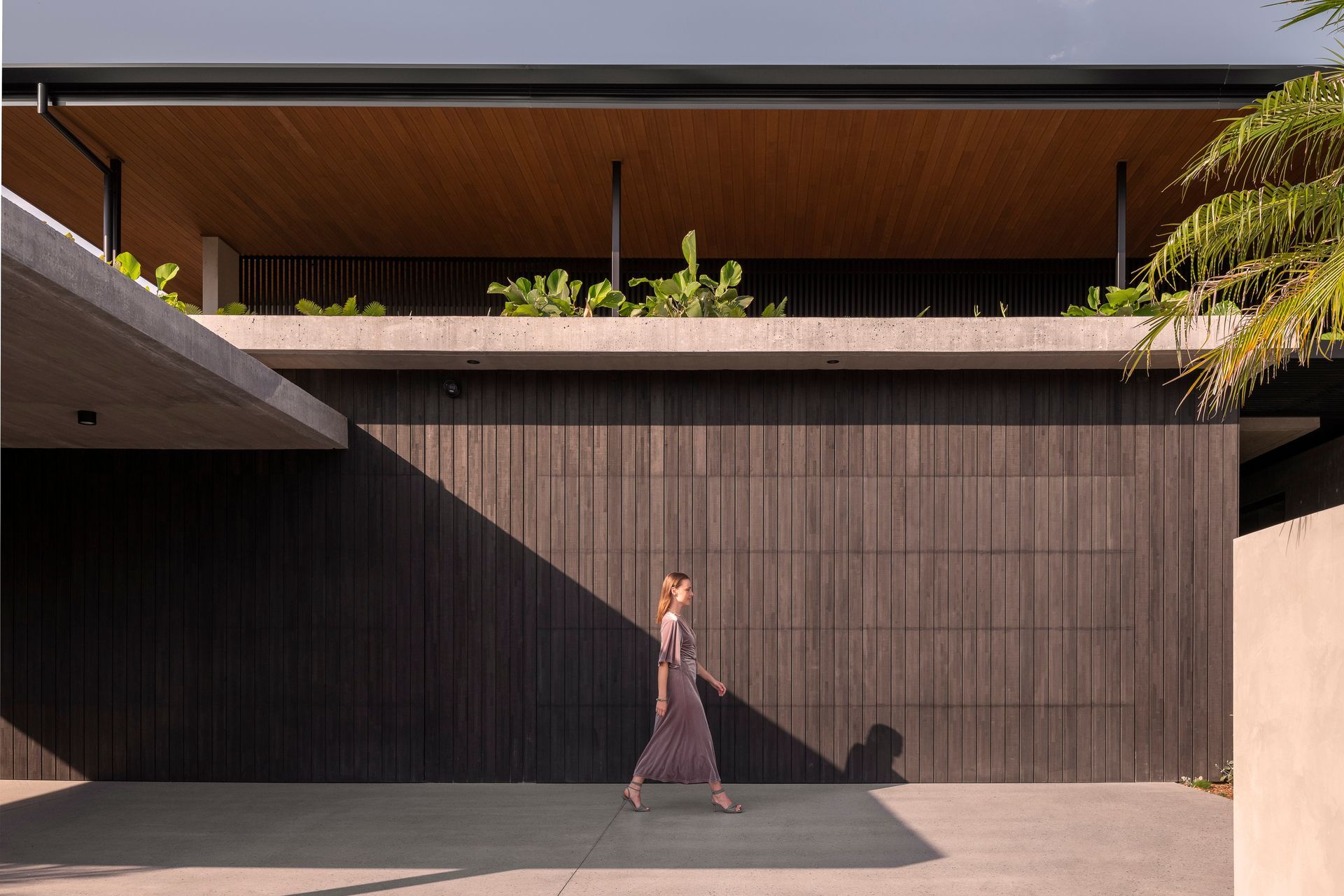
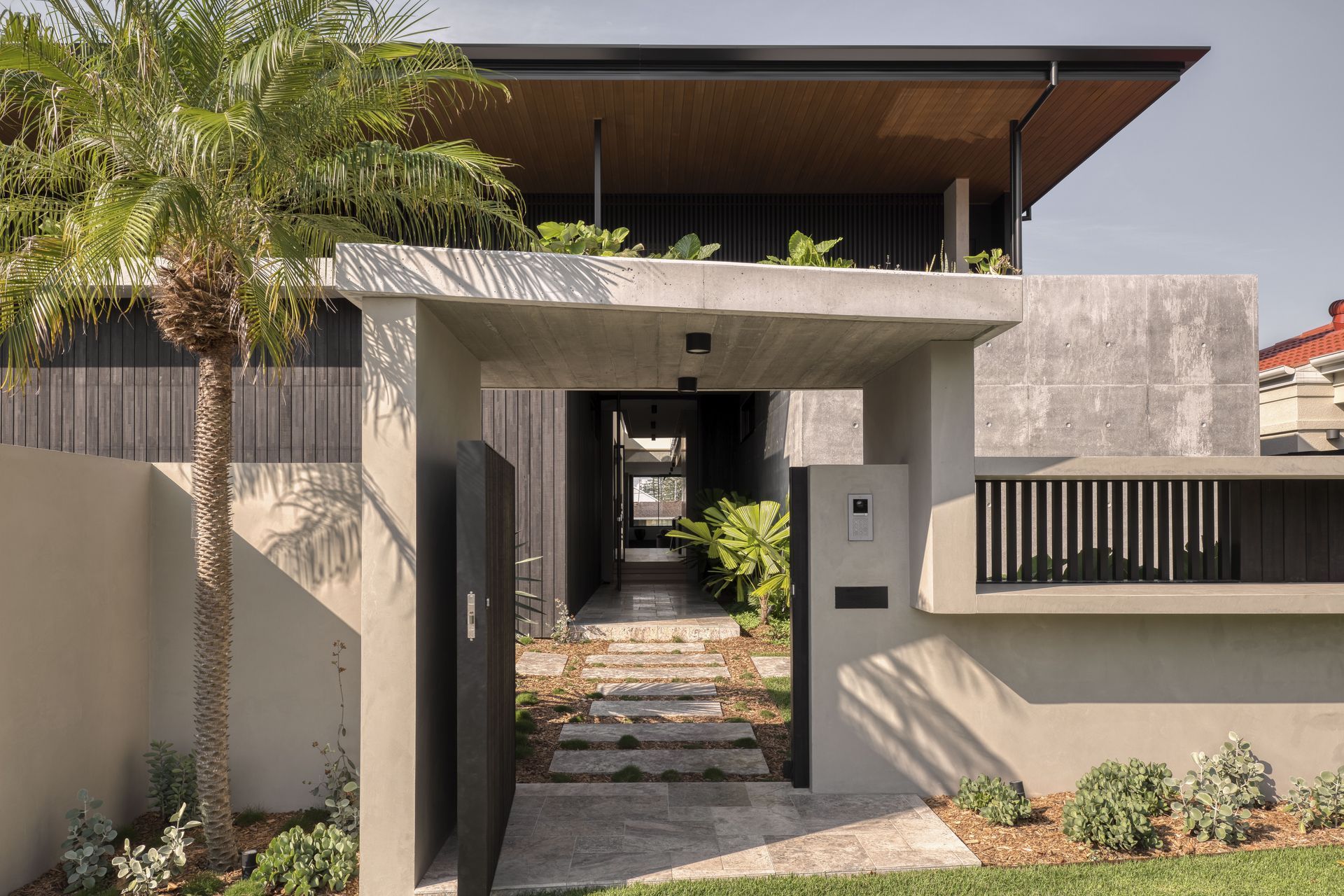
From the street, the home presents as private and somewhat enigmatic. The western aspect brings intense afternoon sun, so the architects designed a robust facade to the street, combining off-form concrete, blackened Abodo cladding and layered planting. The entry sequence is intentionally compressed: a secure gatehouse gives way to a narrow, cabin-like passage that heightens a sense of enclosure.
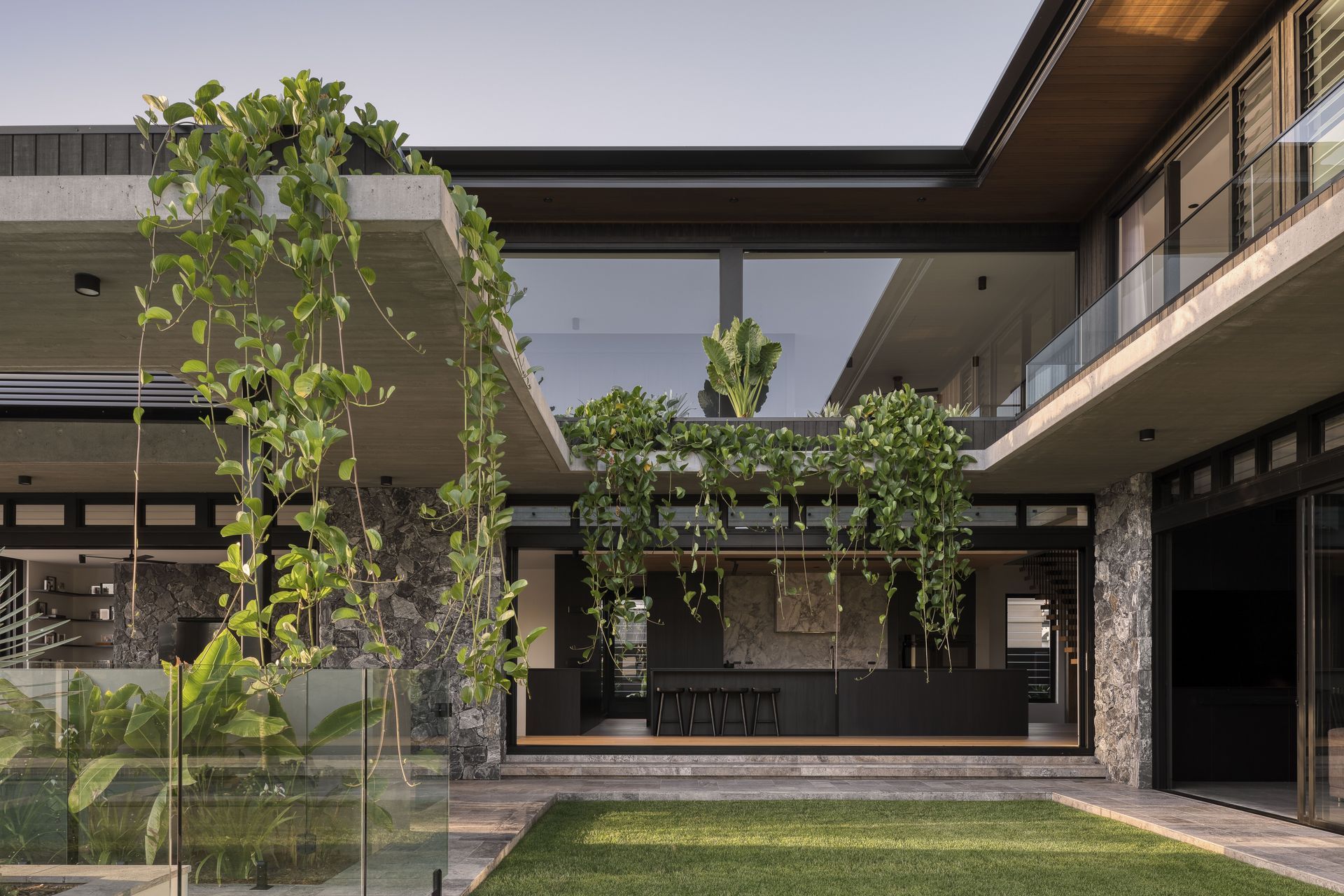
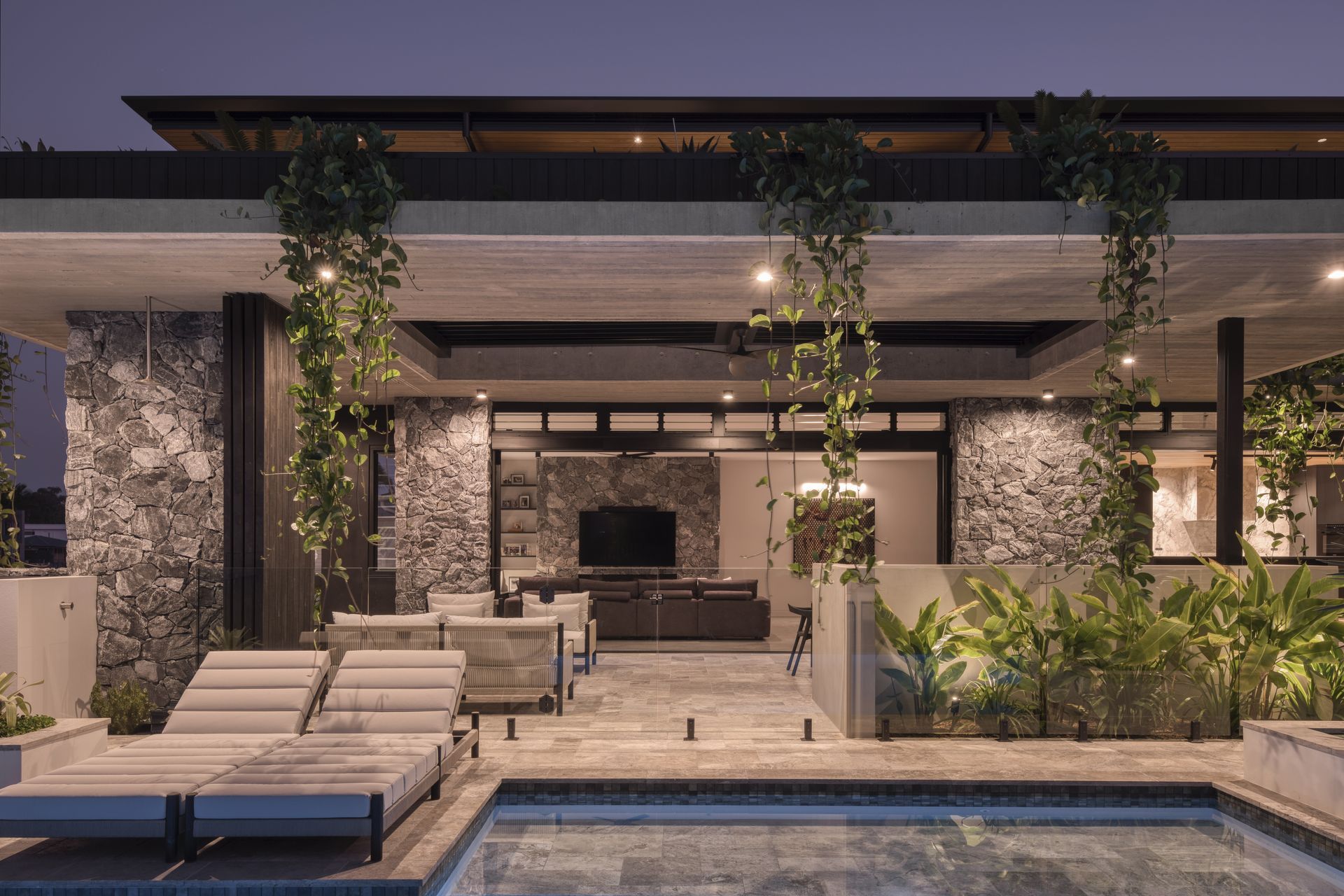
Then comes the reveal. As the front door opens, the home expands dramatically toward the northeast, opening onto scupltural courtyards, a shimmering pool, the canal beyond, and in the distance the Gold Coast’s high-rise silhouette. It’s a controlled choreography of privacy and openness, enclosure and release.
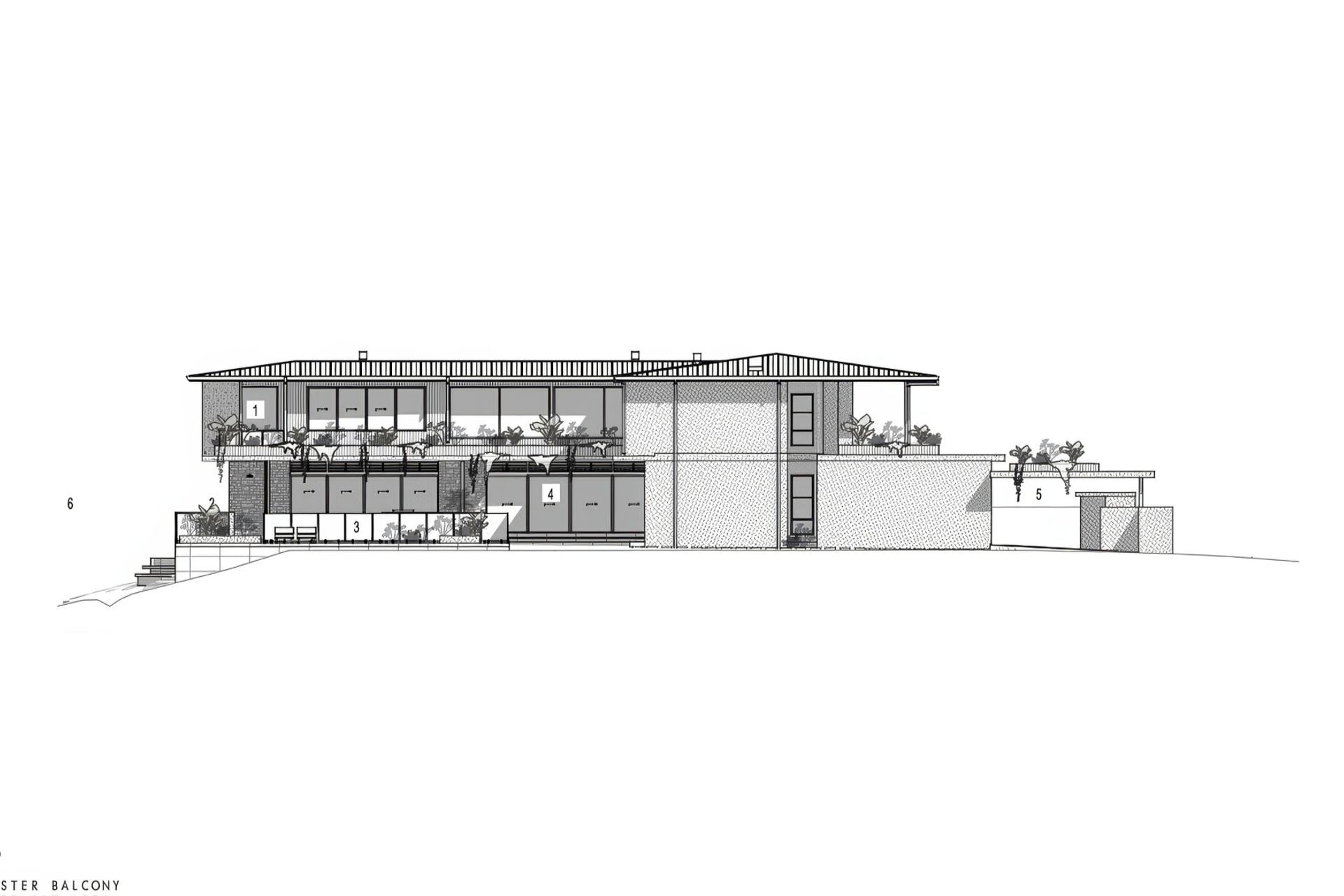
The form of the The L-shaped plan supports this careful choreography, with the long arm of the home arranged along the southern boundary. This strategic move allows the entirety of the living spaces, pool terrace and primary outdoor areas to face north.
“We’ve compressed everything back to that southern side, because it allows all that really nice northern light to get in,” explains Wayne. The configuration also invites cooling sea breezes from the northeast, capturing the microclimate that makes outdoor living central to life here.
Programmatically, the owners kept their requirements minimal: four bedrooms for themselves, their children and visiting family; an open-plan living arrangement; and strong indoor–outdoor connectivity. One exception was the garage. Clean-lined and almost gallery-like, it reflects the owner’s passion for cars: a space for display rather than storage, with functional equipment moved to secondary service zones along the side of the home.
A raw & refined materiality
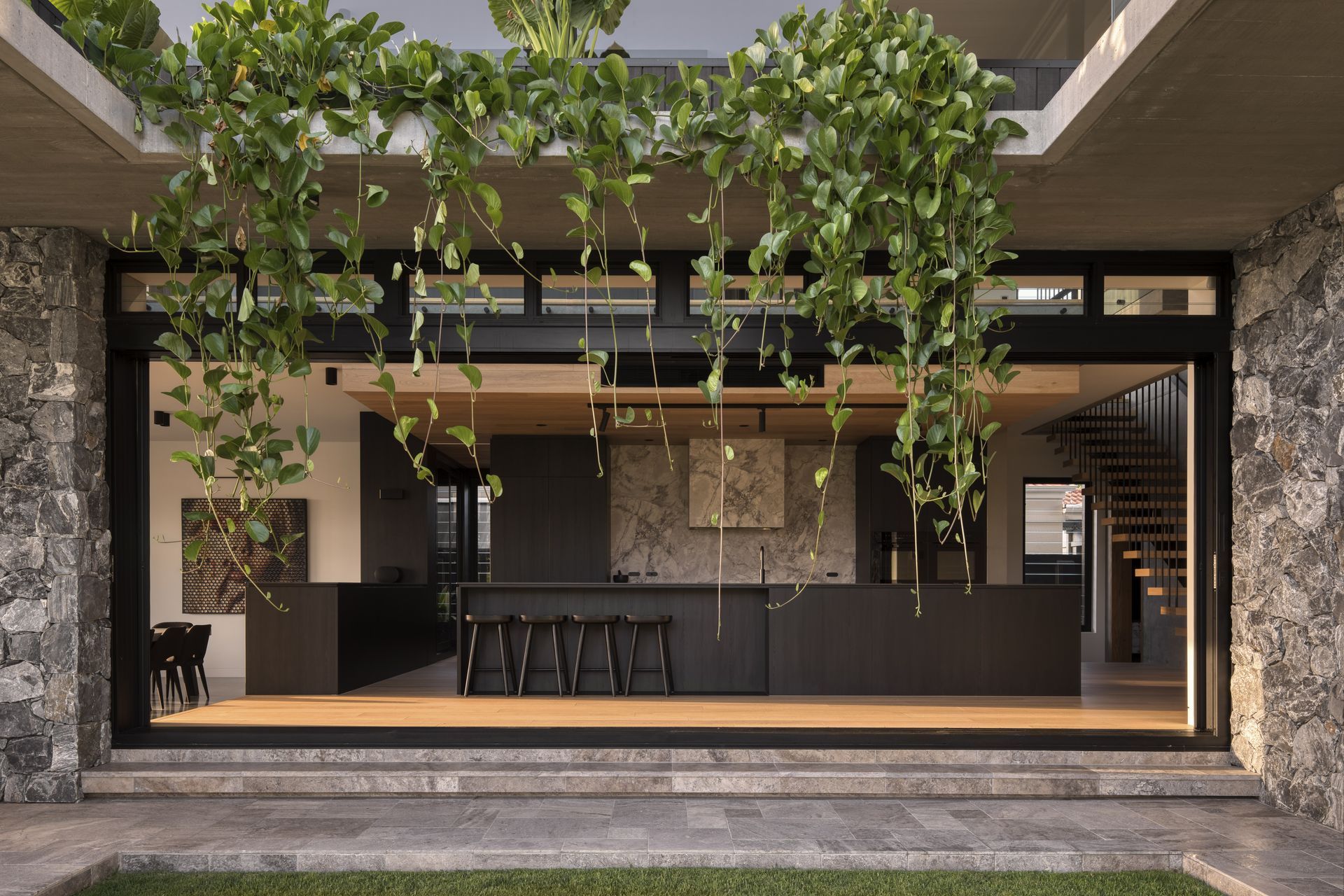
Externally, the home’s palette is anchored by raw, textural elements. Off-form concrete forms the structural backbone, paired with black Abodo timber cladding that conceals the garage doors, which read as a unified, graphic façade. Stonework appears as another grounding element, particularly in the outdoor living spaces, where sliding doors disappear into cavities behind the stone, allowing the upper level to appear as though it floats lightly above.
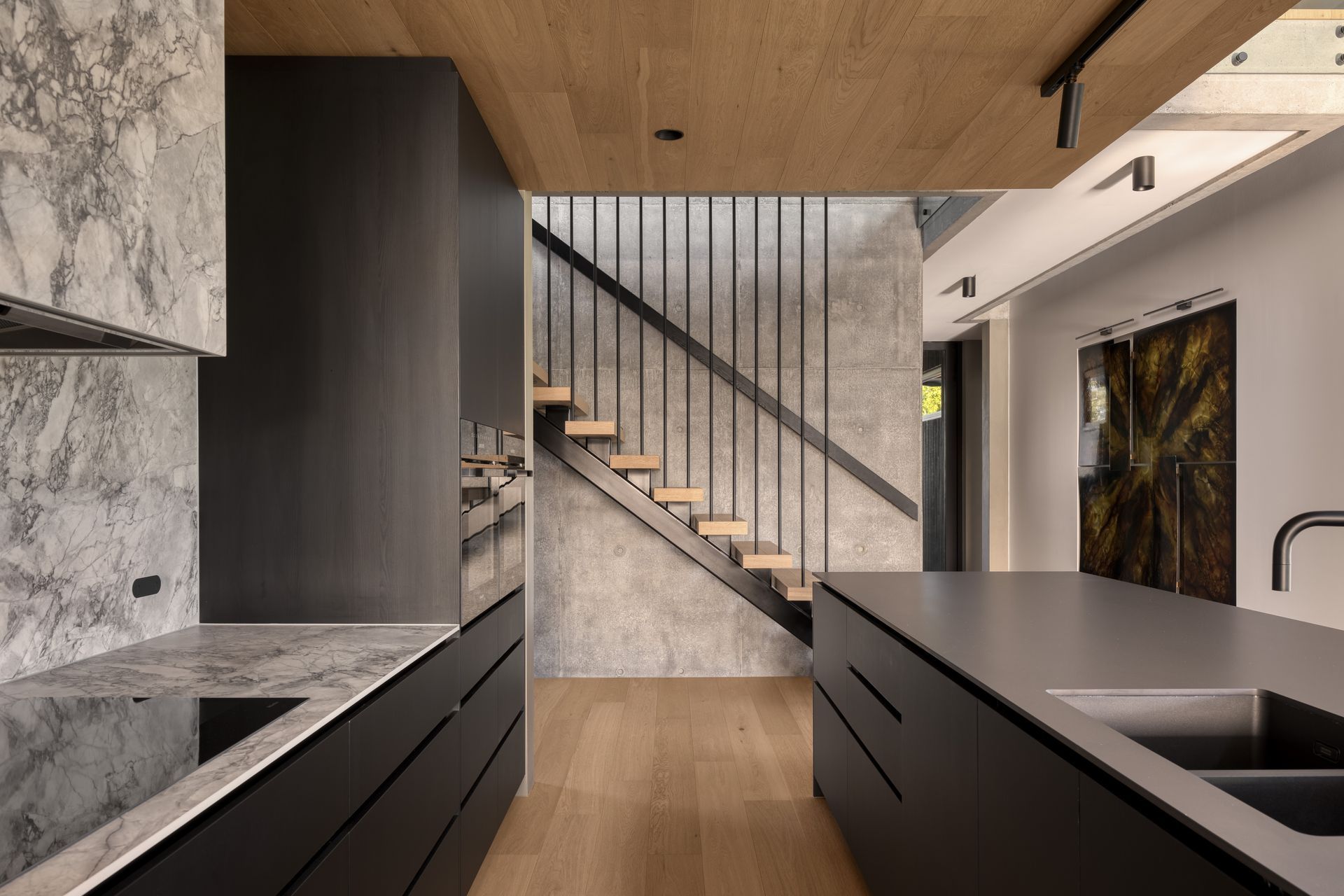
The precision required to execute off-form concrete was significant. “You've got to make sure you've got everything planned in your drawings before it goes to construction because there’s just no way you can hide any of your mistakes,” says Wayne. Services, lighting and even the LED light beneath the stair handrail had to be embedded during early pours, despite being installed nearly a year later.
But the concrete also allowed unexpected opportunities, including integrated planters at the upper level. These become soft, draping pockets of greenery that thread down the building, blending architecture with landscape and giving the façade a living texture.
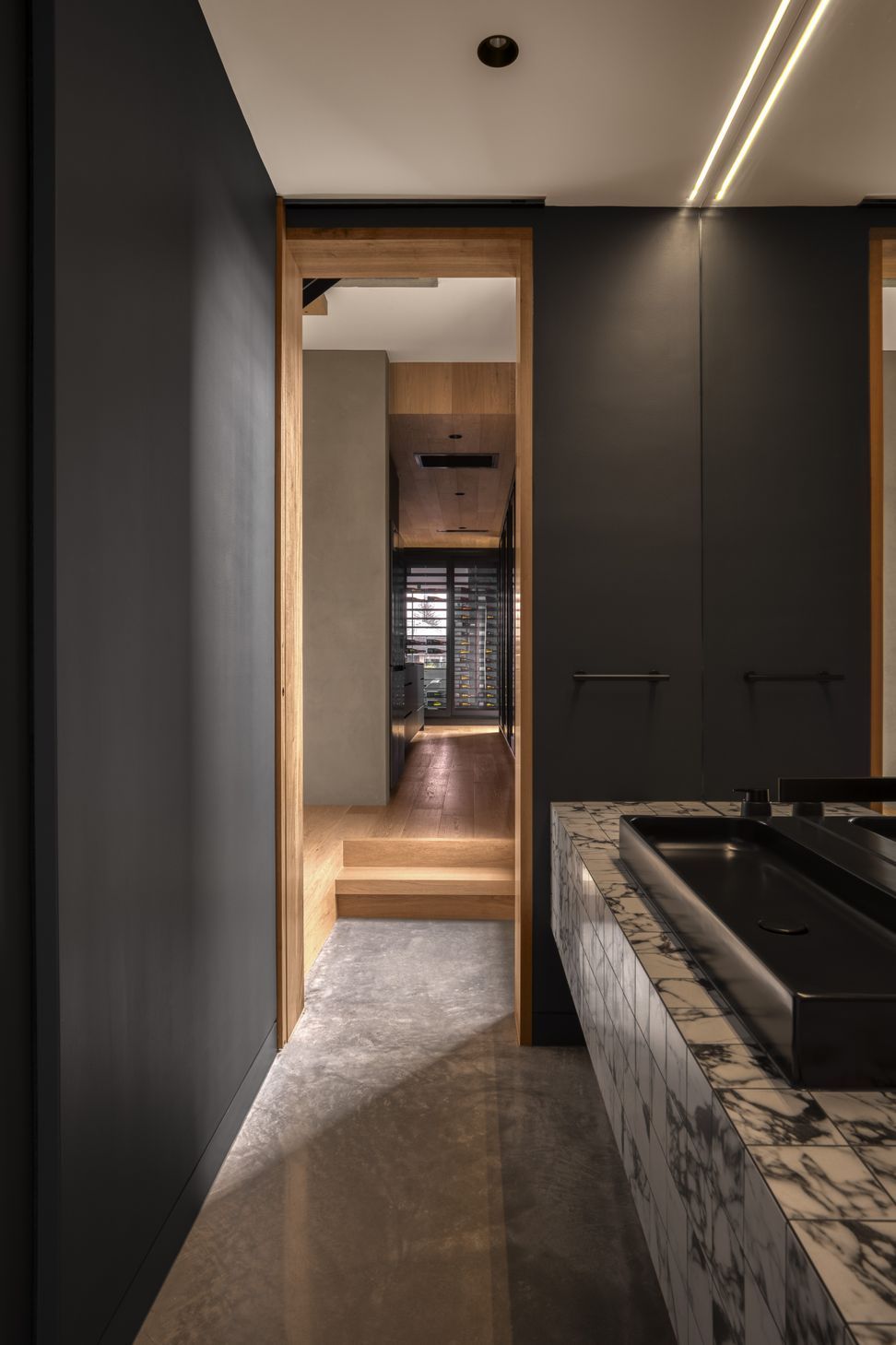
Internally, the industrial palette continues with honed burnished concrete floors, dark joinery and concrete detailing carried through key walls and the stair. Timber becomes the critical softening element, with a raised timber plinth in the kitchen and a lowered timber ceiling overhead , bringing warmth and intimacy to what could otherwise be an austere space. The result is a rich balance of cool and warm, robust and refined.
Living in the home
A year on, the clients remain delighted. “They’ve told us there isn’t anything at all that they'd change after living there,” Wayne says. Their trust was present from the outset: apart from minor functional tweaks, the project moved from concept to completion almost exactly as designed. That confidence allowed Habitat Studio to respond holistically to the site and climate, giving the home architectural clarity.
The project also embodies the studio’s broader philosophy: weaving nature into living spaces wherever possible. In this case, the combination of courtyards, upper-level planting, water views and the home’s continuous flow between inside and out captures exactly that intent. As Greenland puts it, “We live very much with a connection to the outdoors here, so we always really try to connect to the outdoors in the design and have that interplay with nature and the landscape.”
Words: Jo Seton
- Completed
- 2024


Project team
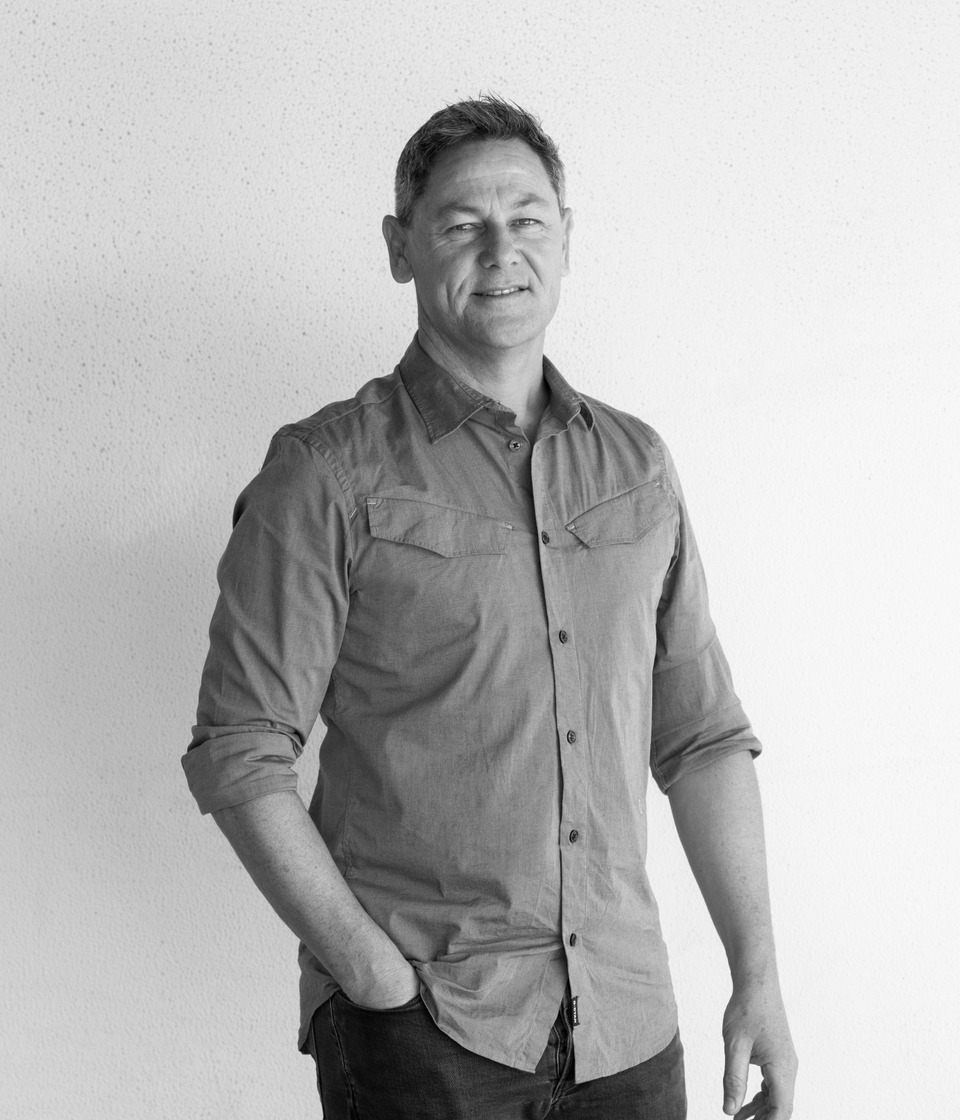
Wayne Greenland
Principal Architect Director
Like this Project?
Hire Habitat Studio Architects
Professional Reviews
The products behind the project
Seven products specified into this build from four suppliers, verified ArchiPro members. Tap through to specifications, suppliers and lead times.


Professionals used in
this project
The practices and trades credited on this project.









More projects from
Habitat Studio Architects
Other work by Habitat Studio Architects, across every category they build in.


More in
Luxury Homes
Everything else in Luxury Homes, from every practice on ArchiPro.


Next Project
Keep scrolling