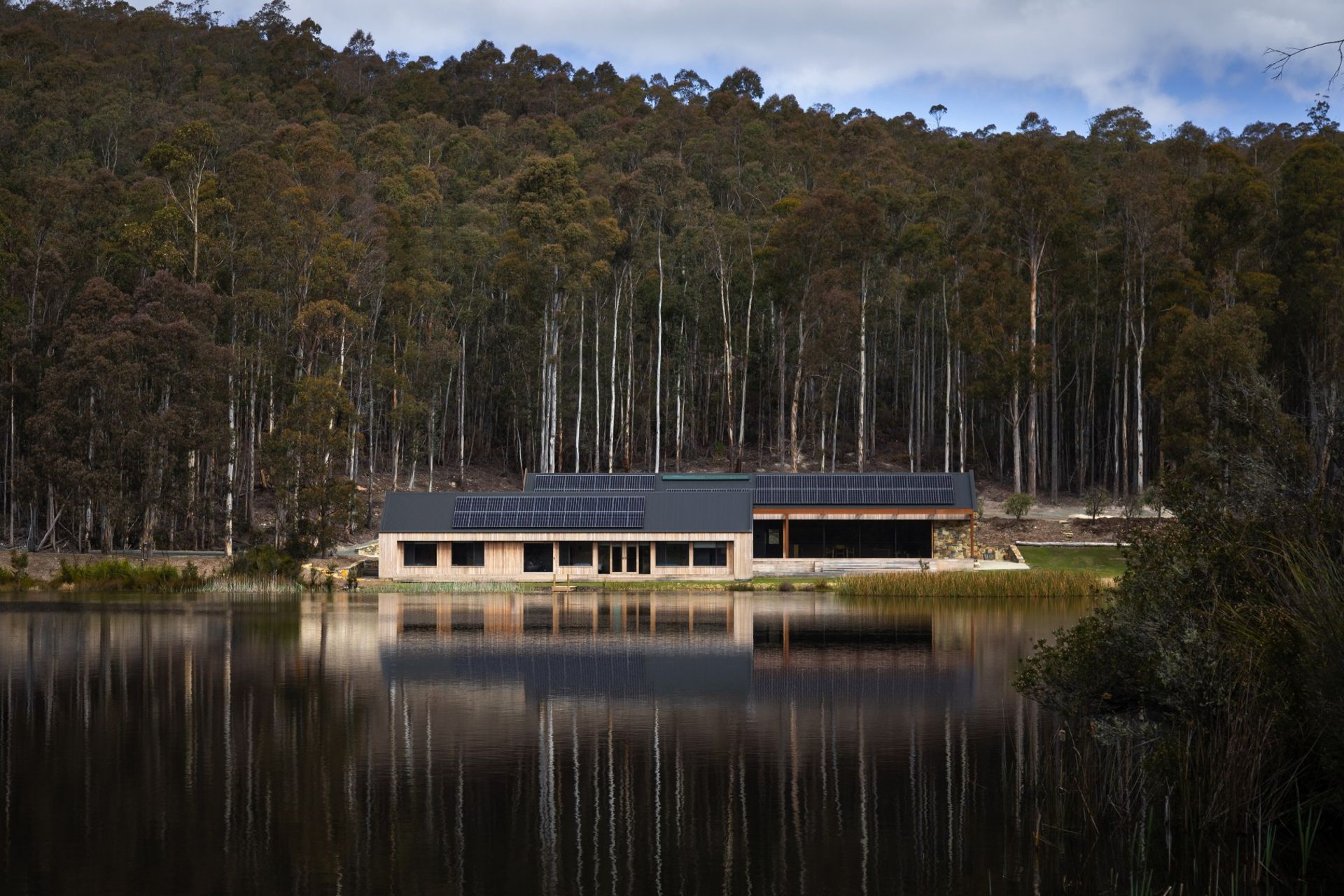
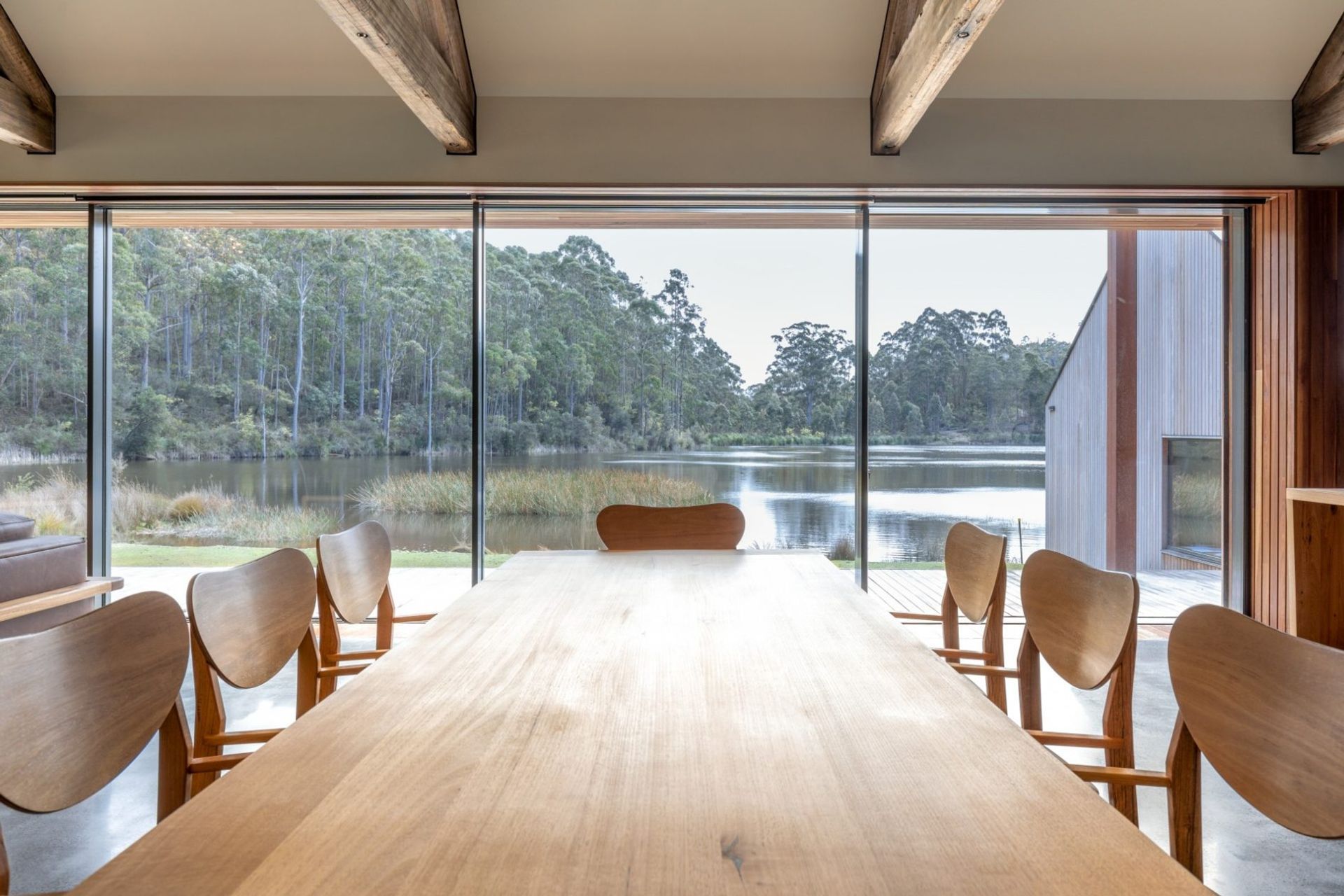
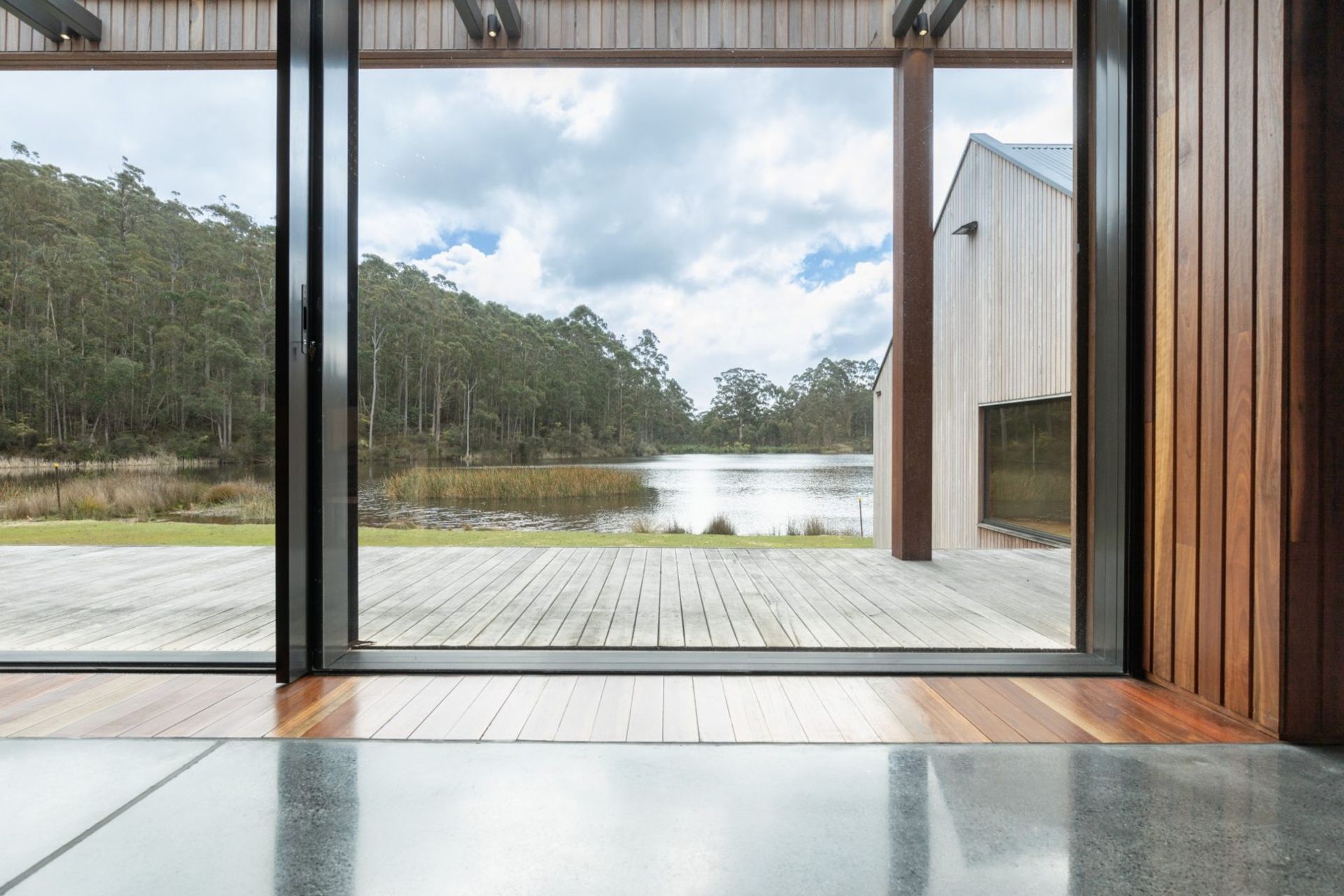
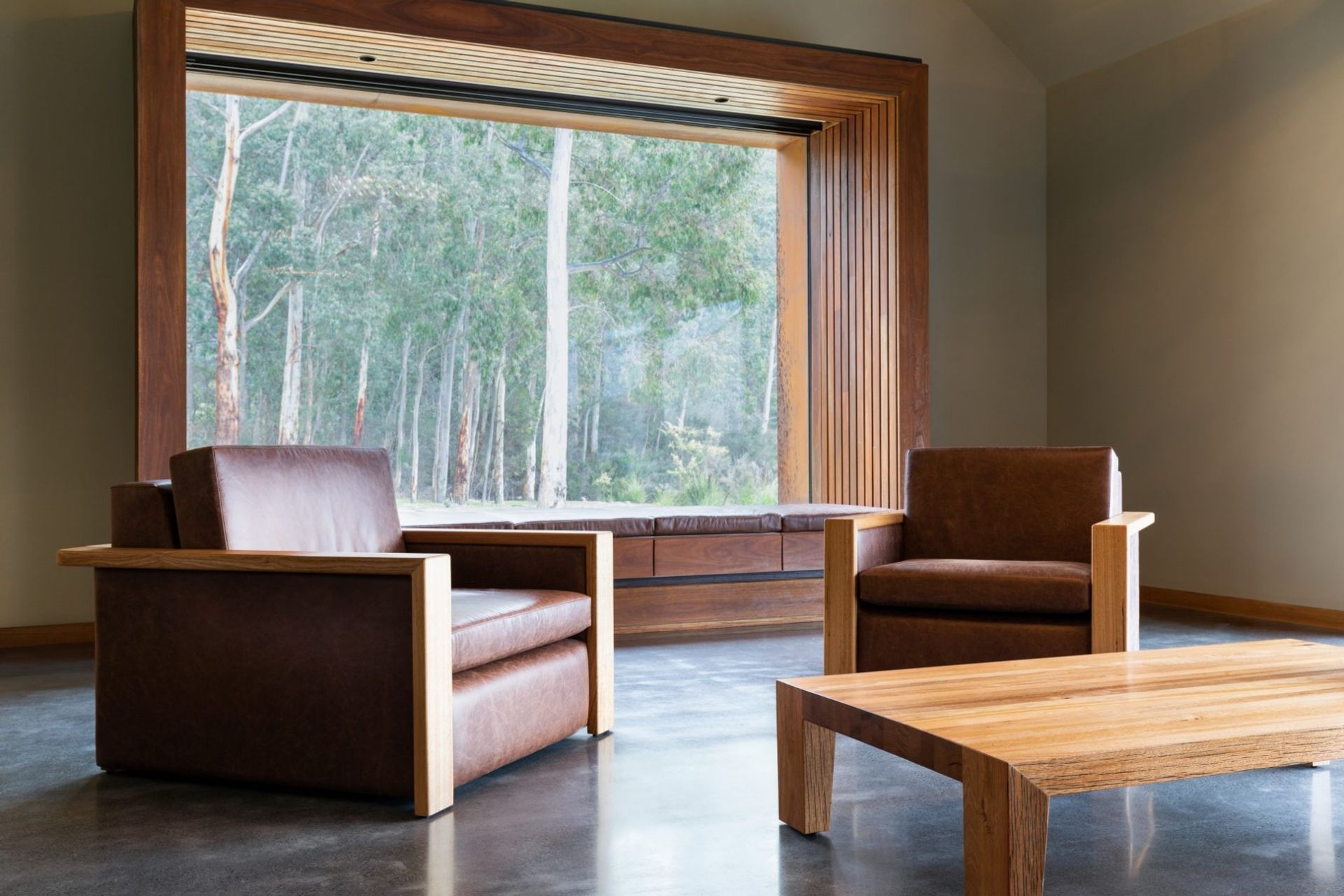
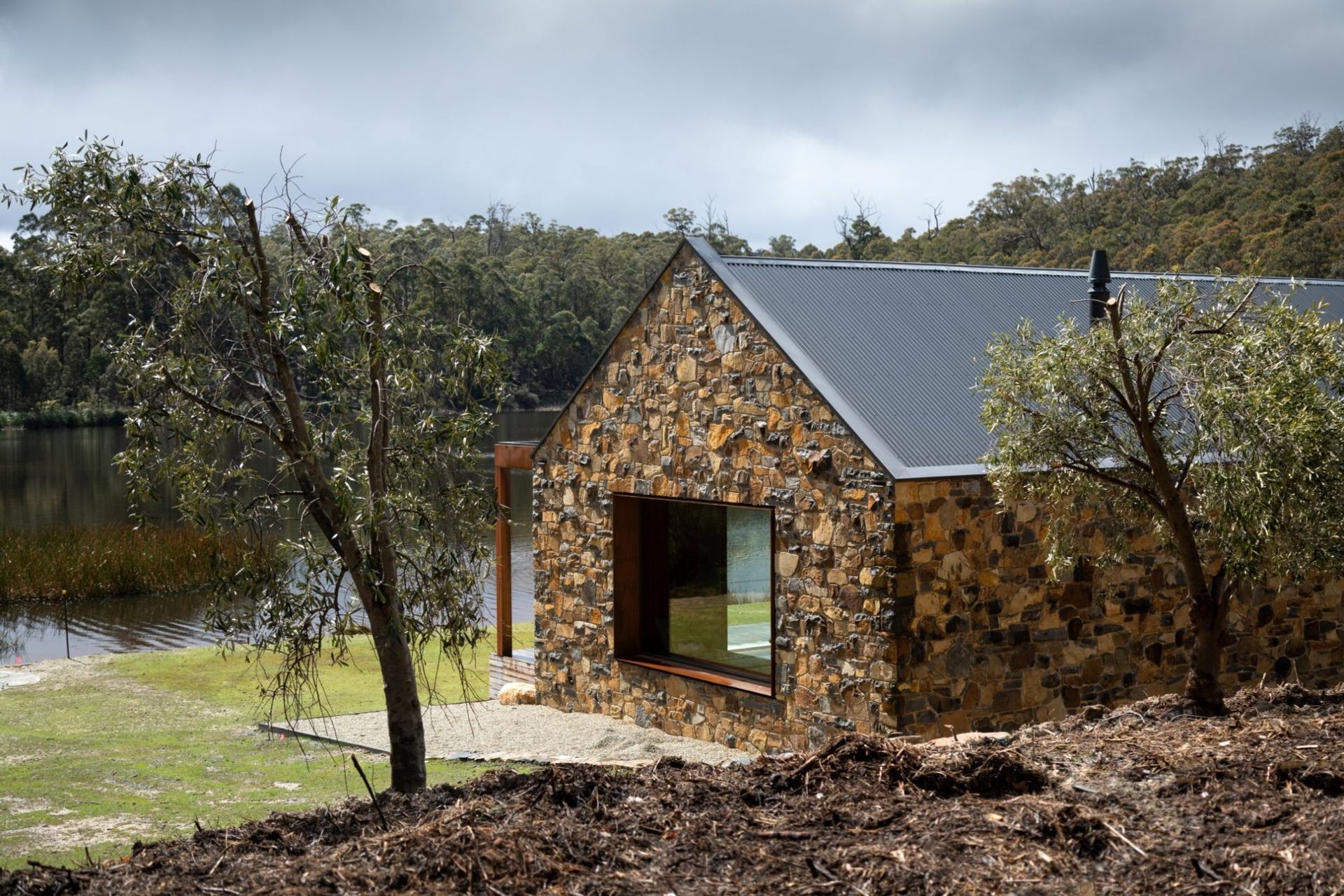
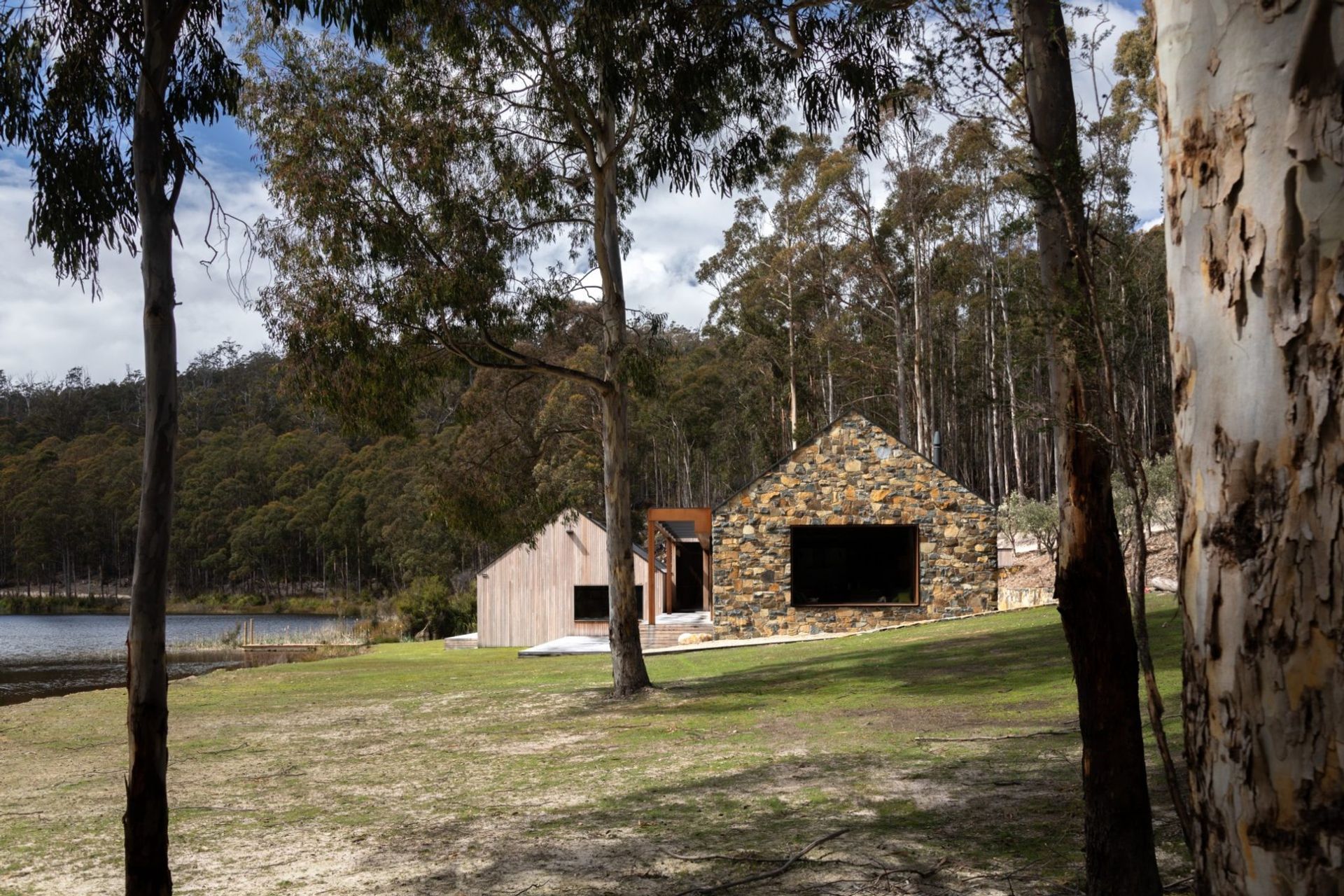
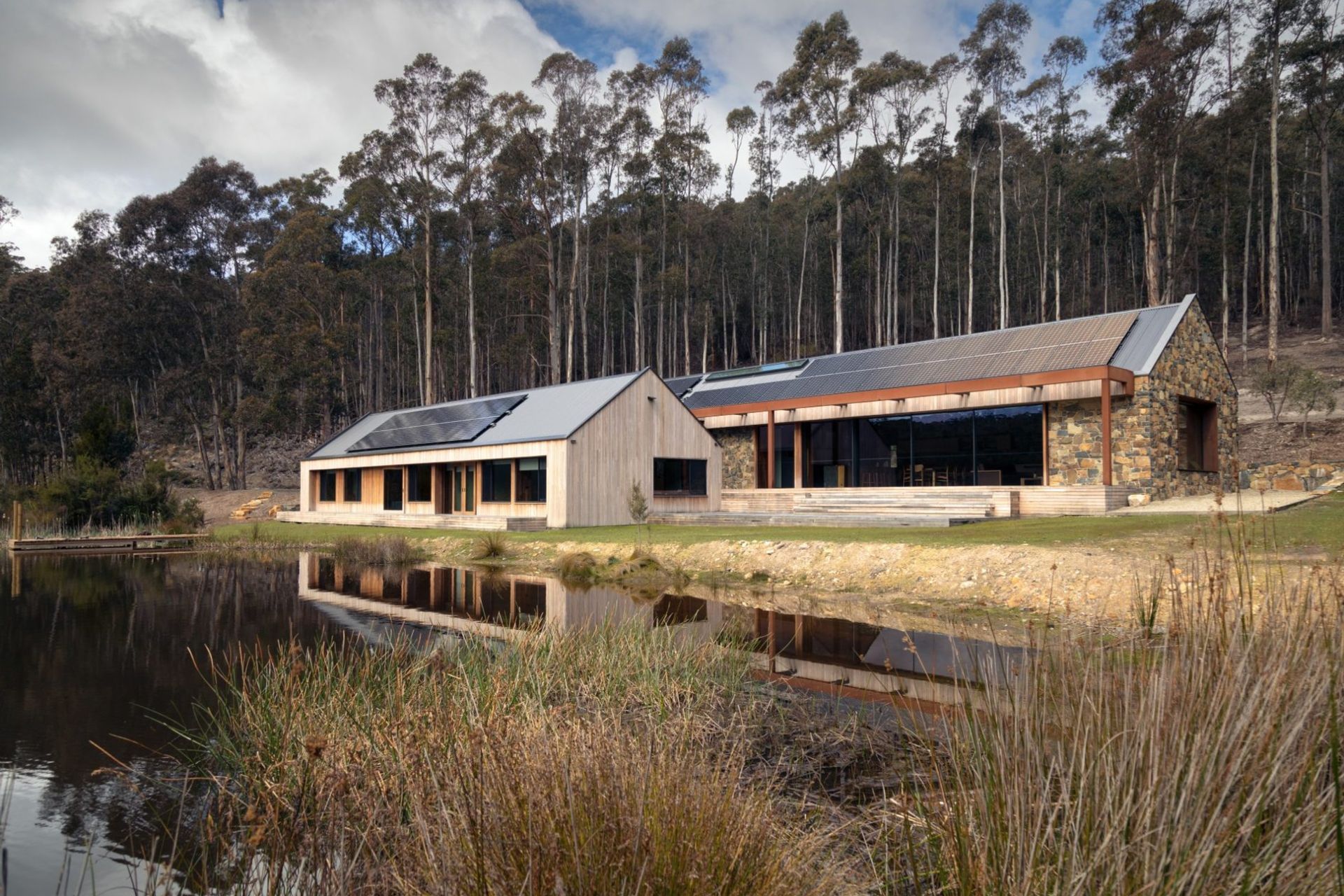
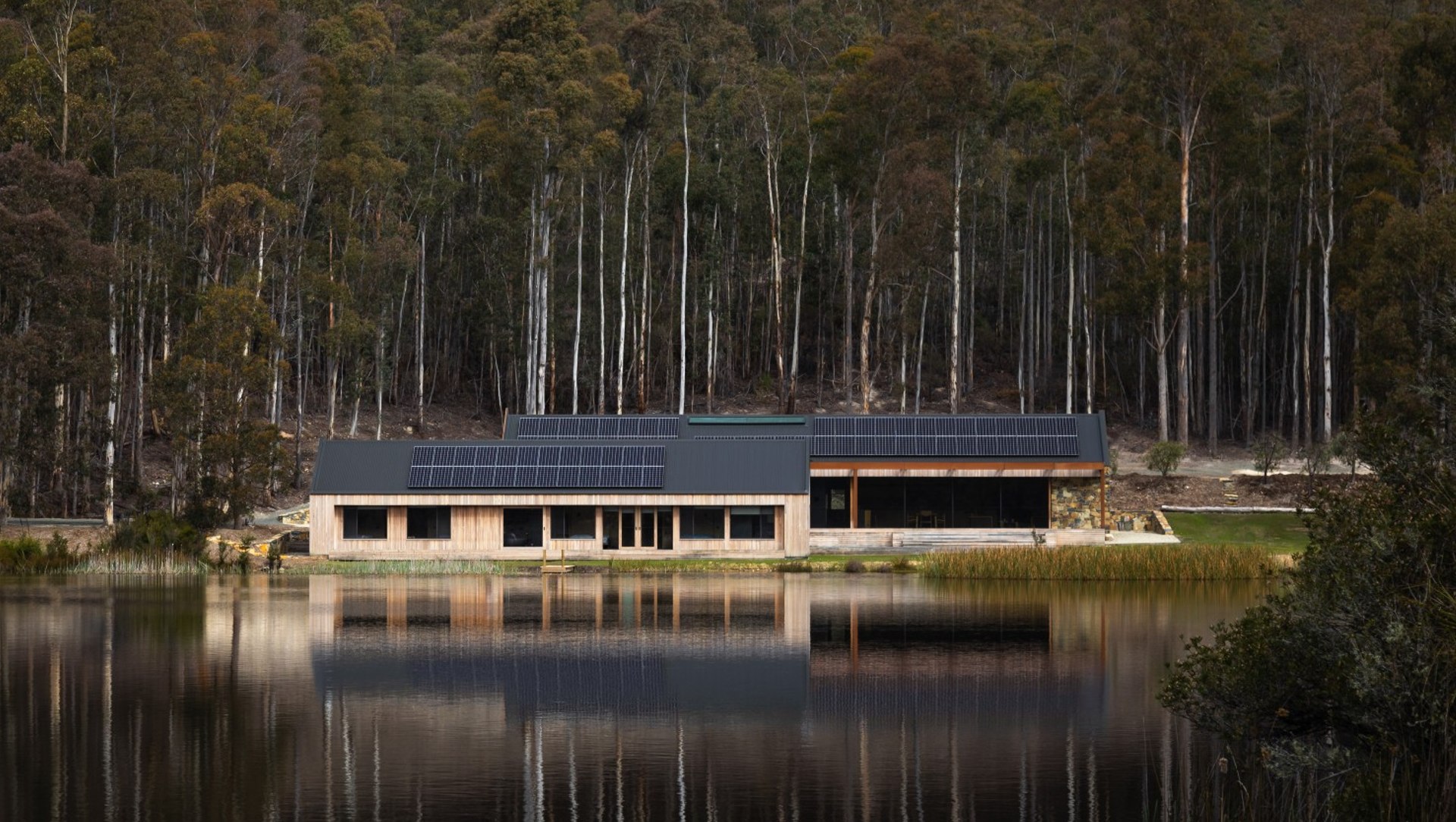
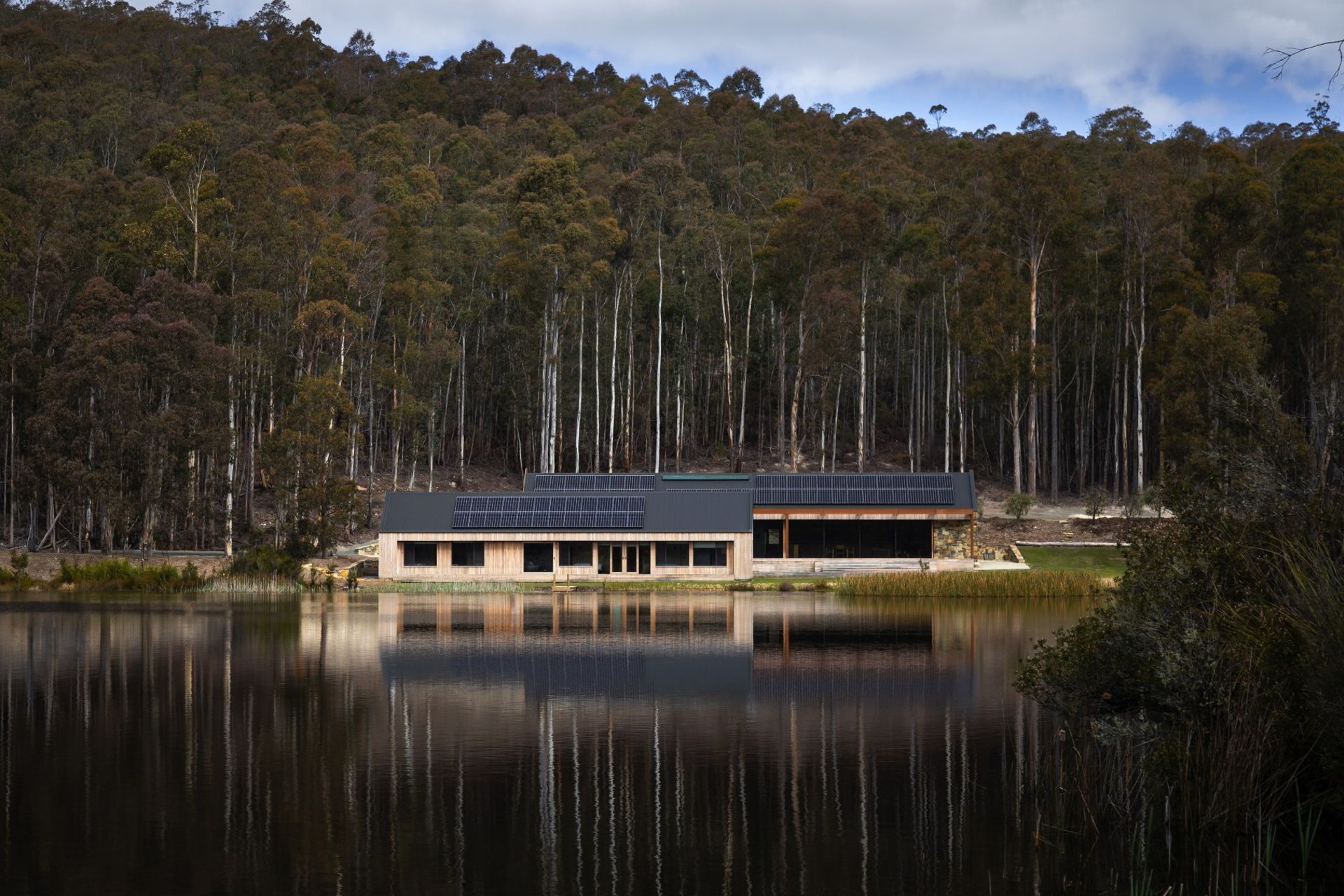
Backed by eucalypts and reflected in an undisturbed lake, The Lake House sits comfortably within the wilds of Tasmania’s bush. Designed as a truly sustainable and landscape‑led home, it draws inspiration from the client’s commitment to environmental stewardship, expressed through its materials, energy‑efficient technologies and deep integration with the site.
The house is positioned with precision to frame views of Mt Wellington, a defining presence that guided the siting and orientation of every major space. During the design process, the footprint was marked out on the ground to ensure the mountain outlook was captured from key interior rooms while maintaining a gentle relationship with the existing clearing.
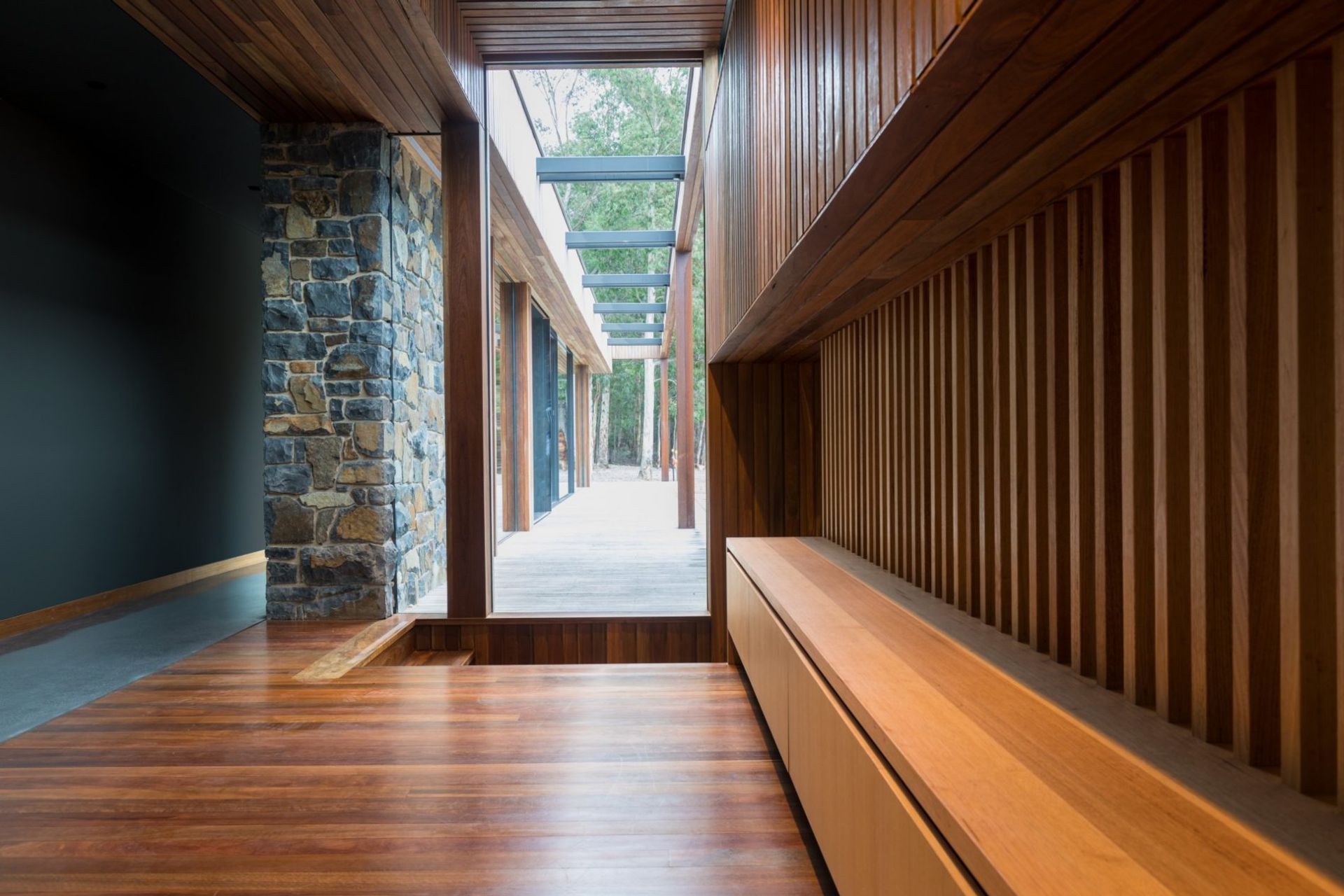
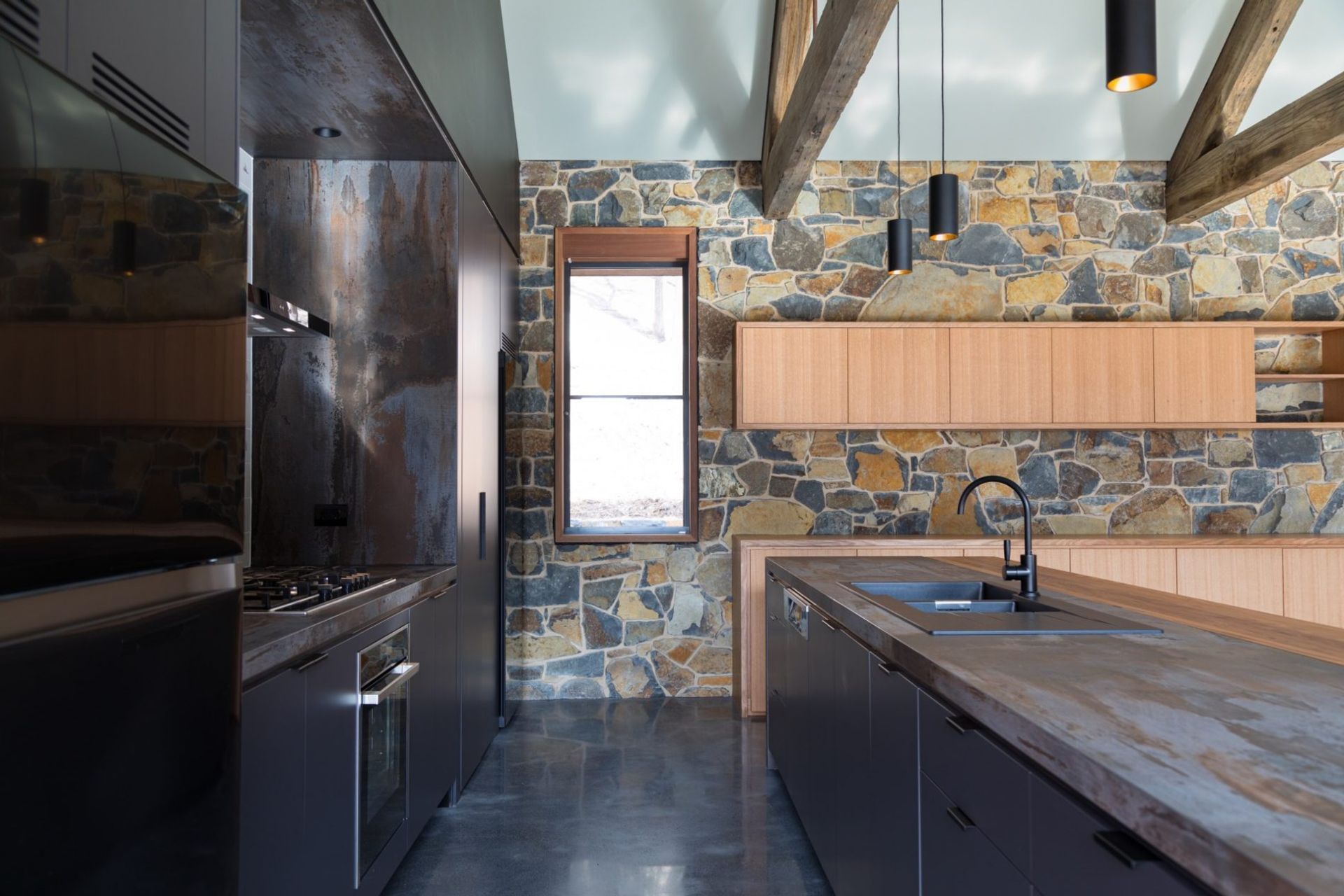
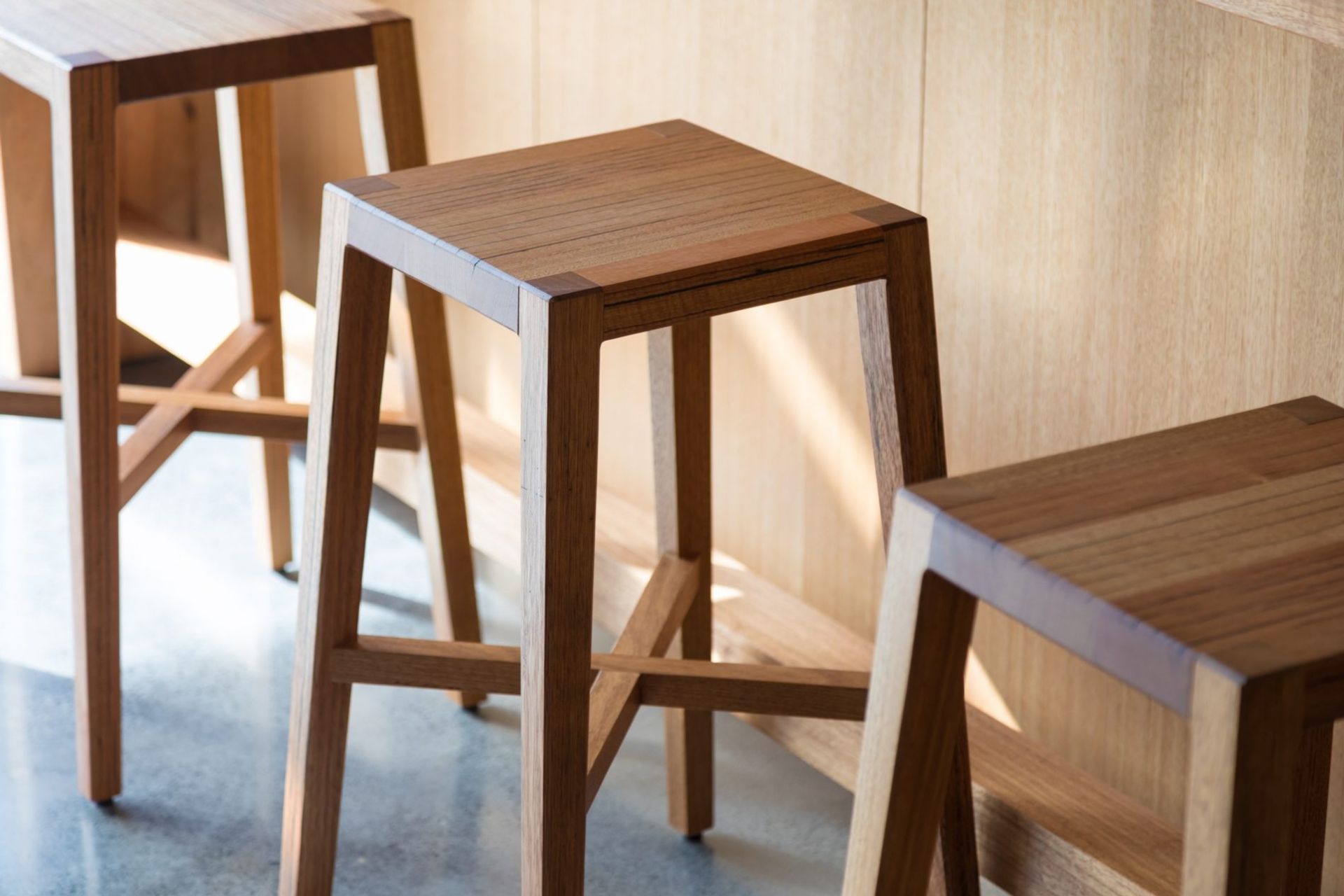
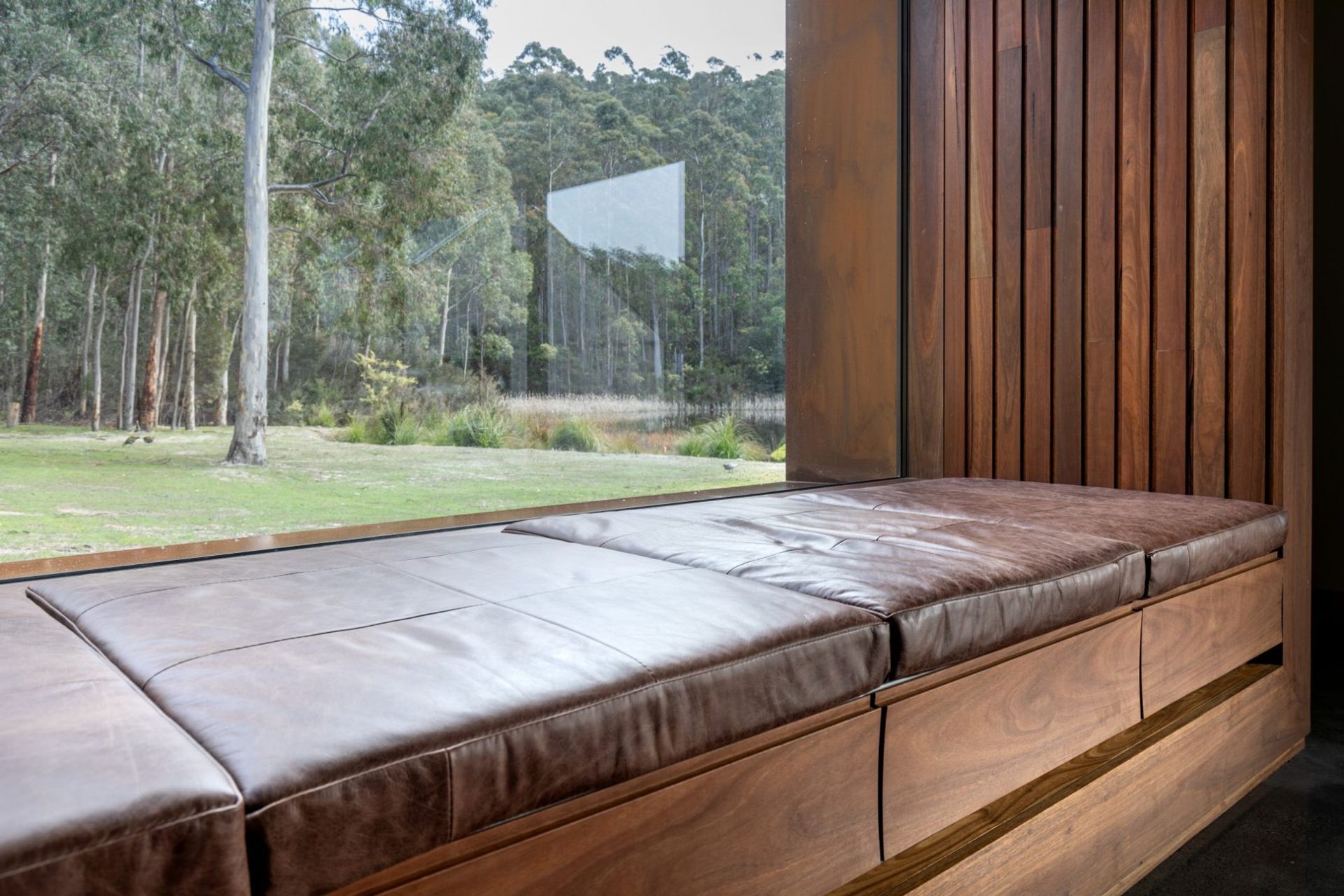
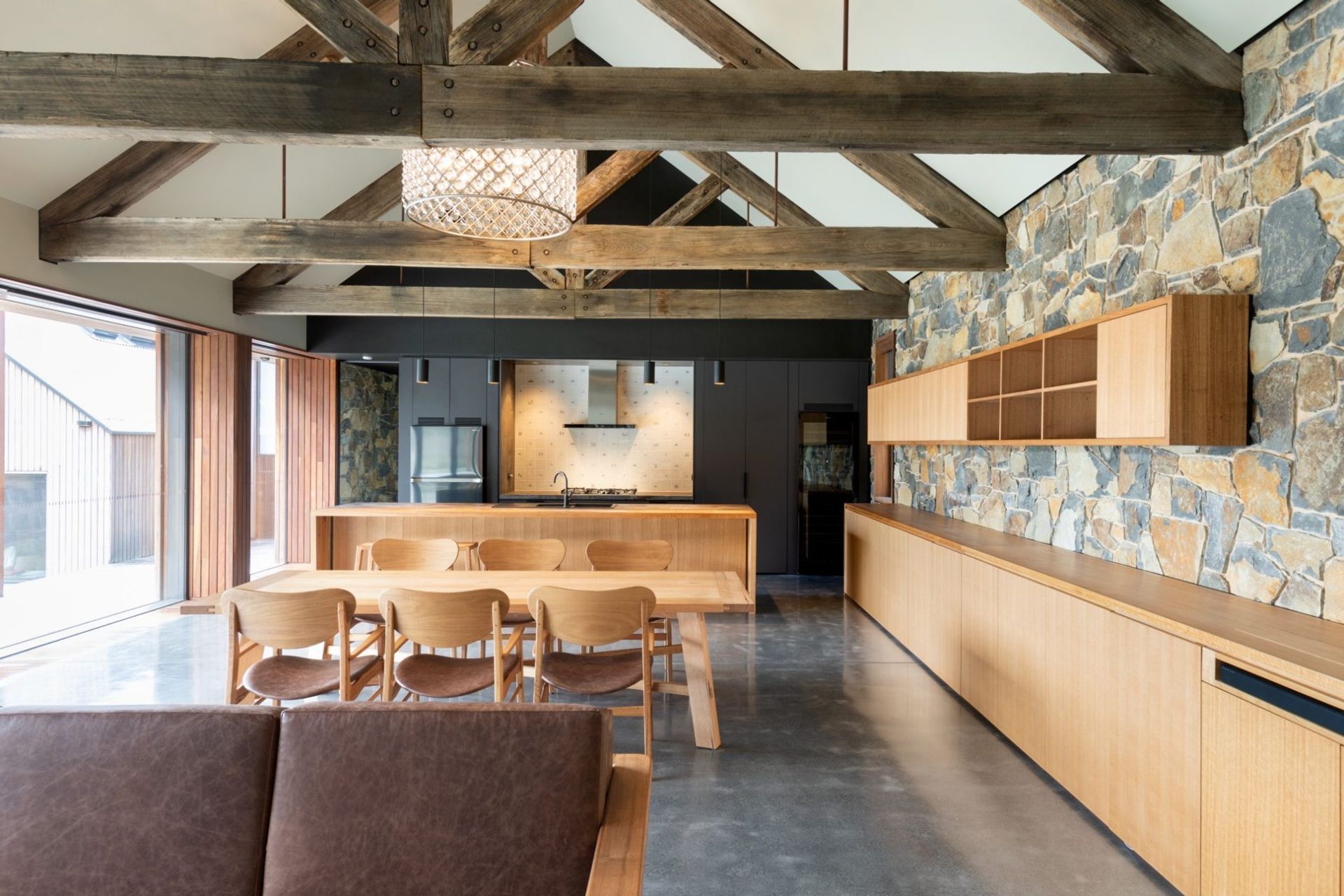
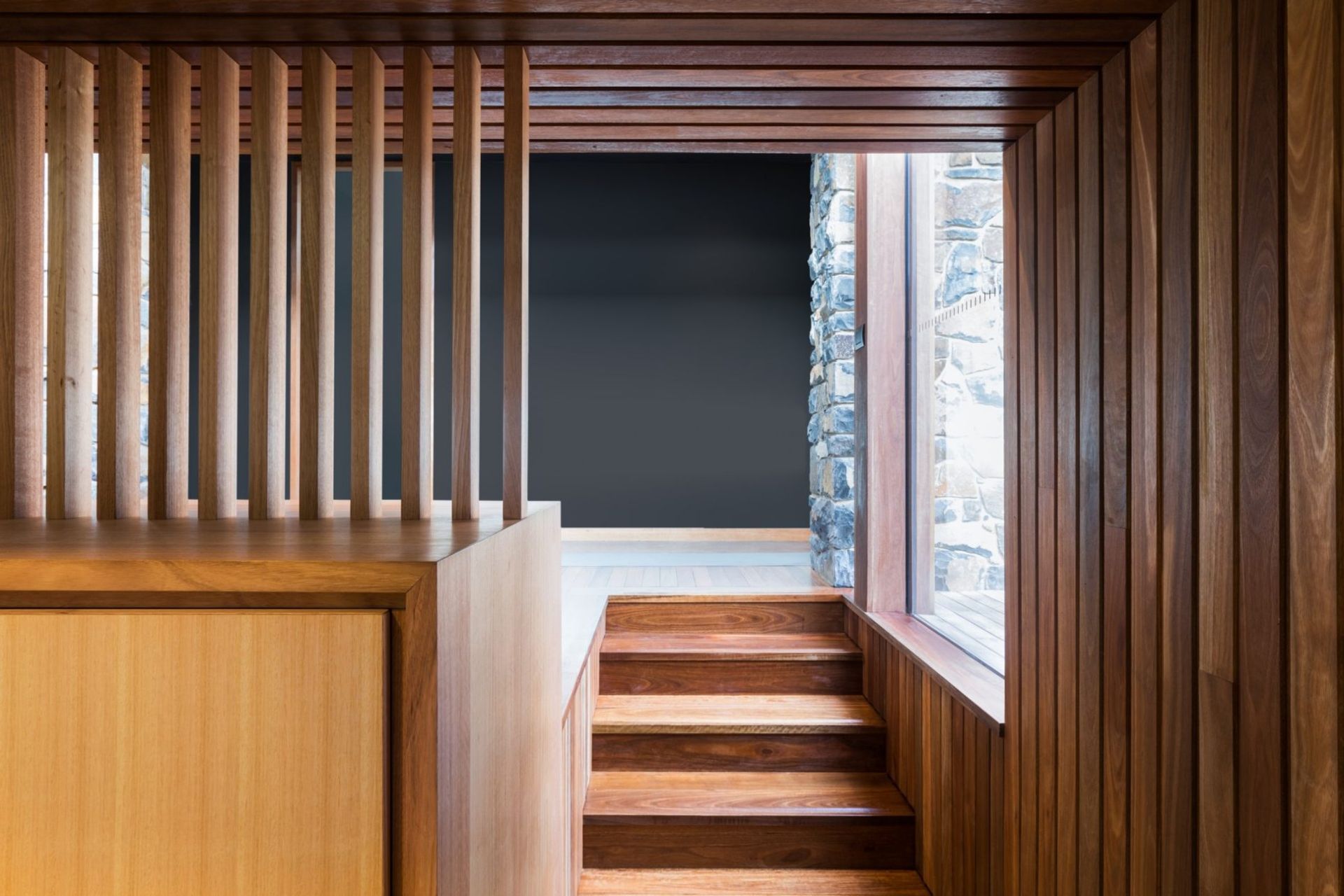
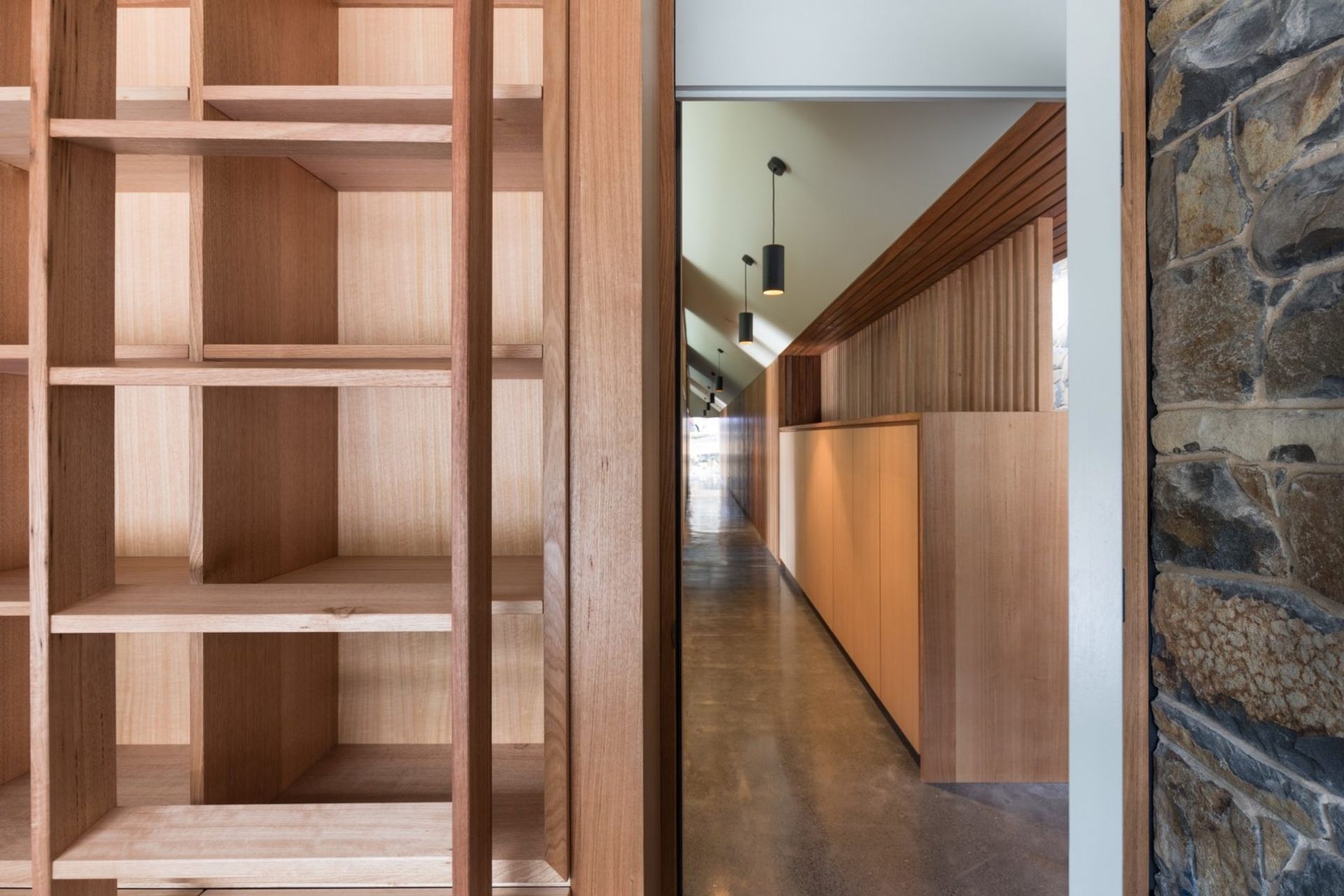
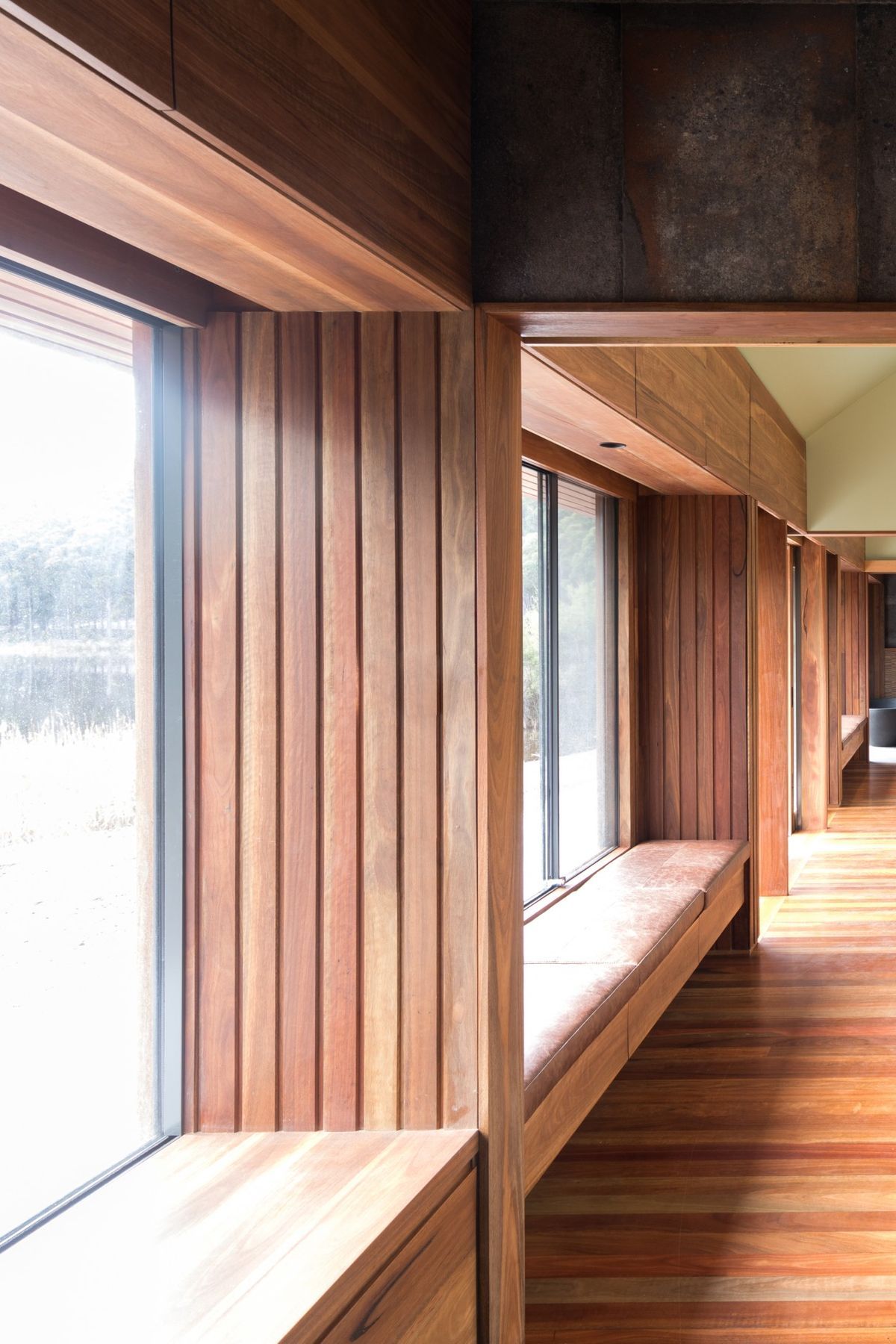
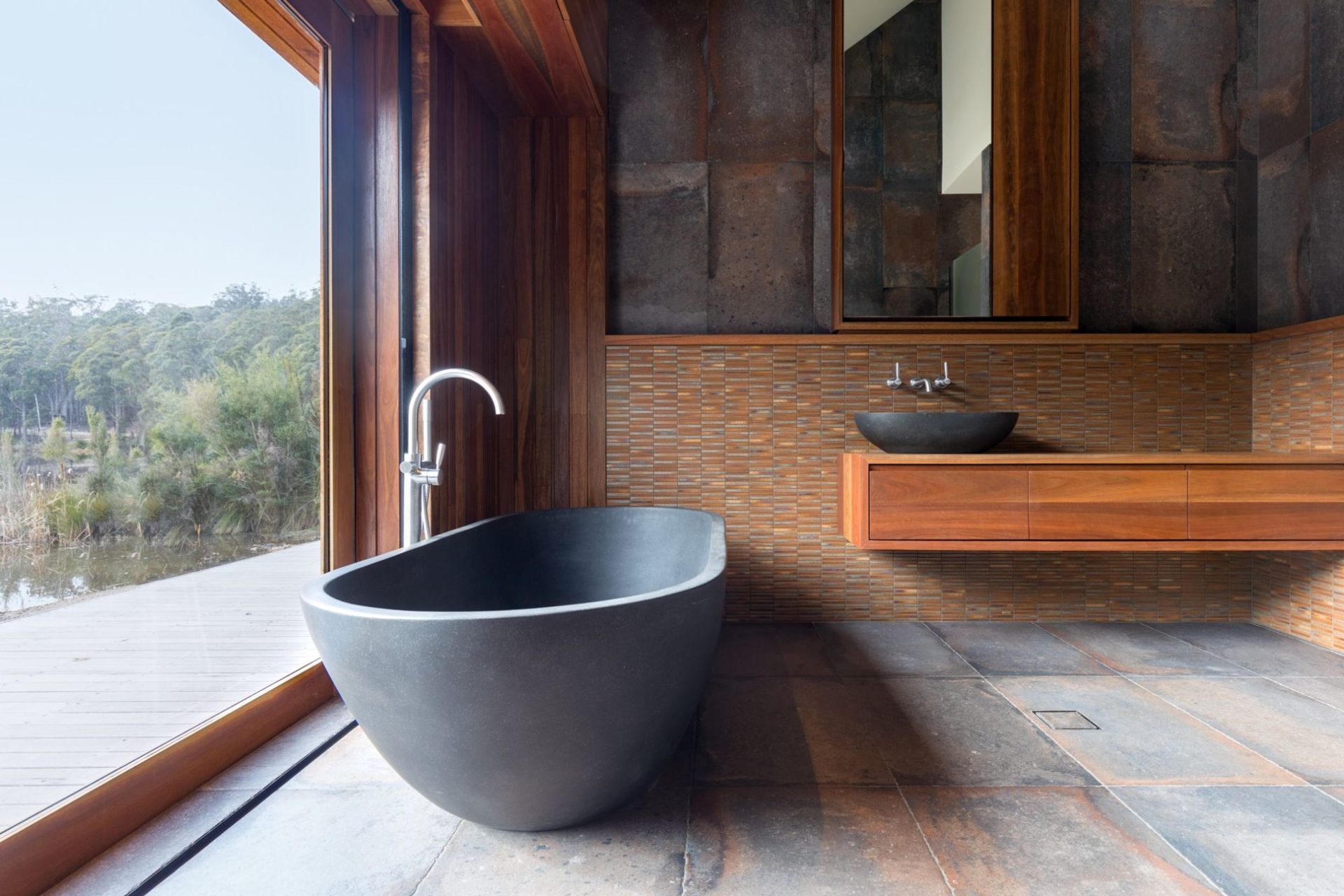
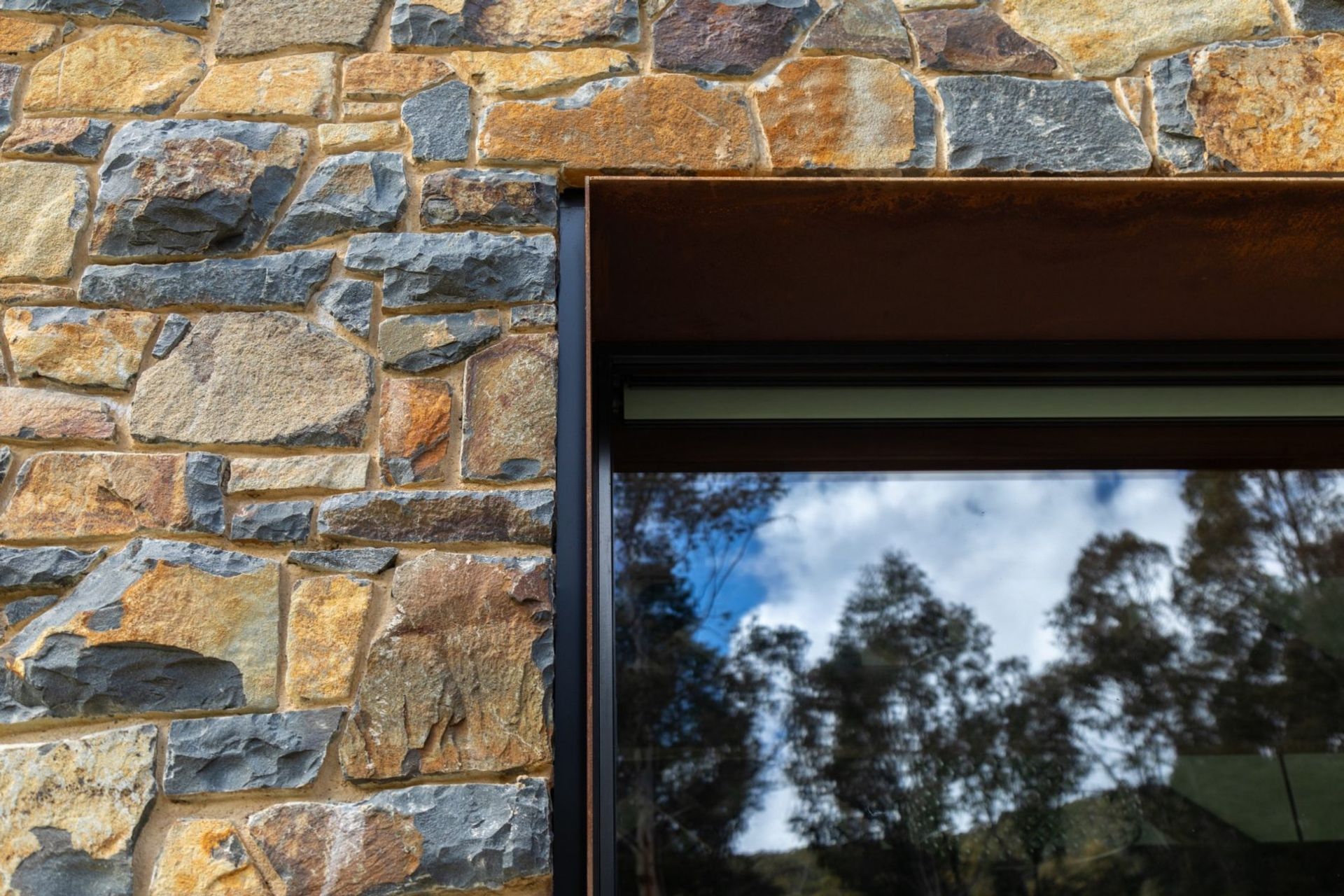
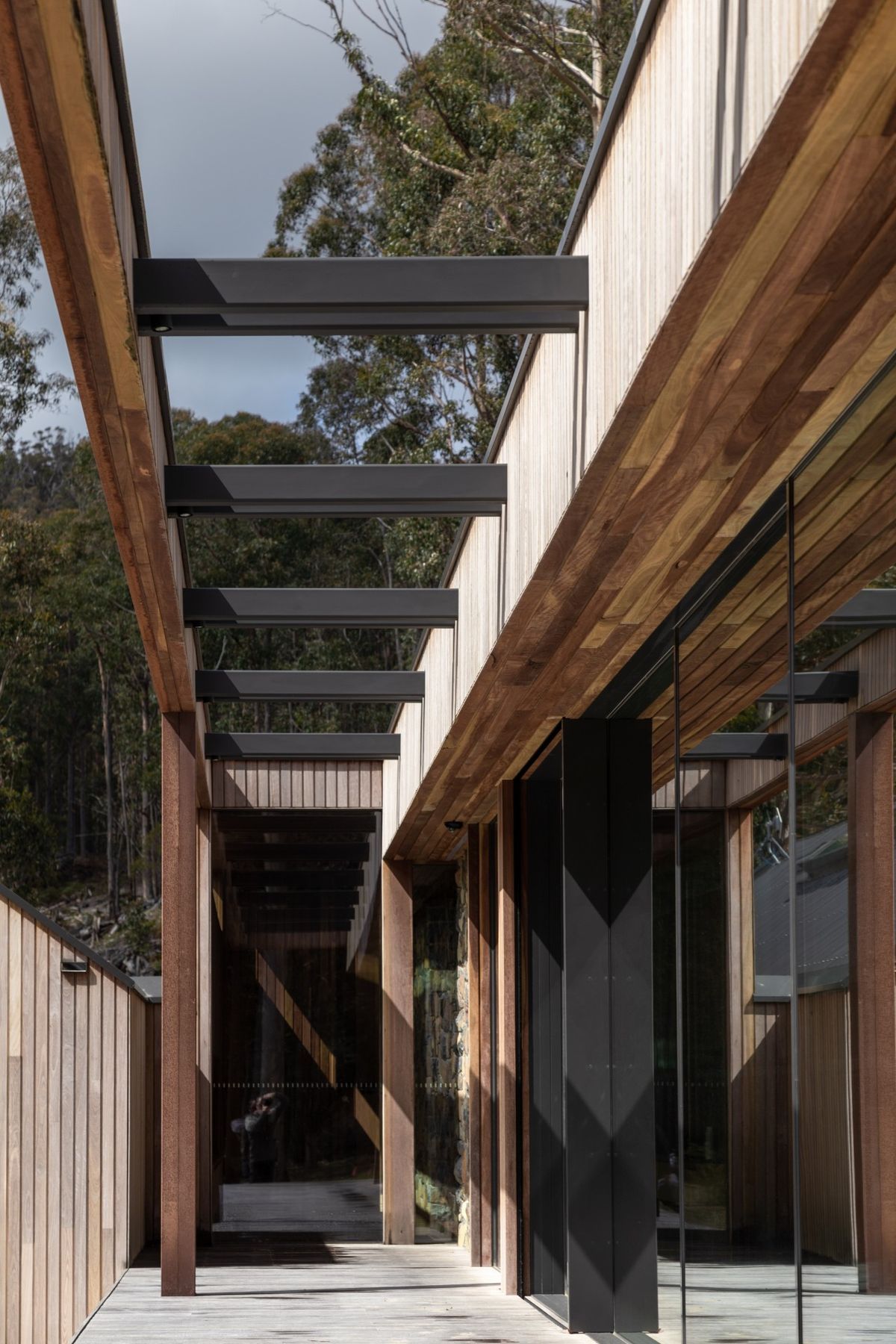
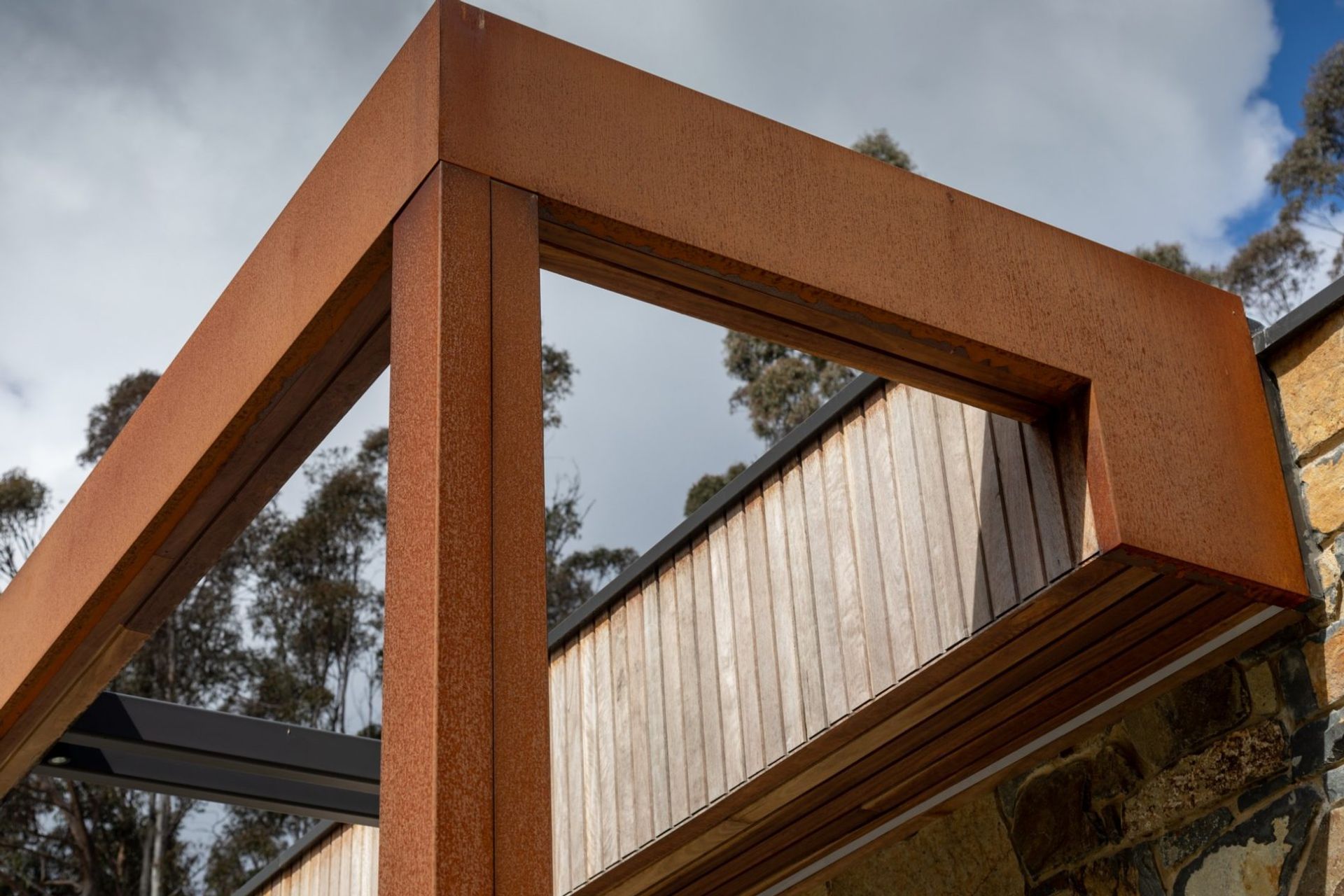
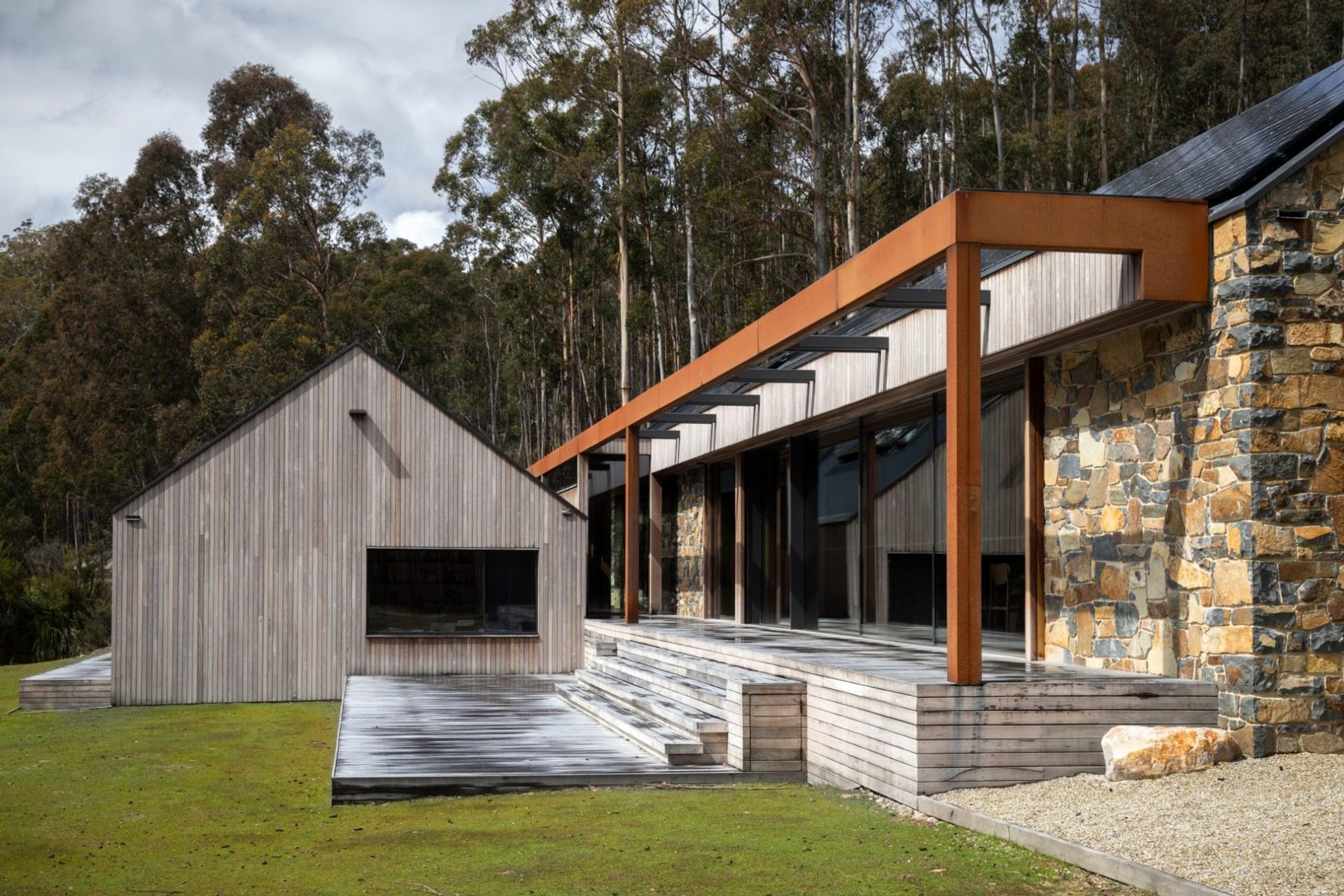
Materially, the home draws directly from its surroundings. Stone sourced from a nearby quarry brings warmth and permanence, complementing natural and recycled timbers used throughout the interior. The timber trusses were inspired by reclaimed beams salvaged from a Launceston warehouse; a full‑scale truss was built on site as a template for the prefabricated structure, grounding the home in craftsmanship and place. The colour palette echoes the native eucalypts, with soft greens and greys creating a calm, cohesive interior atmosphere.
Alongside its material honesty, The Lake House incorporates a sophisticated network of sustainable technologies. A geothermal heat pump, connected to ground‑loop pipes submerged in the lake, supplies energy for the hydronic heating system, ensuring consistent comfort with minimal environmental impact. Seventy‑two photovoltaic panels generate more than enough power for the home, allowing excess energy to be returned to the grid. Together, these systems demonstrate how renewable technologies can be seamlessly integrated into rural residential architecture.Backed by eucalypts and reflected in an undisturbed lake, The Lake House sits comfortably within the wilds of Tasmania’s bush. Designed as a truly sustainable and landscape‑led home, it draws inspiration from the client’s commitment to environmental stewardship, expressed through its materials, energy‑efficient technologies and deep integration with the site.
The house is positioned with precision to frame views of Mt Wellington, a defining presence that guided the siting and orientation of every major space. During the design process, the footprint was marked out on the ground to ensure the mountain outlook was captured from key interior rooms while maintaining a gentle relationship with the existing clearing.
Materially, the home draws directly from its surroundings. Stone sourced from a nearby quarry brings warmth and permanence, complementing natural and recycled timbers used throughout the interior. The timber trusses were inspired by reclaimed beams salvaged from a Launceston warehouse; a full‑scale truss was built on site as a template for the prefabricated structure, grounding the home in craftsmanship and place. The colour palette echoes the native eucalypts, with soft greens and greys creating a calm, cohesive interior atmosphere.
Alongside its material honesty, The Lake House incorporates a sophisticated network of sustainable technologies. A geothermal heat pump, connected to ground‑loop pipes submerged in the lake, supplies energy for the hydronic heating system, ensuring consistent comfort with minimal environmental impact. Seventy‑two photovoltaic panels generate more than enough power for the home, allowing excess energy to be returned to the grid. Together, these systems demonstrate how renewable technologies can be seamlessly integrated into rural residential architecture.
The Lake House is a meeting point between sustainable practice and natural beauty — a home that works with, rather than against, the landscape. It shows what becomes possible when local materials, renewable energy systems and careful siting come together to create a building that is both environmentally responsible and deeply connected to its place.Backed by eucalypts and reflected in an undisturbed lake, The Lake House is right at home in the wilds of Tasmania’s bush. Its truly bespoke and holistic design is inspired by the client’s passion for sustainability, evidenced in its materials, energy-efficient technologies and integration into its locale.
Tapping into resources from its surroundings, the warmth of stones from a nearby quarry compliments natural and recycled timber to create a single-story house that’s in harmony with the land it sits upon.
In collaboration with the traditional farmhouse architecture is a network of heat and energy systems. A geothermal heat pump with ground loop pipes in the lake supplies energy for the home’s hydronic heating system and 72 photovoltaic panels provide enough energy to release excess back into the grid.
The Lake House acts as the meeting point for sustainable practice and natural beauty, reminding us what’s possible when we work with, not against, the Earth.