

A sculpted coastal home of sand-toned brick responds to its exposed beachfront site with careful planning, durable materials and a finely tuned balance of outlook and privacy.
A coastal home shaped by the wind & sand
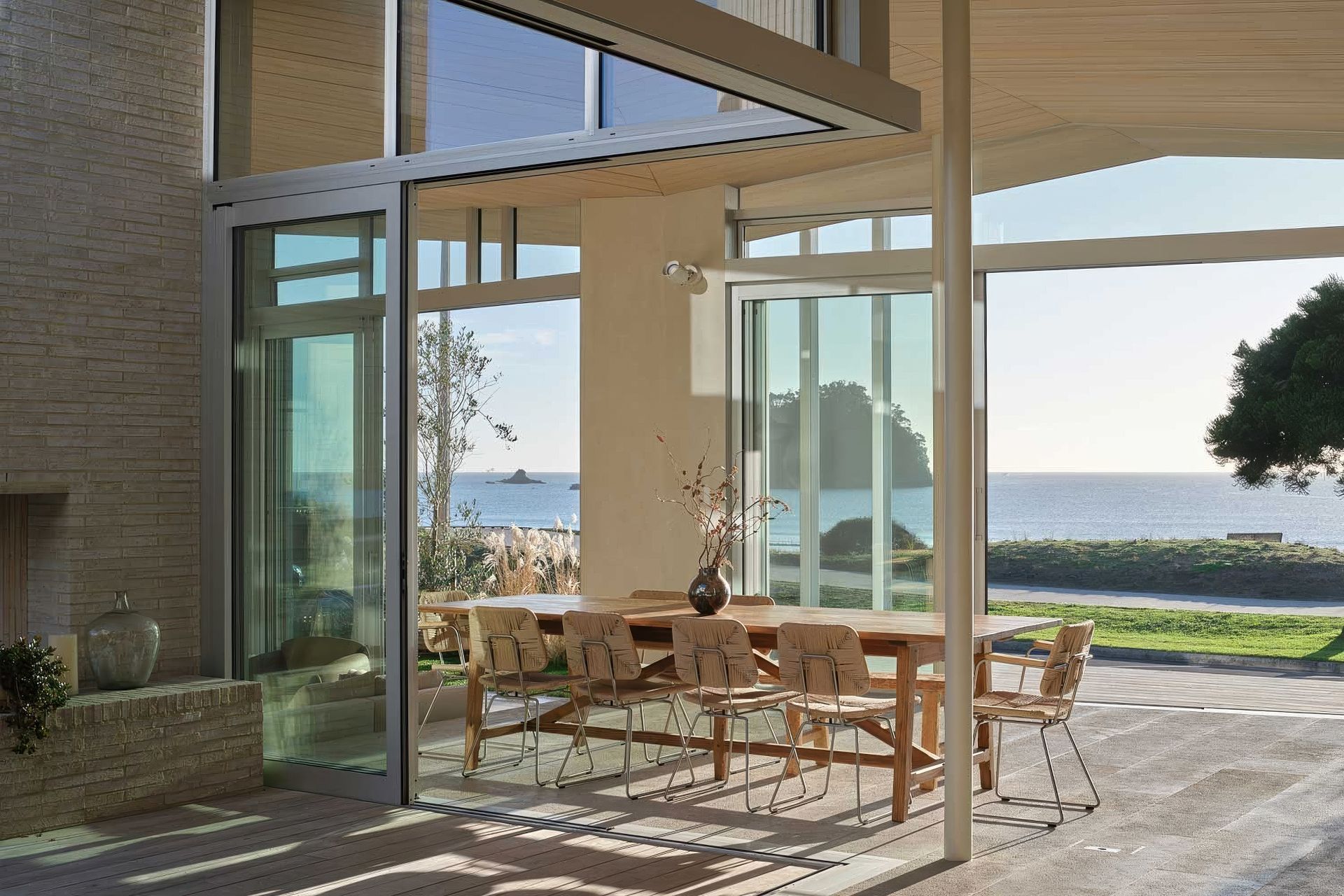
Marine Parade in Mount Maunganui, directly across from the beach, is a prized postcode yet doesn’t offer your typical seaside outlook. Here, the footpath hums with constant movement; walkers, joggers and cyclists pass within metres and beyond them, the dune opposite rises higher than the road, granting beachgoers a gentle vantage back toward the houses. The view is expansive, but so too is the exposure.
“There's a lot of movement in your view, a lot of activity,” says architect Evan Mayo. “This section is directly across the road from the beach, so privacy was a key issue for the design.”
For the long-standing clients of Architecture Bureau, this site was also an opportunity. They had been living two doors down in a narrower property with a constrained glimpse of the water. When this double-width site became available, they recognised its potential to widen their gaze.
This would be the fourth house Evan Mayo and his team have designed for them, and the relationship has evolved as the couple transitioned from full-time work into retirement.
“Working with them is quite intuitive now. There's an evolution of ideas across those homes and things that we've tried, and perhaps improved slightly, or things we’ve actually rethought because it didn't work the way they thought it might do. We've learned what it means to design when you’re still working a little bit and enjoying partial retirement.”
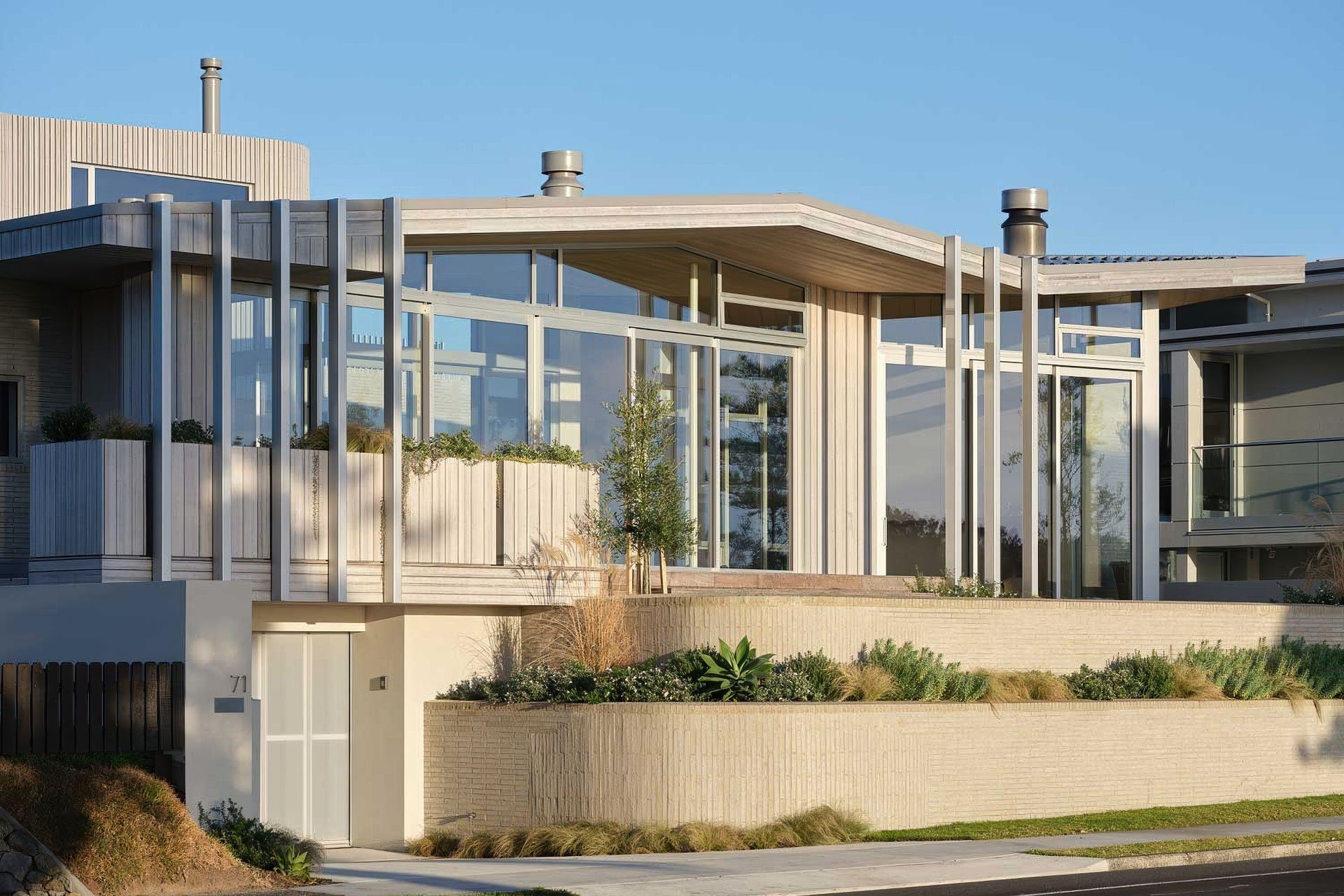
The original dwelling on the site was a 1960s house positioned awkwardly in the middle of the site, with pedestrian access from Marine Parade and vehicle access from the street behind. The strategy was to reorient the property toward Marine Parade, pulling the new house forward to claim the address and compressing the generous front yard into a landscaped threshold that both enhances value and filters the public interface.
“At its closest point, the house is three metres from the boundary,” Evan explains. “The existing house was already a storey higher than the footpath, essentially on top of a dune, so to achieve privacy and connection with the view we pulled the house forward while maintaining that dune front yard and terracing, so that when people are walking on the footpath below their view in is limited.”
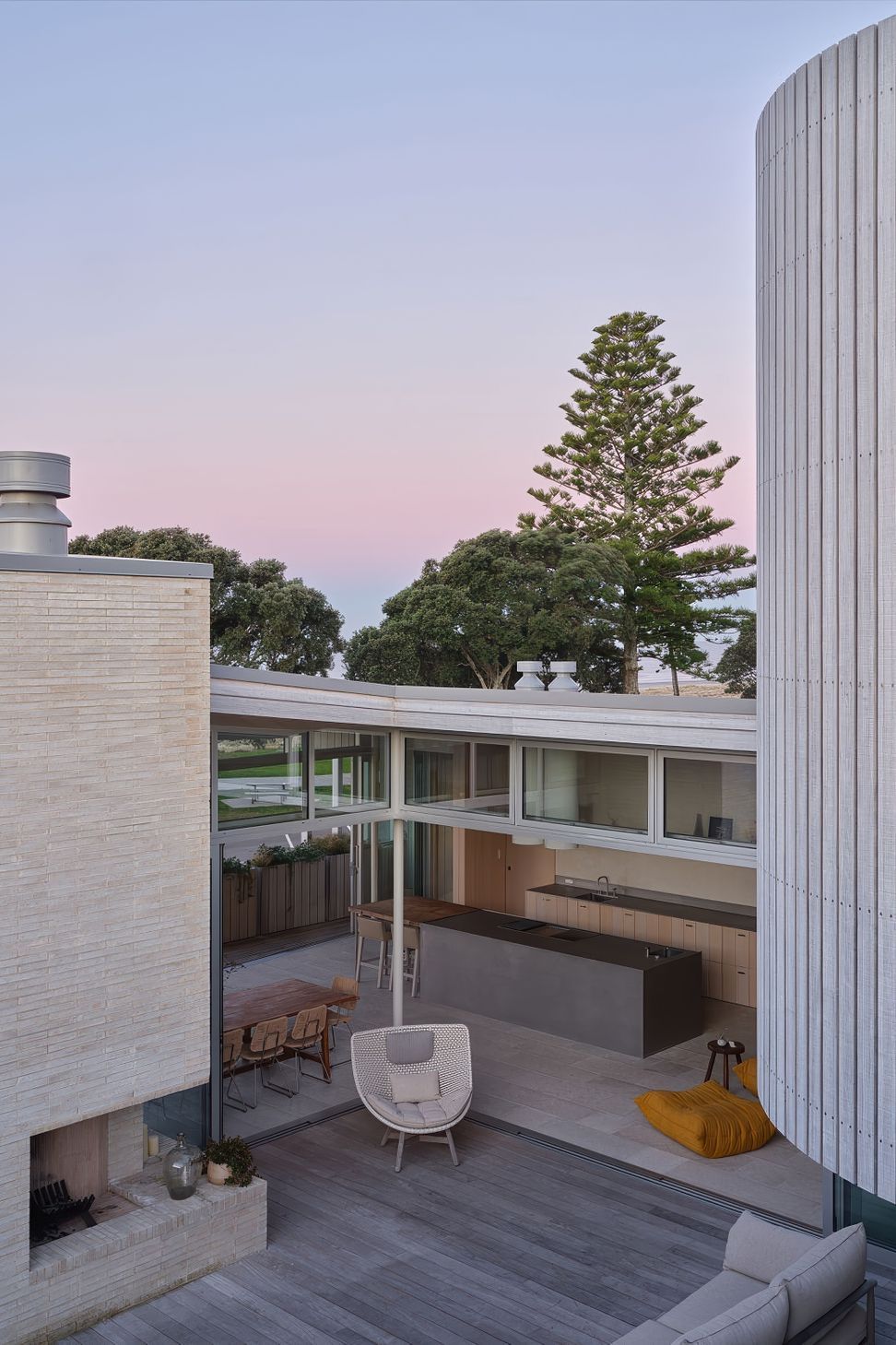
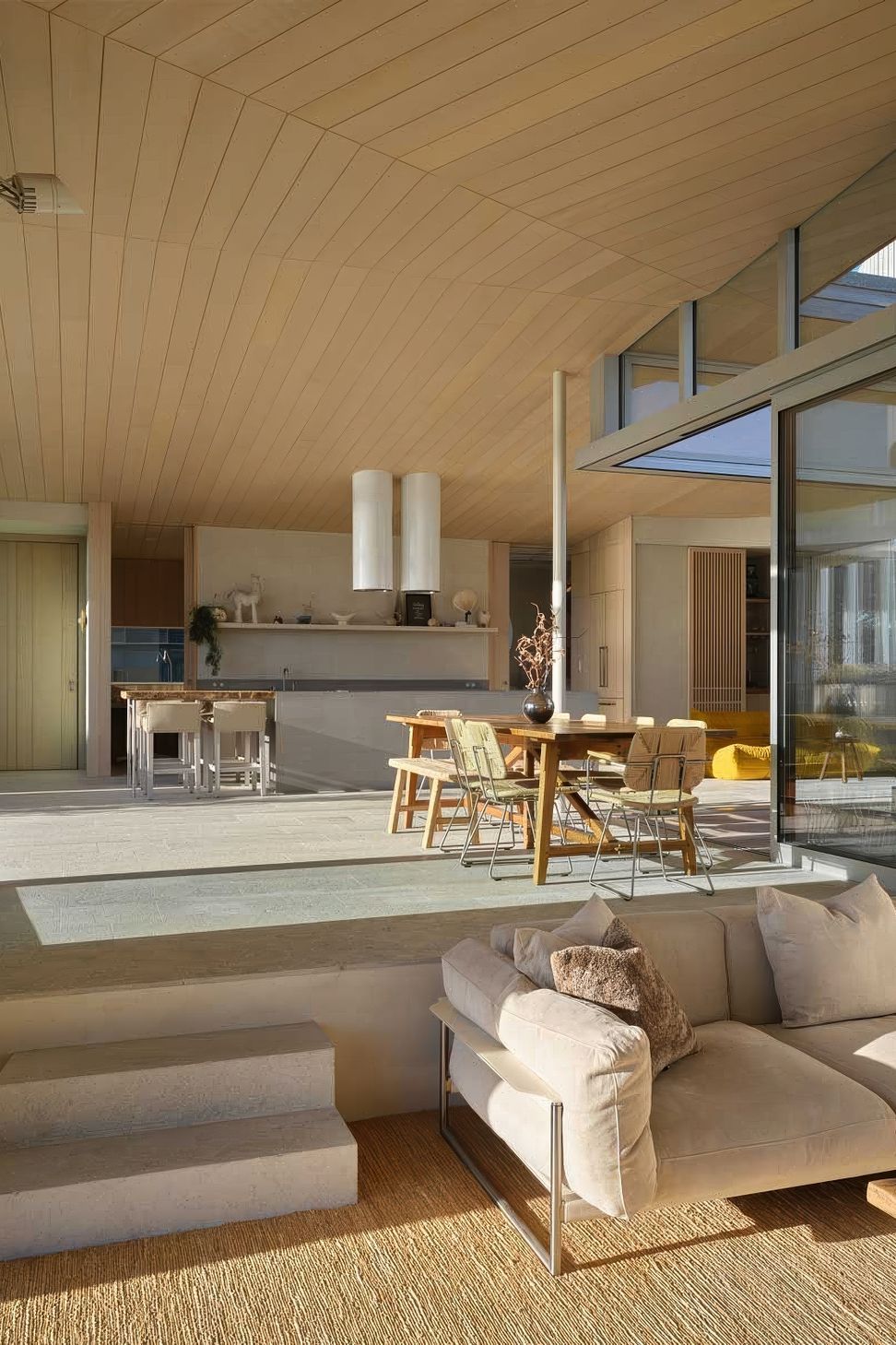
The front façade is subtly angled, never running parallel to the road to further help with privacy. Walls tilt and glazing deflects, catching light and returning it softly, like a mirror set slightly askew. A courtyard is inserted deep within the plan, creating a protected outdoor room that remains visually tethered to the sea through layers of shelter. The living room drops three steps below the main floor level so that when seated, the occupants fall beneath the sightline of passersby.
Privacy here is not a single gesture but an accumulation of deliberate moves, says Evan.
“It’s all these things that are combined that make the house private enough so you don't feel like you’re being looked at.”
The exterior materiality grounds the home in the coastal context. The brick, custom-made by Canterbury Clay Bricks, carries a sandy coating that feels as though it might have been blown from the shore. Larger weatherboards in natural hues and aluminium joinery ensure durability in the coastal climate, an important consideration for retired owners seeking low maintenance.
The house unfolds across three levels. An L-shaped basement garage tucks underground so that maneuvering vehicles is done internally. Above, the main living floor contains three bedrooms (including master), two bathrooms and a single generous living space with office, laundry and guest toilet. The couple inhabit this level entirely. A self-contained suite above, complete with lounge, kitchenette, bedroom, ensuite and its own deck and access, accommodates a future carer or visiting family, ensuring flexibility and broad appeal should the house ever change hands.
Entry is deliberately discreet. A small stair on the southeastern corner rises from the road to a modest threshold. One can glimpse the living room beyond, but not the kitchen. The sequence allows the homeowner a moment to retreat if desired.
“We wanted an entry that was fairly discreet so that people wouldn't just arrive straight into the guts of the house. My client doesn’t always want to be sociable —this gives her an opportunity to duck out the back if she wants to.”
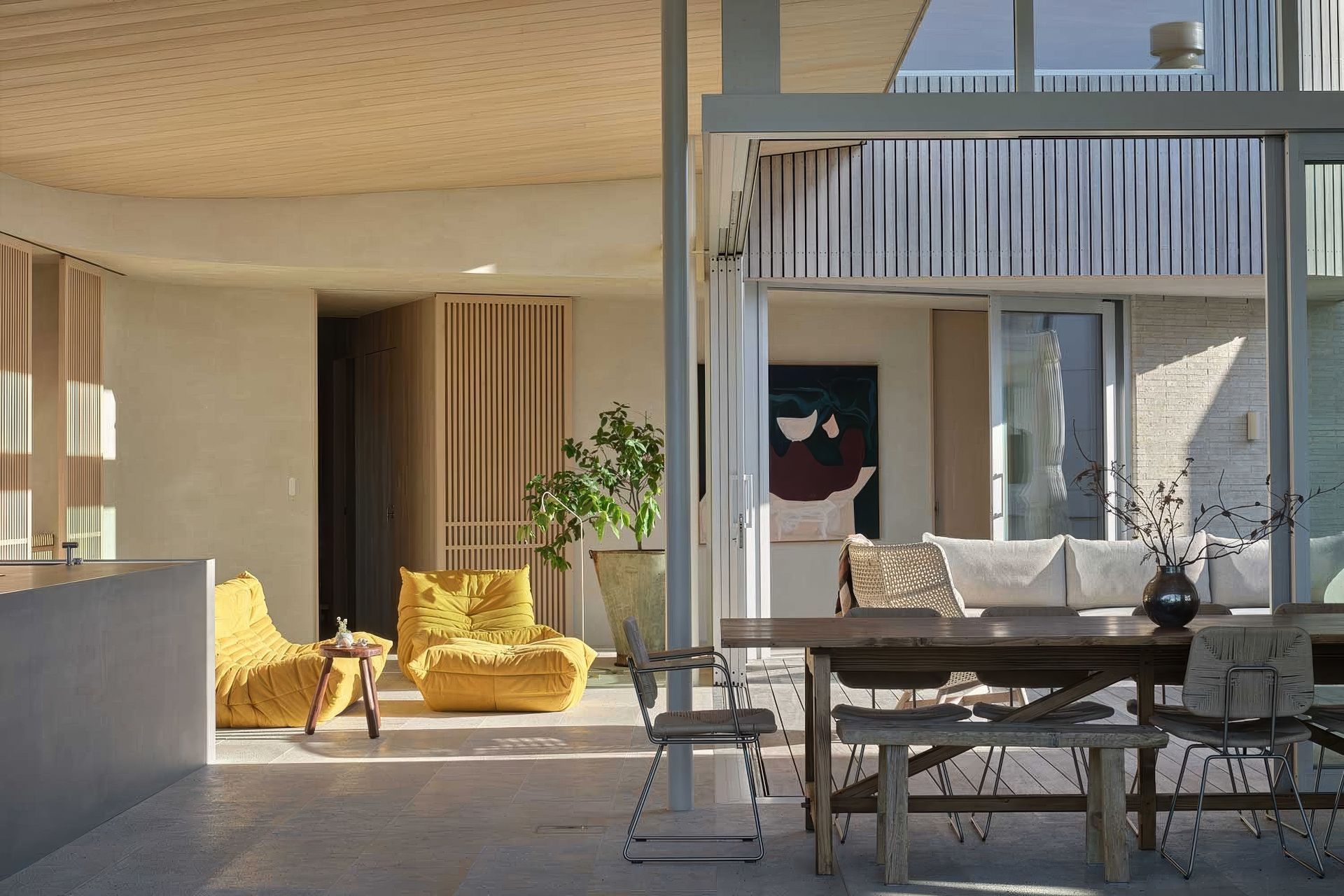
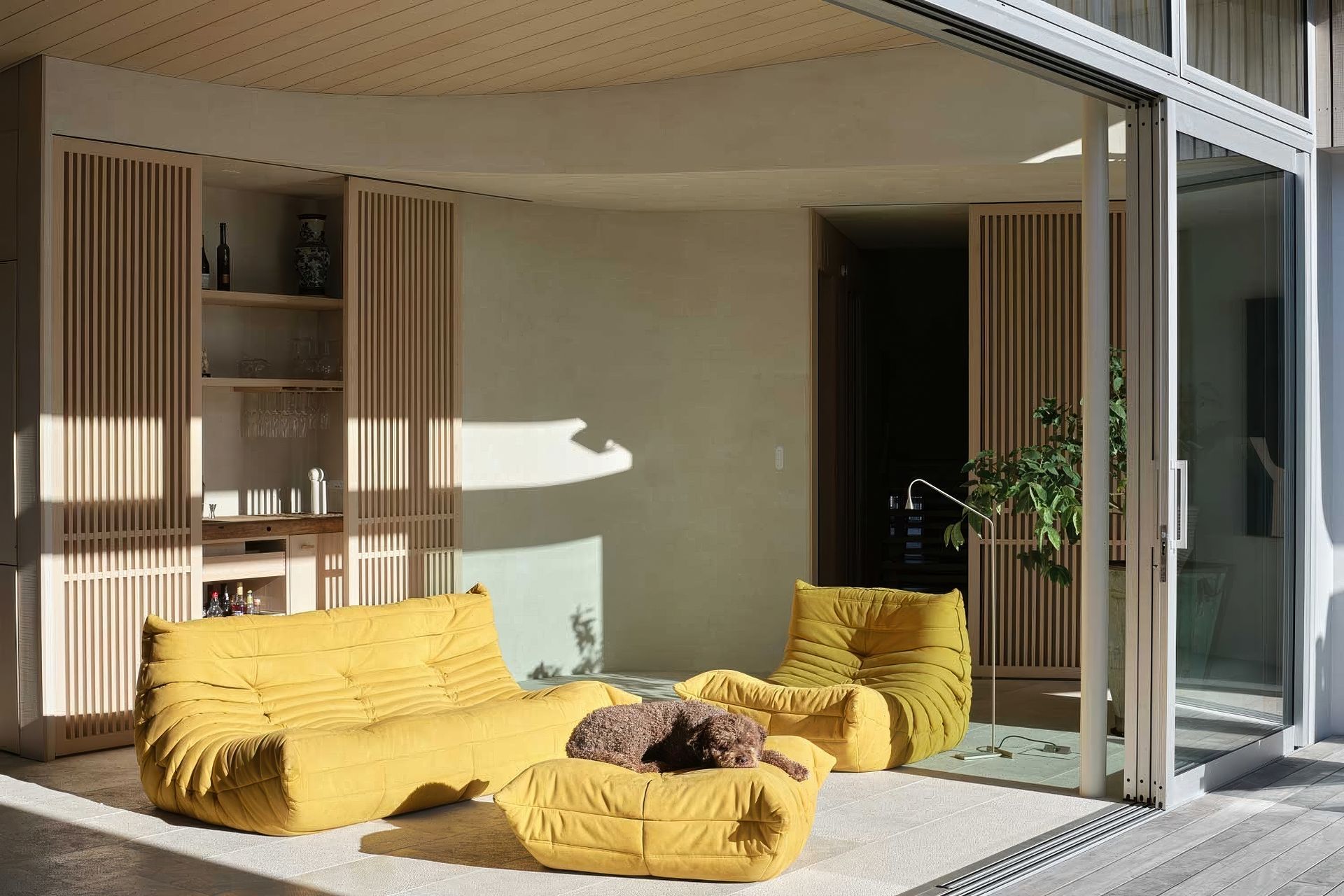
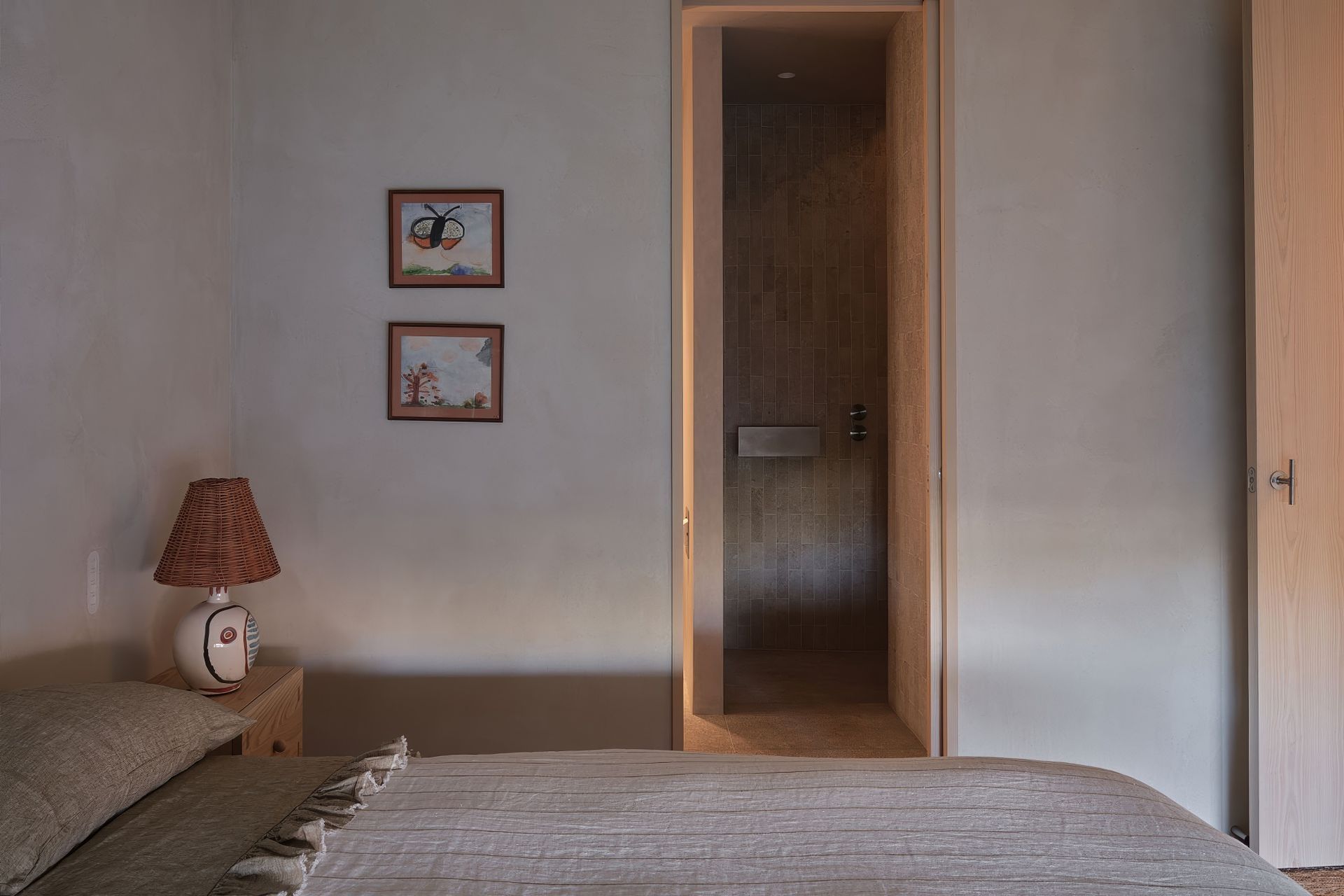
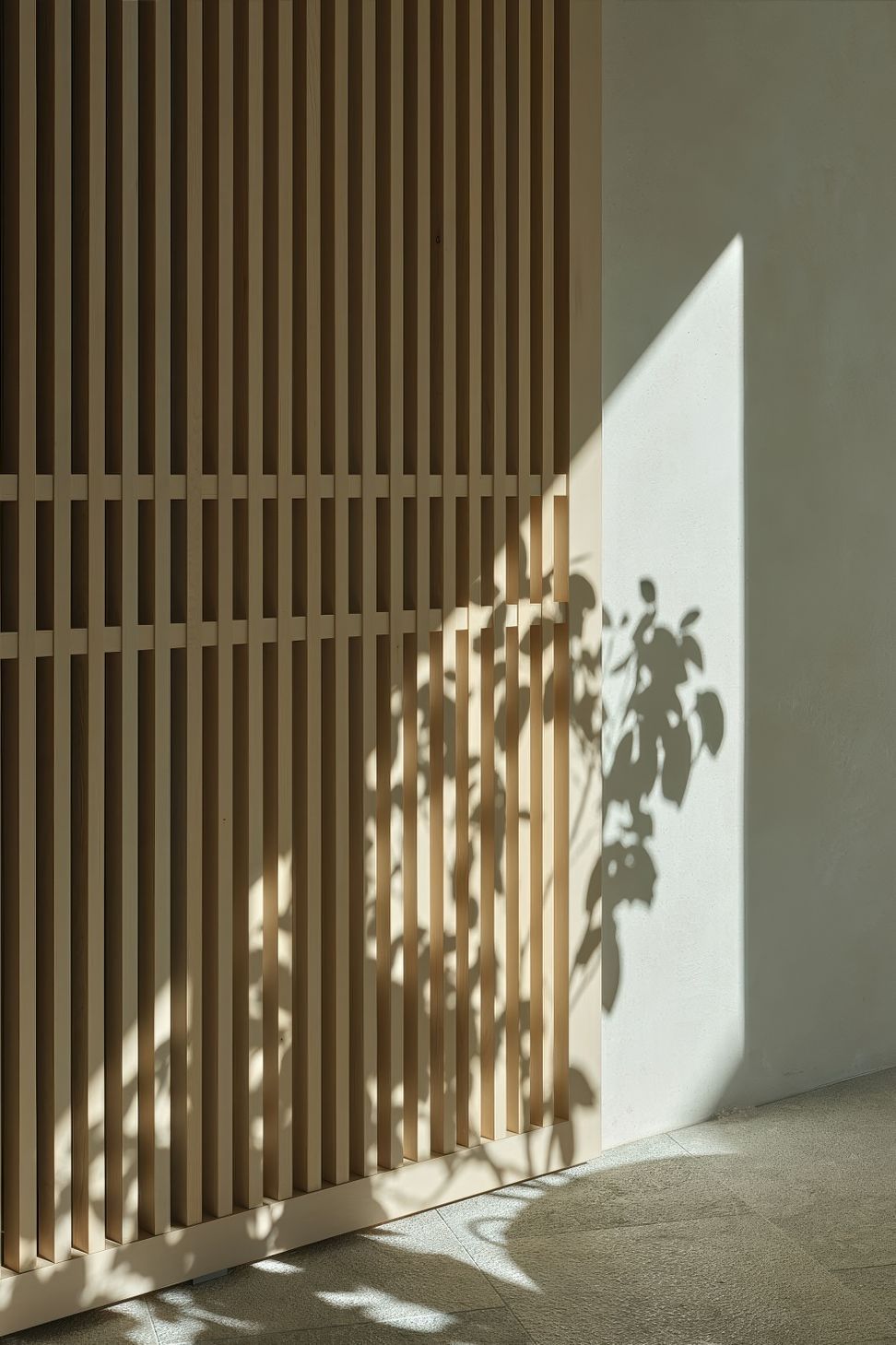
Inside, the language of dune and drift continues. Limestone floors underfoot absorb the grit of beach life without complaint. Microcement clay linings ripple across walls, textured and alive with movement. The plan itself bends and curves, eschewing rigid geometry for something more windblown.
“It’s a bit like a meandering sand dune,” shares Evan. “Sand dunes go up and down, and in and out sideways as sand is blown by the wind. This floor plan is bendy and curvy, and the walls and roof reflect the undulating sand dune that has been shaped by wind.”
In a suburb often characterised by stacked boxes competing for a sliver of ocean views, this home takes a different stance. Rather than piling volume up like a wedding cake to get more view of the ocean, the height is drawn back, opening space for the courtyard and softening the presence to the street. It’s this site-specific response that is Evan’s favourite aspect of the project.
“It achieves all the things those other large houses do in terms of number of bedrooms and outdoor spaces and amazing views and nice outlook, but it’s done in a way that's not imposing and is quite unique.”
Words: Joanna Seton
- Building style
- Contemporary







Project team

Evan Mayo
Like this Project?
Hire Architecture Bureau
The products behind the project
Five products specified into this build from four suppliers, verified ArchiPro members. Tap through to specifications, suppliers and lead times.


Professionals used in
this project
The practices and trades credited on this project.





More projects from
Architecture Bureau
Other work by Architecture Bureau, across every category they build in.


More in
Beach House
Everything else in Beach House, from every practice on ArchiPro.


Next Project
Keep scrolling