
Project team
- Bryant Alsop Architects
- Jack Lovel
Product Suppliers
Designed as a “reception centre” rather than a retreat, this Phillip Island home brings an extended family under one roof.
For decades, a pocket of waterfront land on Phillip Island held a collection of unassuming structures gathered near the shoreline. It was not picturesque in the conventional sense (it’s more of a fishing spot than a sunbathing one) but it was deeply loved. The owners, now in their seventies, had spent years coming here with friends, children and grandchildren, casting fishing lines, gathering for meals, and sharing time together across generations. When they decided it was time to rebuild, their priorities were clear: more than a retreat, the new house needed to be a place that could hold everyone at once.
“At one point early on, the client said to me, ‘Think about it as more of a reception centre, and less of a house’,” says architect Sarah Bryant of Bryant Alsop, who worked alongside project architect Stephanie Marshall.
That single sentence reoriented the entire project. The house needed to accommodate large family gatherings with ease, while still working comfortably when only one or two people were in residence. Longevity was critical as well as accessibility as the owners aged; careful noise management between children and adults was crucial; as well as generous spaces for cooking, eating and processing the day’s catch. The outlook mattered as much as the plan, and the house needed to maintain a direct visual connection to the nearby boat ramp and coastline for the client, an avid fisherman.
The site itself presented significant constraints. Large, protected gum trees occupied the nature strip adjacent, and deep root zones from the trees extended into the property, limiting where and how foundations could be constructed.
“These trees are much loved in the community and protected,” shares Sarah. “So we had to do a structural slab that cantilevered across the root zone.”
At the same time, the site’s proximity to sea level required careful flood mitigation and future proofing against rising tides. This became an essential layer of the project’s environmental response.
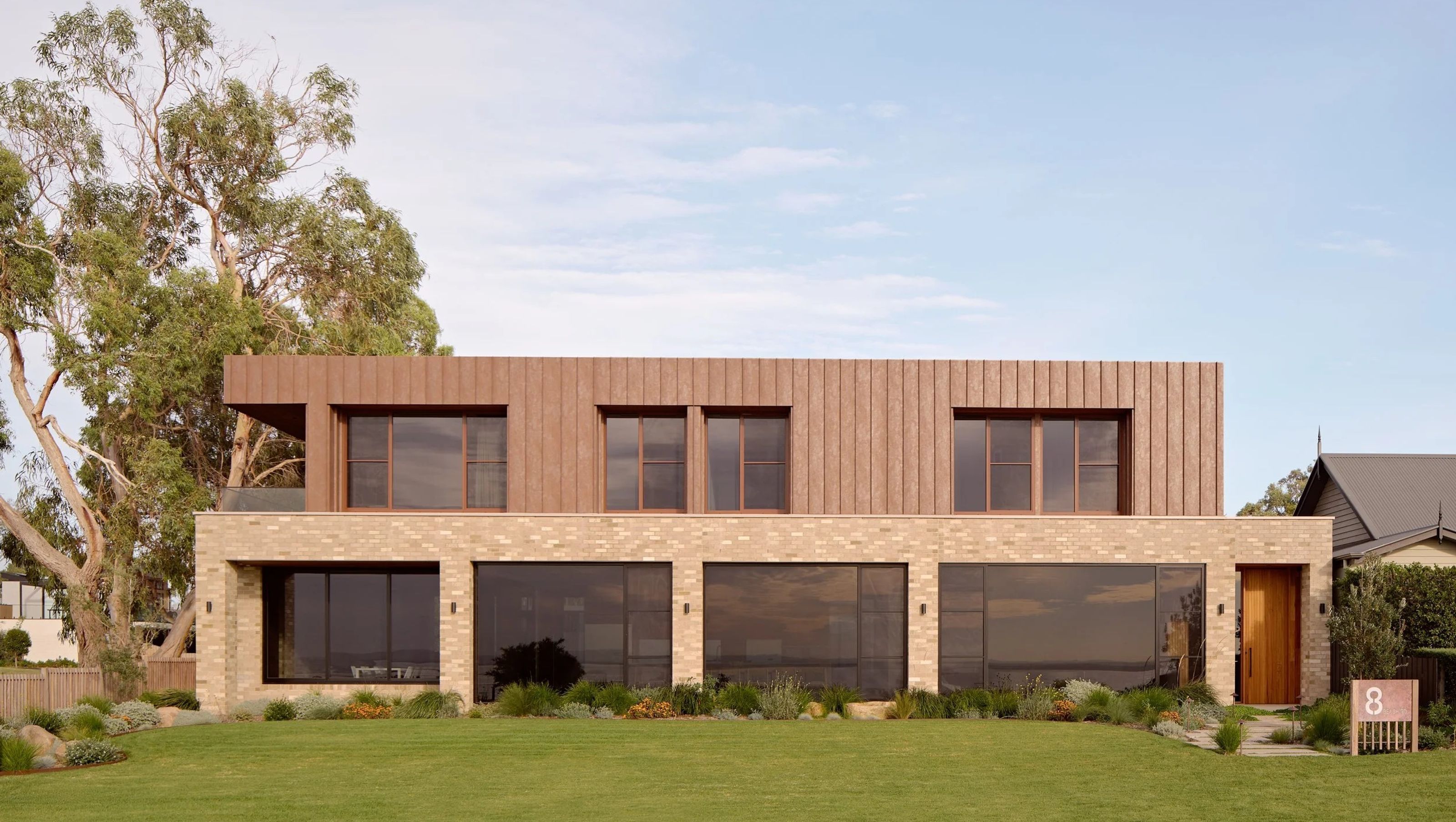
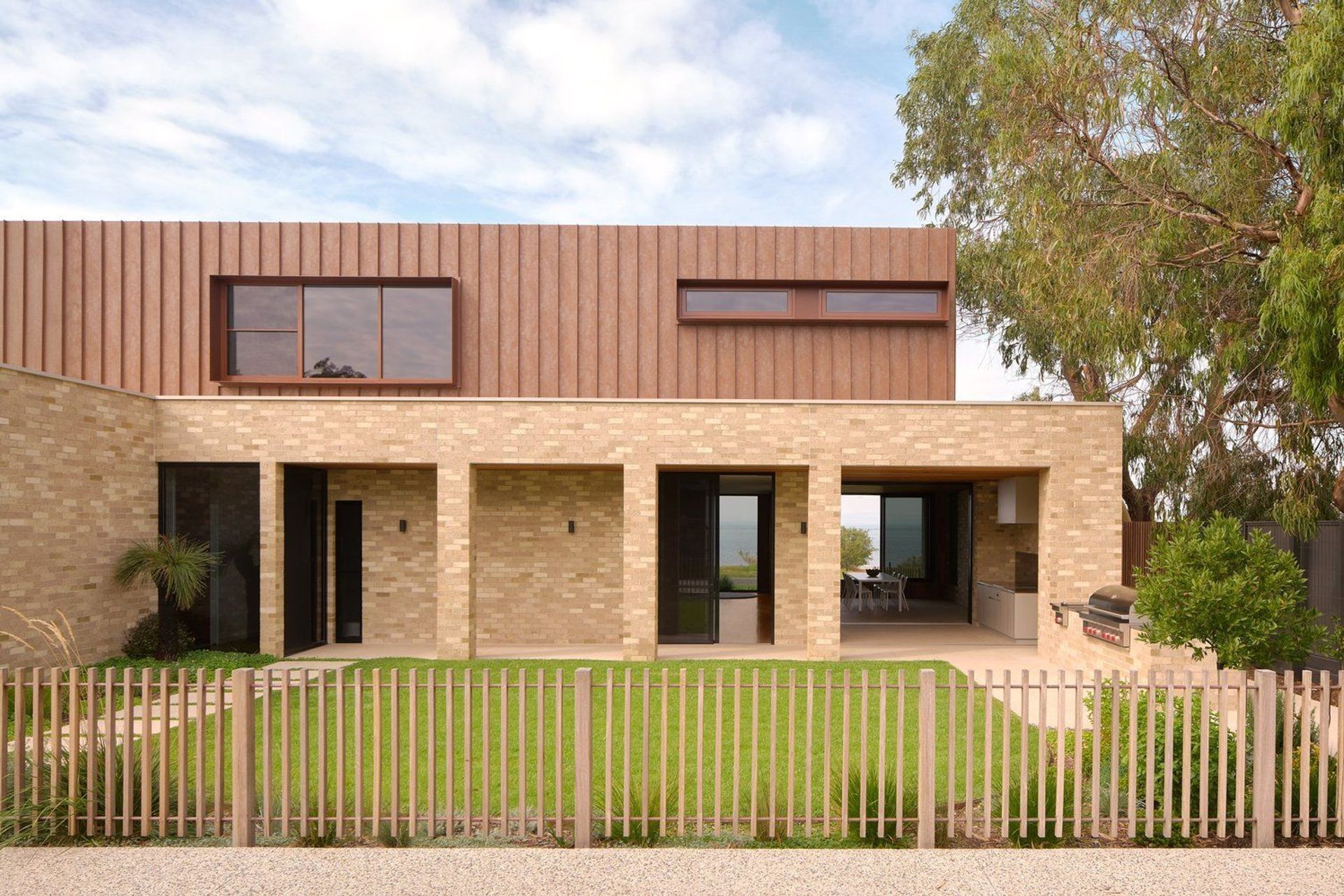
Externally, the house adopts a fortress-like, almost industrial form, in response to the exposure to coastal weather.
“The site cops a lot of weather, being directly on the coast so we needed very robust materials,” says Sarah. “The Archclad cladding imitates corten steel, creating a shipping container-like feel on the first floor, and then we’ve got brick on the ground floor.”
There is no ‘grand entrance’ moment. The front door is deliberately understated and pushed to the side, a decision driven by the clients.
“For a lot of people, the entrance or the front door is a centrepiece, but the clients wanted it pushed to the side,” Sarah says.
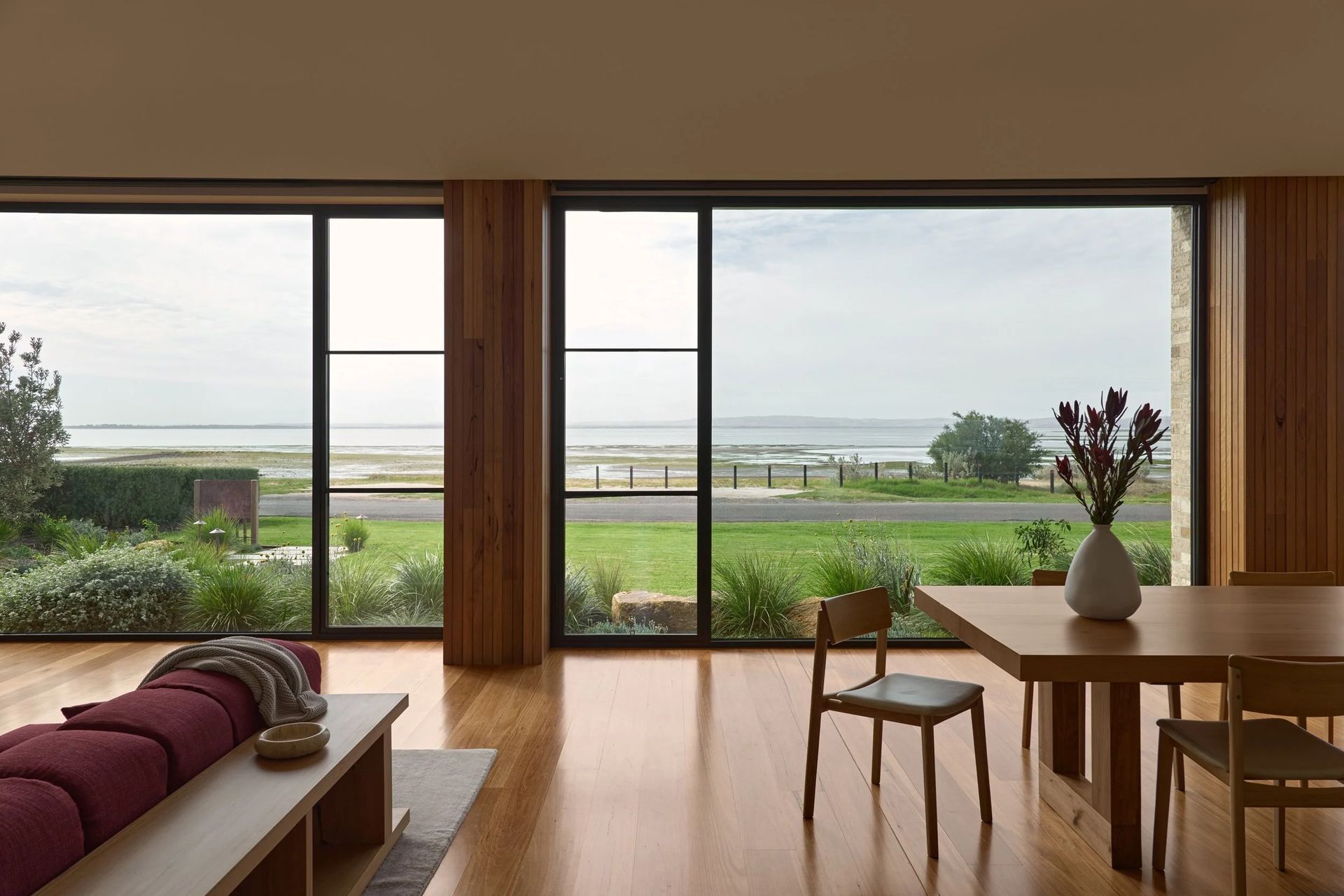
Entry occurs along the northern edge of the site, unfolding quickly into the heart of the house. A vast kitchen, dining, and living space is oriented east to capture morning light and uninterrupted sea views.
The layout prioritises connection above all else. Large sliding openings blur the boundary between inside and out, linking the main living space to a southern alfresco area that reprises the position of an outdoor space from the original house. While initially challenged, the architects ultimately honoured this familiarity.
From the main living zone, the house transitions into more intimate spaces. A secondary living area is carpeted, quieter, and slightly removed. It provides a retreat for grandchildren while remaining visually and spatially connected. Upstairs, the programme becomes more cellular. The main bedroom suite commands views to the boat ramp, alongside five guest suites, each with its own bathroom. Despite its size, the house avoids feeling overwhelming through careful zoning and material consistency.
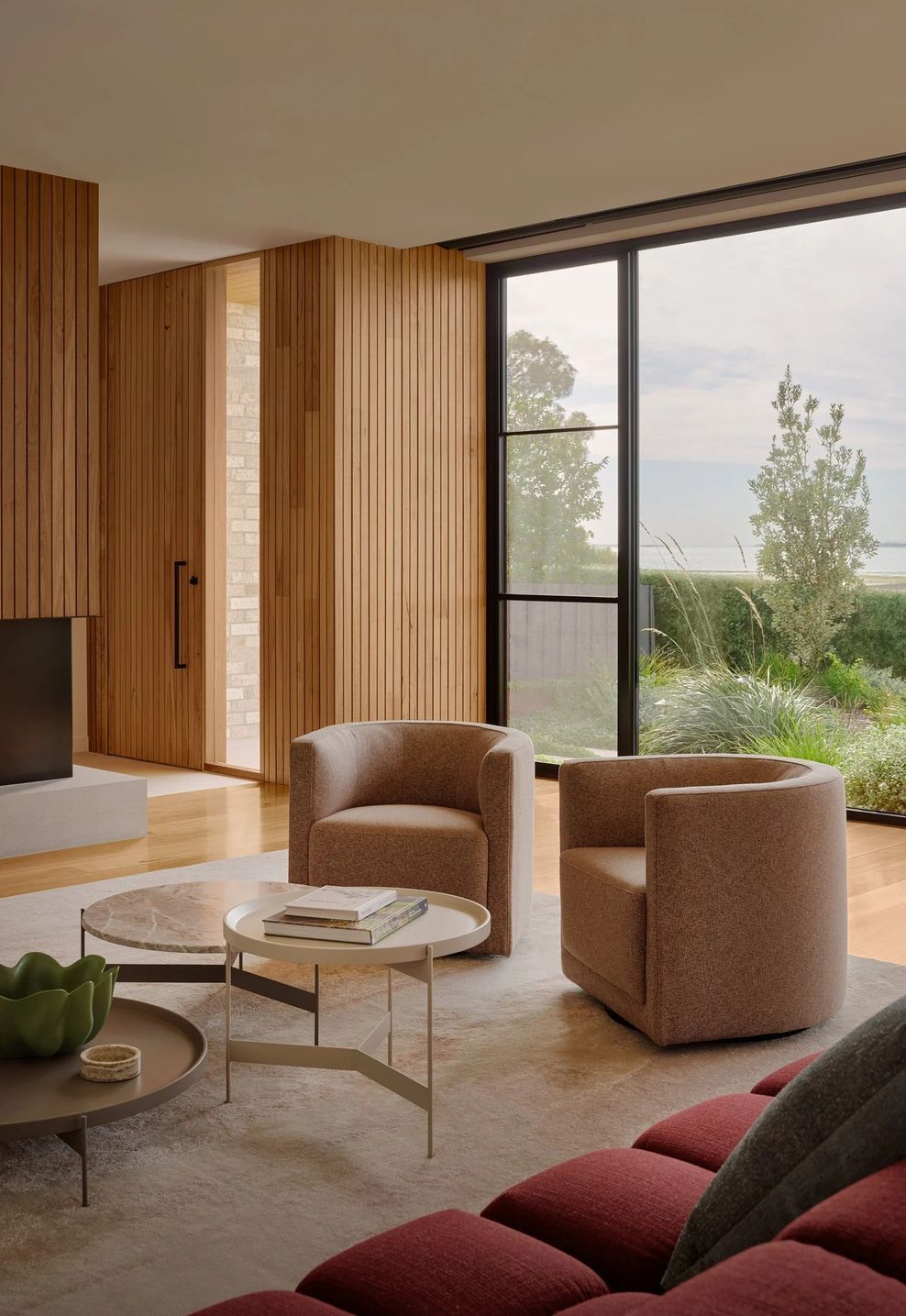
Internally, the palette is restrained, warm, and intentionally tough.
“The client wanted it to be very pared back,” shares Sarah. “Robustness, cleanliness, longevity, simplicity of materials, all those things and quality were very important.”
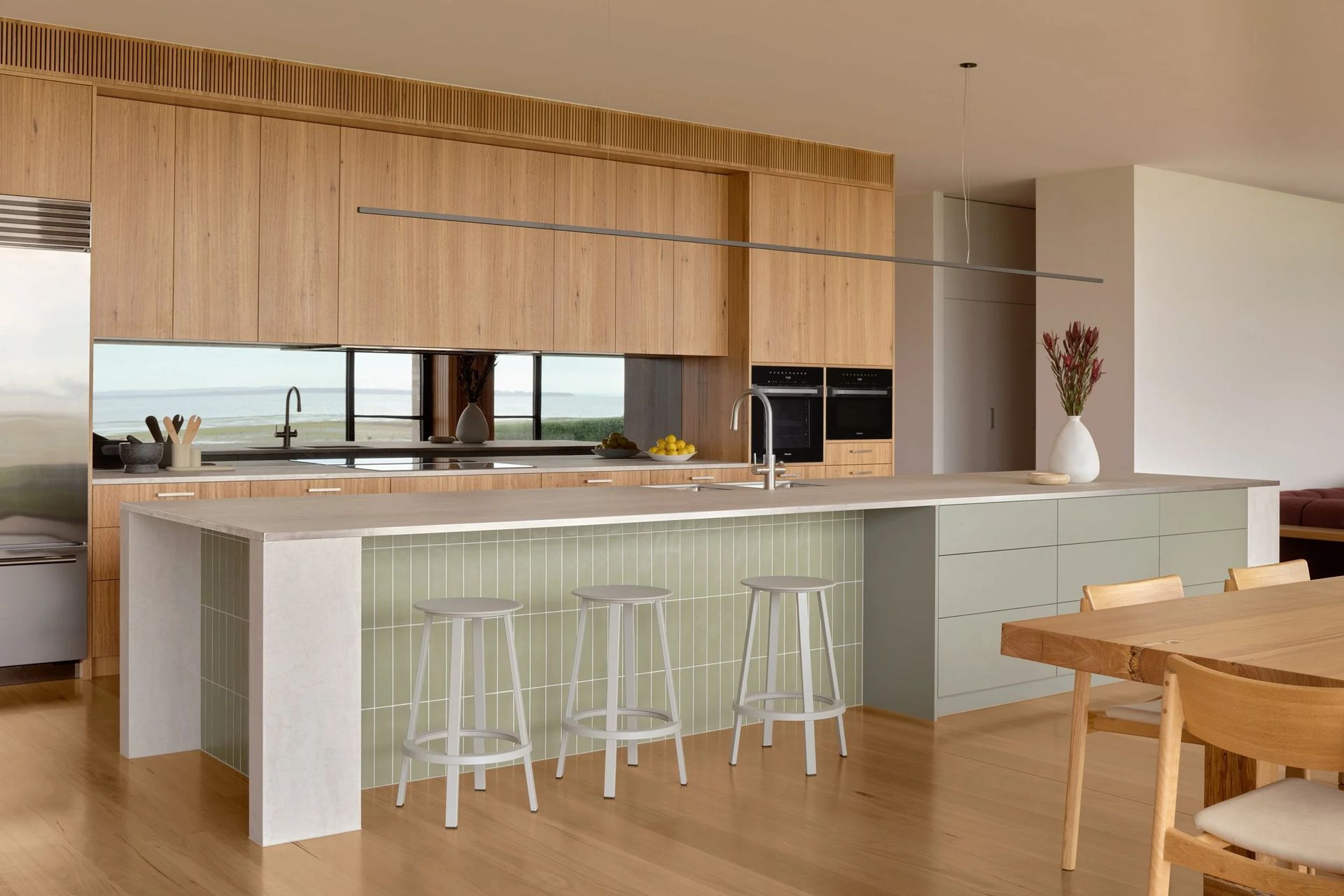
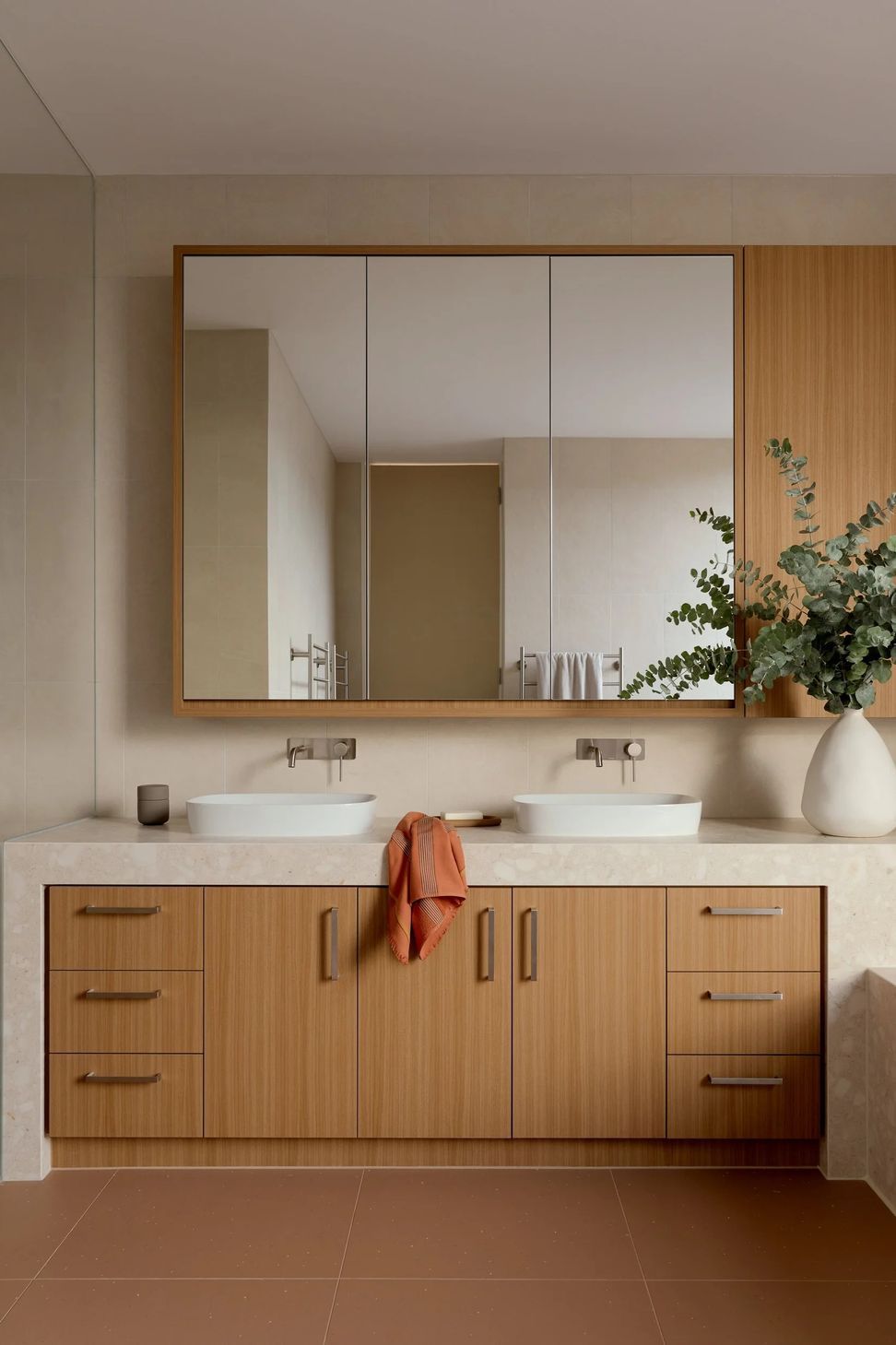
A solid blackbutt kitchen anchors the main space, paired with timber ceilings that temper the scale and introduce warmth. Porcelain surfaces are used throughout. Benchtops, splashbacks, and tiles were chosen for durability over delicacy. Material continuity across bathrooms and bedrooms helps unify the house and ground its generous proportions.
Performance is also embedded throughout the design. An insulated concrete slab, high-performance glazing, careful orientation, and generous insulation underpin the home’s thermal efficiency. Solar power and a substantial battery system allow the house to operate independently during frequent island power outages. This is a practical necessity when freezers full of bait and fish are part of daily life.
Now complete, the holiday home is doing exactly what it was designed to do.
“The house is really a place for the family to come together, which was the core of the brief,” Sarah says. “It works just as well for one person as it does when 30 people are there.”
For Sarah, the project’s success lies in its material clarity and restraint. “The robustness of the materials, combined with a restrained, refined outcome, feels right for the place.”
Words: Joanna Seton
Designed as a weekend sanctuary for a three-generation extended family, this two-storey contemporary home by Bryant Alsop Architects is set on a spectacular beachside site and responds sensitively to its natural and climatic context. The house balances robust, low-maintenance materials with refined architectural detailing, creating a retreat that is both practical and deeply connected to its surroundings.
With a strong emphasis on family and entertaining, the home accommodates large groups with ease, offering a spacious kitchen, living, and dining area that opens directly onto the water’s edge through expansive glazing. A main bedroom and five guest suites were all designed to maximise the waterfront views, ensuring every occupant enjoys a direct connection to the coastal landscape.
Environmental sustainability underpins the design, with passive solar orientation, natural ventilation, and high-performance insulation delivering long-term comfort and energy efficiency. A substantial PV solar array with battery storage ensures resilience during power outages, a reasonably regular occurrence in the area.
Outdoor living was a key consideration, with a flexible alfresco zone that can be opened or enclosed in response to shifting winds and silt blown in from the nearby bay. The plan also aligns carefully with the prevailing coastal weather patterns and the family's interest in boating, offering visual access to the nearby boat ramp.
Existing mature gum trees on the adjacent road reserve were retained and designed around, softening the building’s profile and anchoring it in the natural Australian landscape. The materials palette—comprising timber, natural stone, and muted finishes—blends seamlessly with the surrounding environment, reinforcing the home’s sense of place.
This home represents a thoughtful synthesis of family needs, environmental sensitivity, and architectural clarity, delivering a timeless retreat for generations to come
- Building style
- Contemporary




Like this Project?
Hire Bryant Alsop Architects
Professional Reviews
The products behind the project
Five products specified into this build from four suppliers, verified ArchiPro members. Tap through to specifications, suppliers and lead times.


Professionals used in
this project
The practices and trades credited on this project.





More projects from
Bryant Alsop Architects
Other work by Bryant Alsop Architects, across every category they build in.


More in
Beach House
Everything else in Beach House, from every practice on ArchiPro.


Next Project
Keep scrolling