

BJELIN Woodura Hardened Timber Delivers Low Carbon Luxury
Reserve House in the Bay of Plenty showcases how BJELIN Woodura Hardened Timber unites the timeless beauty of wood with responsible use of natural resources, delivering verified low carbon performance.
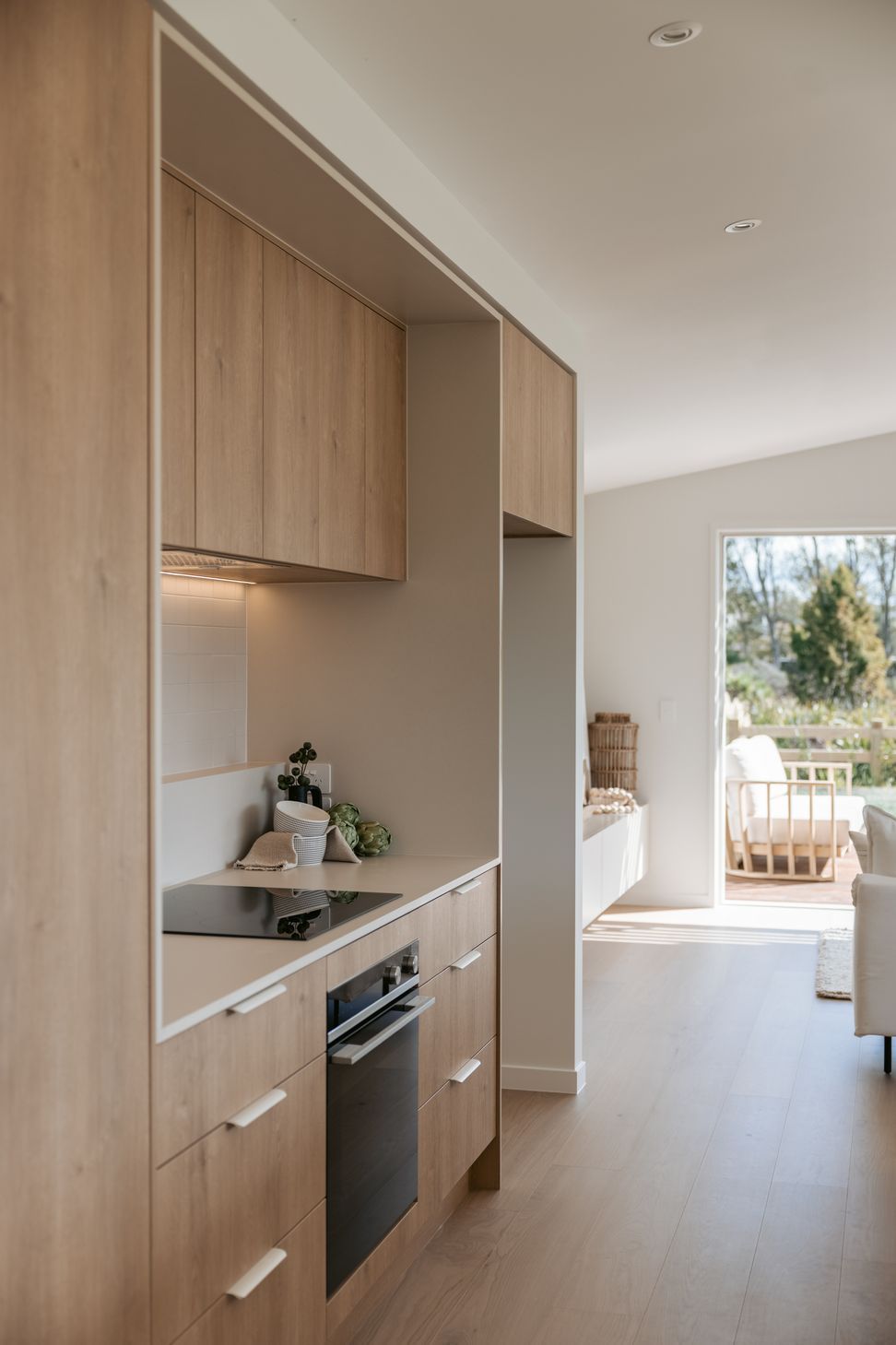
Built by Thorne Group Homes and Jon McAlpine Architecture, Reserve House is a recently constructed display home located in the Bay of Plenty. Designed to harmonise with the surrounding landscape, interior designer Katherine McDonald made a deliberate choice to feature natural, sustainable materials. BJELIN Woodura European Hardened Timber XL in Earth Grey was selected for the floors for its durability, sustainable performance, and timeless natural beauty.
Manufactured in Europe using timber from sustainably-managed Croatian forests, BJELIN’s patented Woodura technology achieves up to ten times more flooring yield from the same volume of wood compared with conventional engineered timber, and ensures every part of the tree — including offcuts and shavings — is put to use. Thanks to this process, BJELIN Woodura demonstrates one of the lowest embodied carbon profiles among timber flooring products available in New Zealand. The Environmental Product Declaration (EPD) confirms the following values:
- Gross cradle-to-gate emissions (A1–A3): 8.40 kg CO₂-eq/m²
- Biogenic carbon stored in the wood: -14.30 kg CO₂-eq/m²
- Net cradle-to-gate emissions: -5.90 kg CO₂-eq/m²
While there are unavoidable emissions associated with harvesting and processing, the carbon absorbed during tree growth more than offsets the emissions generated during manufacturing. In practical terms, each square metre of BJELIN XL flooring stores more carbon than it emits at the point of manufacture — effectively acting as a small carbon sink. For designers, this presents a compelling case: a commercial-grade timber floor with a verified net negative cradle-to-gate carbon balance, supported by independent certifications including:
- Forest Stewardship Council® (FSC®)
- GREENGUARD Gold
- Nordic Swan Ecolabel
- ISO 9001 Quality Management
The visual impact of a larger, cleaner board was a key factor in selecting BJELIN Woodura XL for Reserve House. BJELIN’s technology ensures this look remains accessible despite increasing scarcity of high-grade timber due to climate change. Shorter growing seasons and greater climatic stresses are creating more variability in timber grading for European oak and other hardwoods, meaning wide, defect-free boards are harder to source. The Woodura process overcomes this by enabling full use of the log, delivering higher yields and reducing waste of scarce high-grade hardwood.
BJELIN Woodura was also selected for Reserve House for its durability. The Woodura manufacturing process compresses a thin layer of oak onto a high-density fibreboard core, maximising strength and stability. Rated Class 33 for heavy commercial use and achieving IC3 impact resistance, the durability of the resulting product reduces maintenance and replacement cycles — lowering whole-of-life embodied carbon.
Reserve House demonstrates how architects and designers can achieve a refined timber aesthetic while contributing to measurable low carbon outcomes for New Zealand’s built environment. More than simply a beautiful wood floor, BJELIN Woodura minimises embodied carbon, maximises the use of natural resources, and offers outstanding resilience and performance.
- Completed
- 2025
- Price range
- $1m - $2m
- Building style
- Contemporary
- Client
- Thorne Group Homes



Like this Project?
Hire Belgotex
Professionals used in
this project
The practices and trades credited on this project.

More projects from
Belgotex
Other work by Belgotex, across every category they build in.


More in
Single House
Everything else in Single House, from every practice on ArchiPro.


Next Project
Keep scrolling