Reworking the detail in a Sydney terrace
Purchased by the owners more than a decade before construction began, the Paddington residence already had strong architectural foundations beneath its tired finishes and disconnected planning. For Porebski Architects’ Victoria D'Alisa, rather than reinvention, the project was about carefully reworking what was already there.
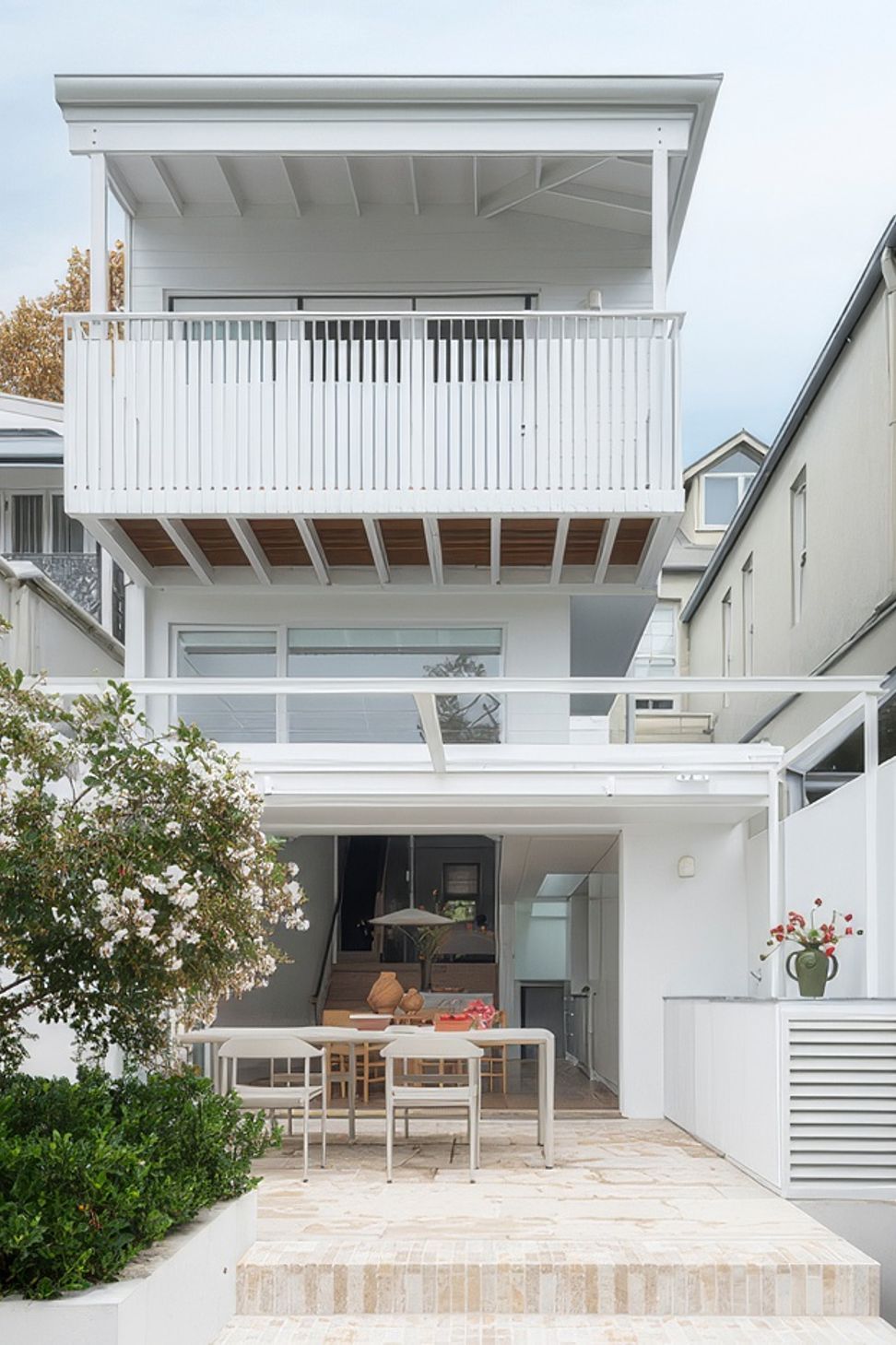
“The floor plate was quite similar in the end,” D’Alisa explains. “All we did was push out the first-floor veranda from the main bedroom, but what it really needed was a complete overhaul in terms of the entry space and the finishes throughout.”
The house carried an unexpected history. The house was previously owned by a celebrity cook and the kitchen once served as her test kitchen. Remnants of that former life remained embedded in its spatial character.
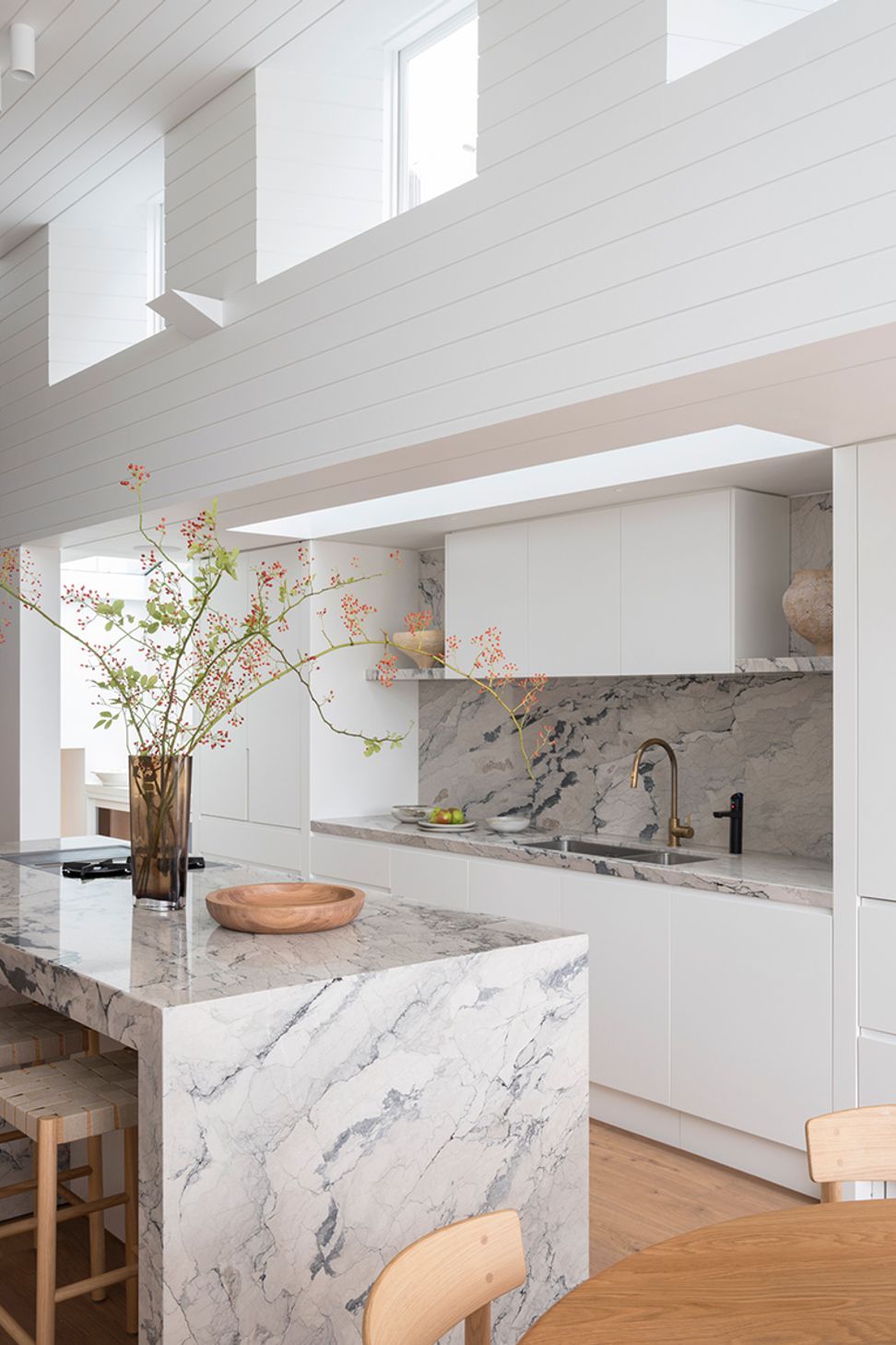
“It was unusual in that it already had those two large solid open volumes in the kitchen space, which council probably wouldn’t allow these days,” says D’Alisa.
While the generous kitchen volume offered opportunity, much of the home felt visually overwhelming. Shiplap cladding wrapped almost every surface, creating what D’Alisa describes as a relentlessly beachy atmosphere. Rather than stripping the character away entirely, the architects refined and reduced it, introducing a more restrained material palette that brought clarity and softness to the interiors.
“We removed the shiplap and replaced it with a smaller tongue-and-groove cladding, which helped give it a nicer scale,” she says.
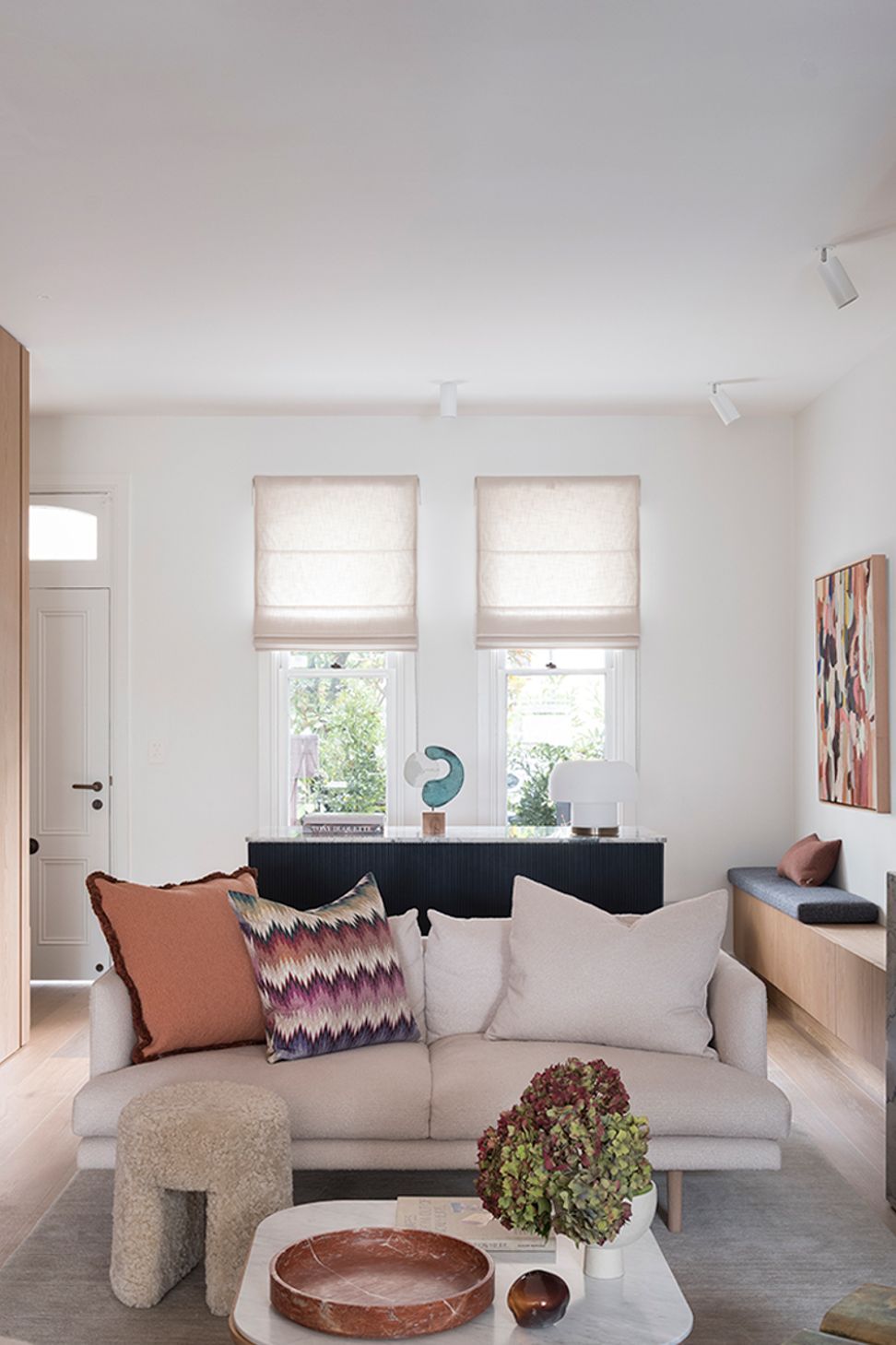
The redesign focused heavily on circulation and spatial flow, particularly at the entry where the original planning lacked functionality. The architects reimagined the threshold as a layered sequence of spaces that gradually draws occupants deeper into the home.
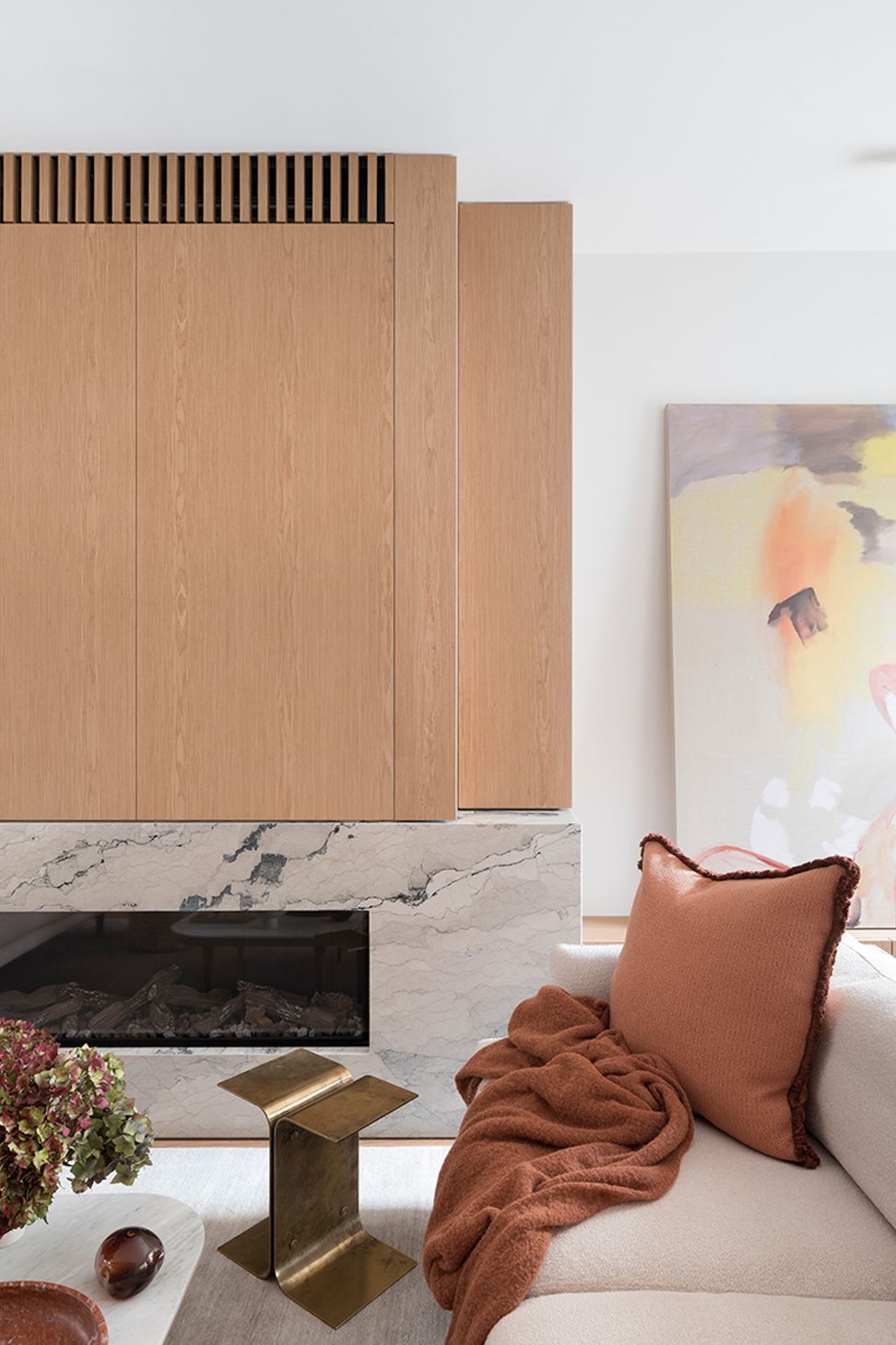
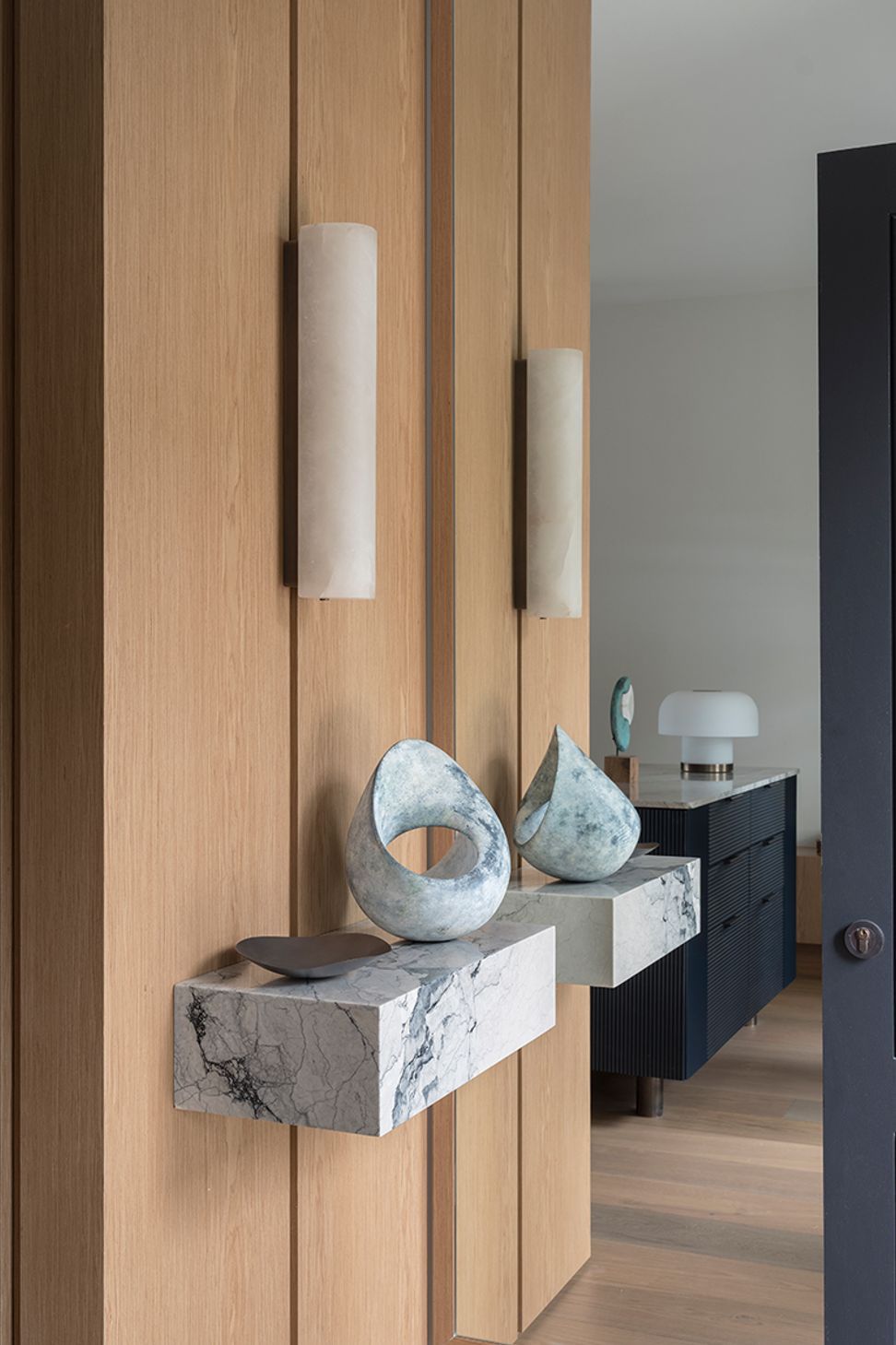
“When you walk into the entry, the way it had been planned wasn’t very useable so we created a set-down area with a low console,” shares D’Alisa. “Then we created storage under the stairs and centred the fireplace two thirds of the way in, to ground that area.”
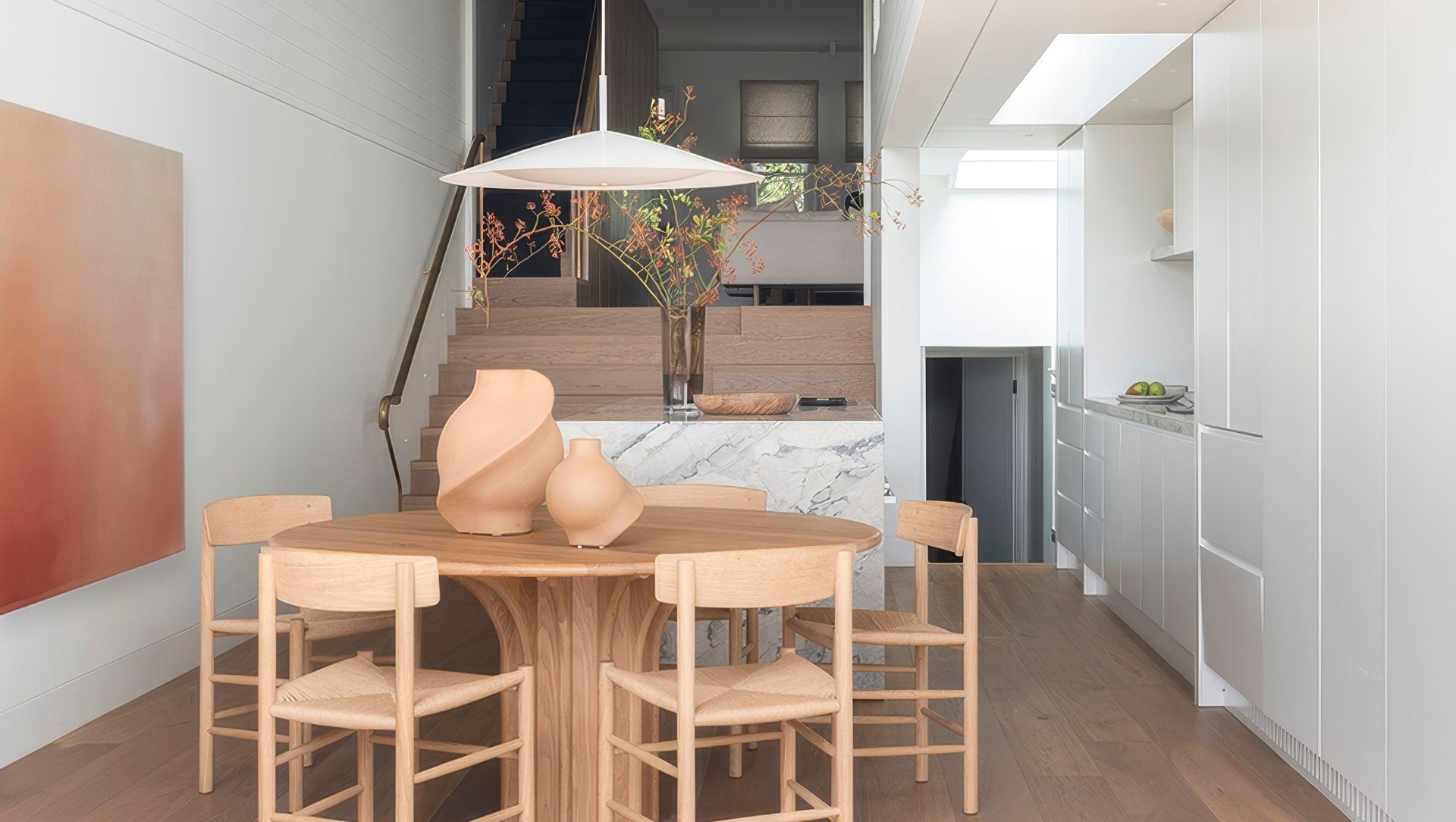
That sense of grounding continues throughout the house. A dramatic stair descends from the entry level towards the lower ground floor kitchen and dining spaces, becoming both circulation path and sculptural intervention. Rather than resisting the prominence of the staircase, the architects embraced it.
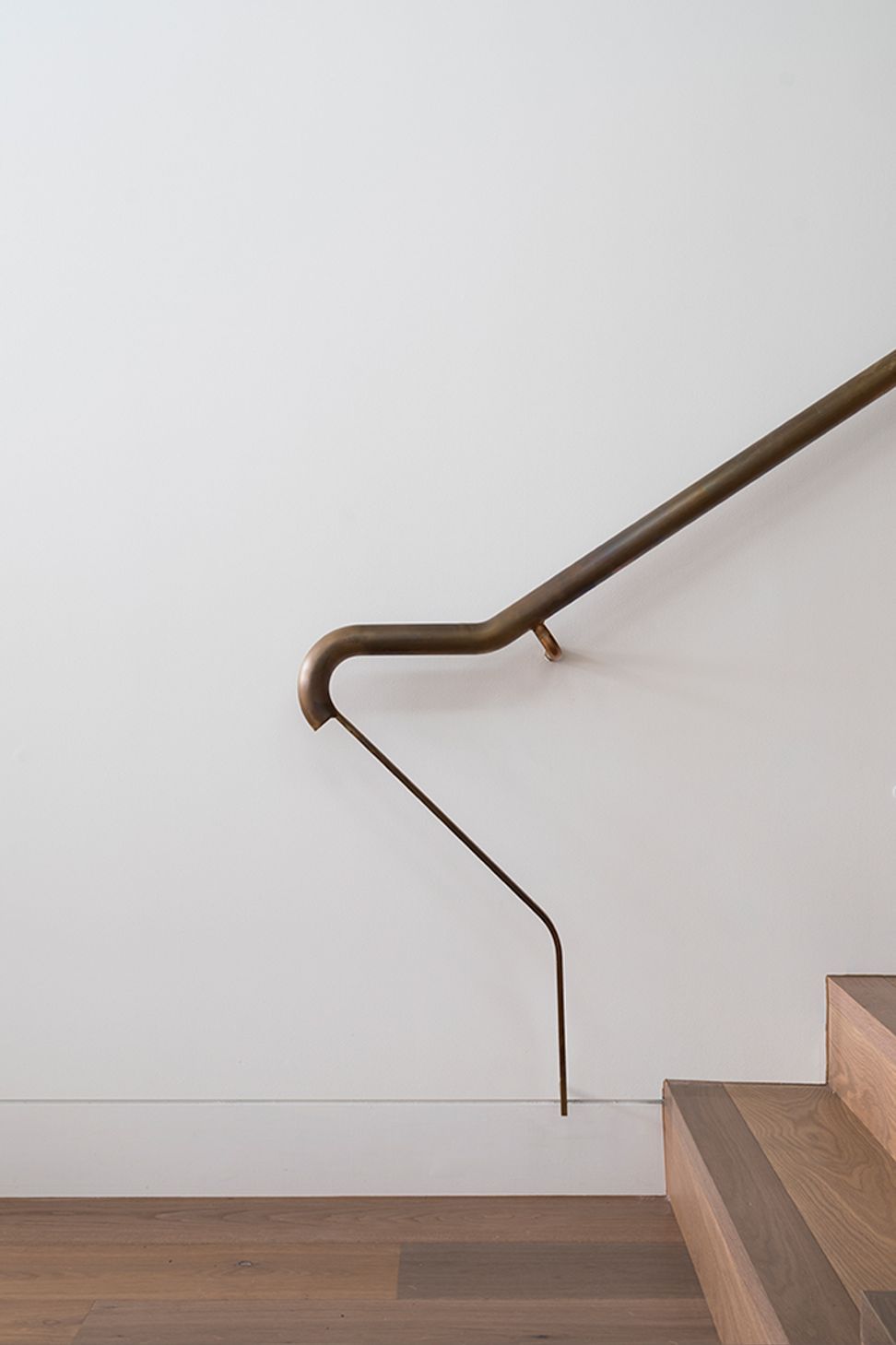
“One concern was initially how to make the stairs less overwhelming,” D’Alisa explains. “So by having an amphitheatre style and tapering down with that beautiful brass handrail it really works.”
The descending movement through the house becomes almost cinematic. As the stairs taper downward, sightlines open gradually towards the kitchen island, dining space and rear garden beyond. Skylights punched through above the kitchen floods the lower level with natural light, transforming what could have felt subterranean into one of the brightest spaces in the home.
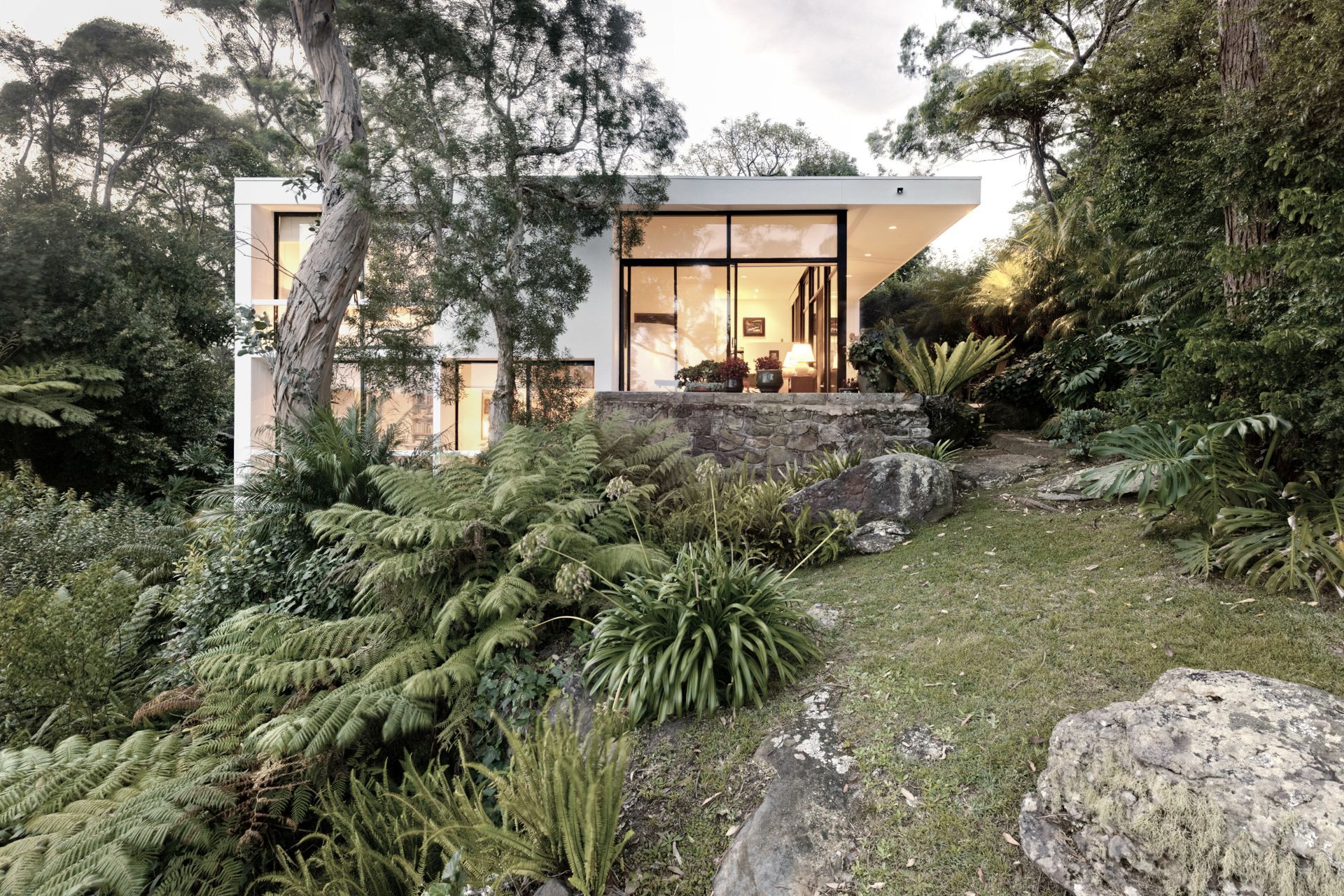
Beyond the interiors, the landscape design played an equally important role in reshaping the experience of the house. The rear courtyard was subtly raised to soften the sense of steep terracing, creating more generous and functional outdoor zones that feel integrated with the architecture rather than detached from it.
“The courtyard is now a lot more useable, and the terracing of the steps create a continuous view out and back into the home,” D’Alisa says. “And the firepit adds a wonderful touch.”
Throughout the project, materiality was approached with both warmth and longevity in mind. Timber became the defining surface element, paired with dappled bluestone that anchors the interiors with texture and weight. The clients, close friends of the architects, placed considerable trust in the design process from the outset.
“They were really open to our ideas,” says D’Alisa. “They simply said: give us three options and we’ll choose one.”
That openness extended beyond architecture into furniture and styling, allowing the interiors to feel fully resolved from the moment of completion. Carefully selected furnishings reinforce the home’s sculptural qualities, particularly within the dining space where furniture was chosen to be appreciated from multiple vantage points.
“In the dining space we went to Cult for the Rib dining table,” says D’Alisa. “That’s my favourite piece. We wanted something with a really nice base, because when you’re sitting on the terrace, the base of the table is at eye level.”
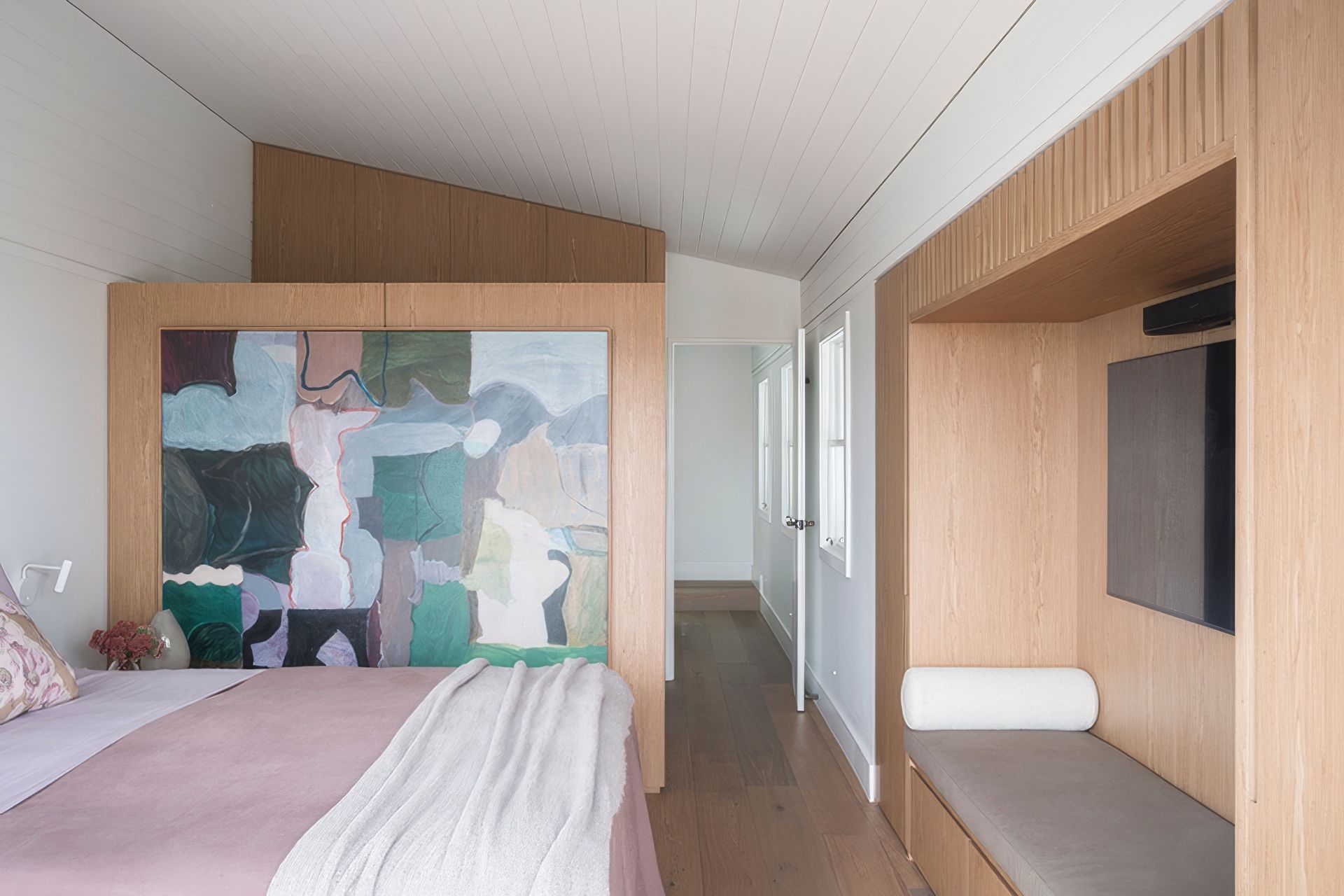
Practicality also remained central to the redesign. Storage was integrated throughout the home, from concealed joinery beneath the staircase to expanded cabinetry in the kitchen and bedrooms. Upstairs, the main suite was reconfigured to improve accessibility and everyday function, simplifying what had previously been a fragmented arrangement spread across split levels.
At its core, the project succeeds because of its balance between openness and intimacy. Double-height volumes create moments of drama, while timber detailing and carefully framed views maintain a sense of warmth and domesticity throughout.
Rather than erasing the character of the original terrace, Porebski Architects has refined and clarified it, transforming a once-dated house into a richly layered family home designed for contemporary living.
Great architecture is often found in the careful reworking of what already exists. Through considered planning, refined materiality and a stronger connection to landscape, this Paddington terrace shows how existing homes can be transformed to better support contemporary living. Discover more exceptional projects and design inspiration on ArchiPro.