An architectural mystery on the water at Lake Rotoiti
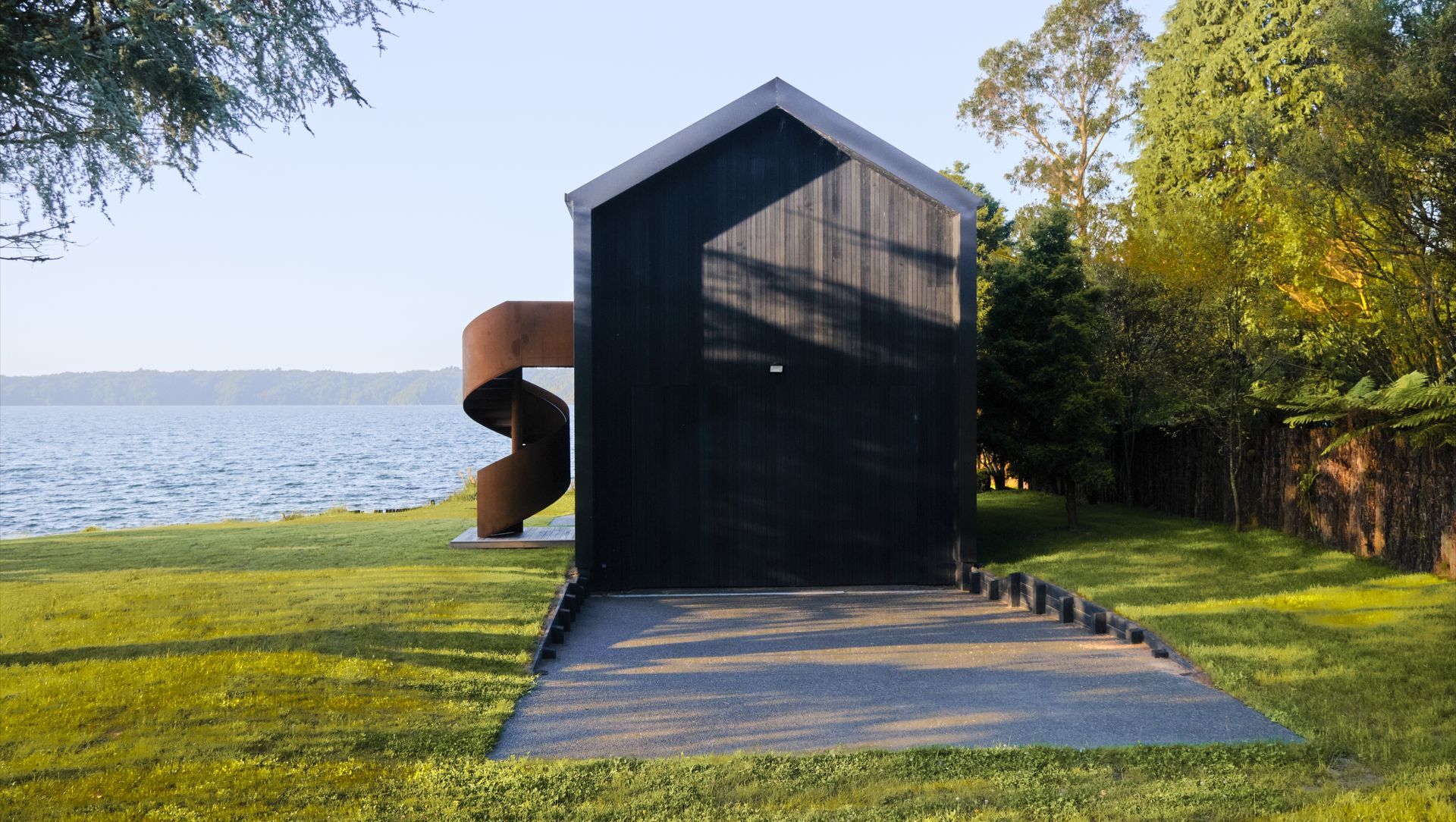
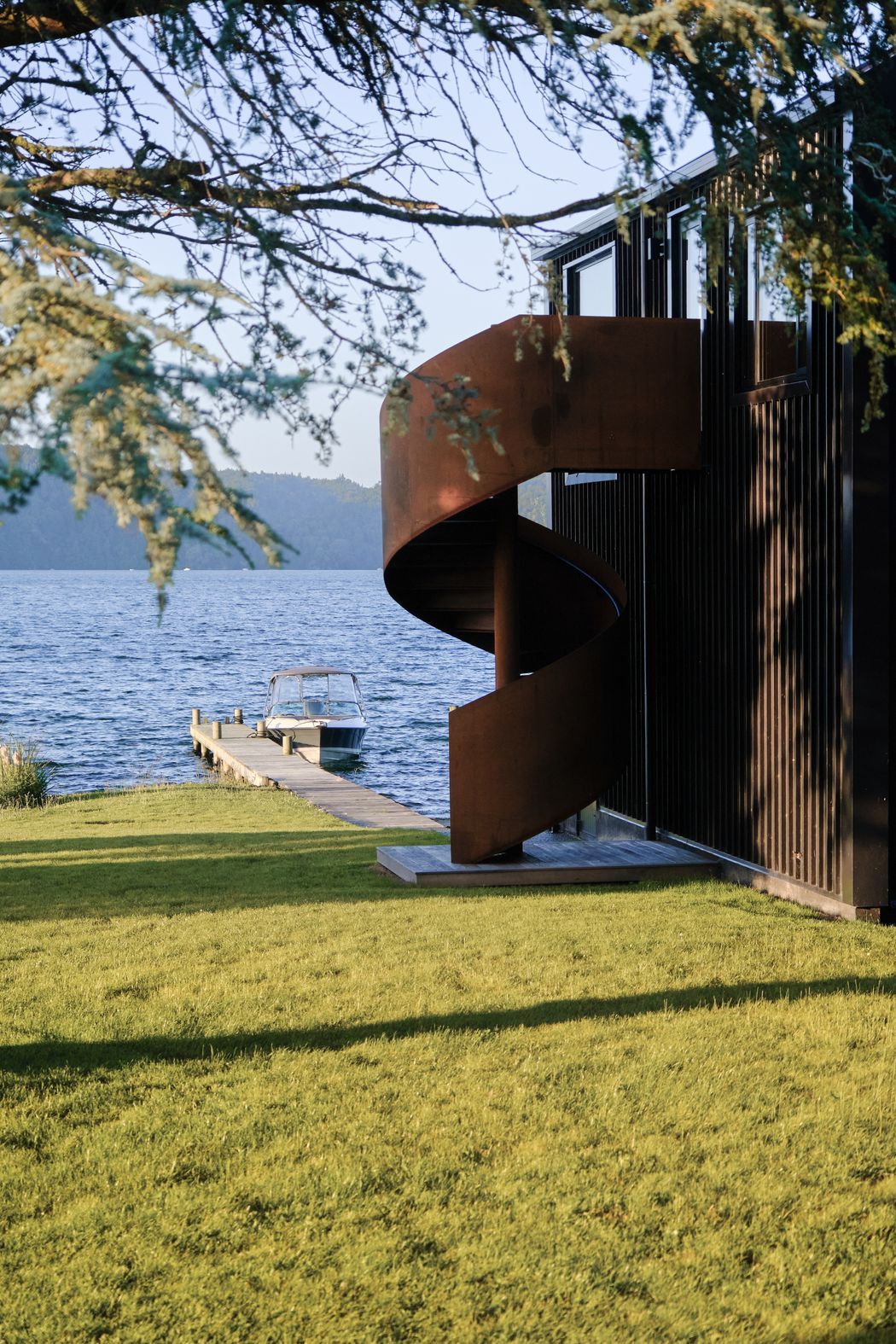
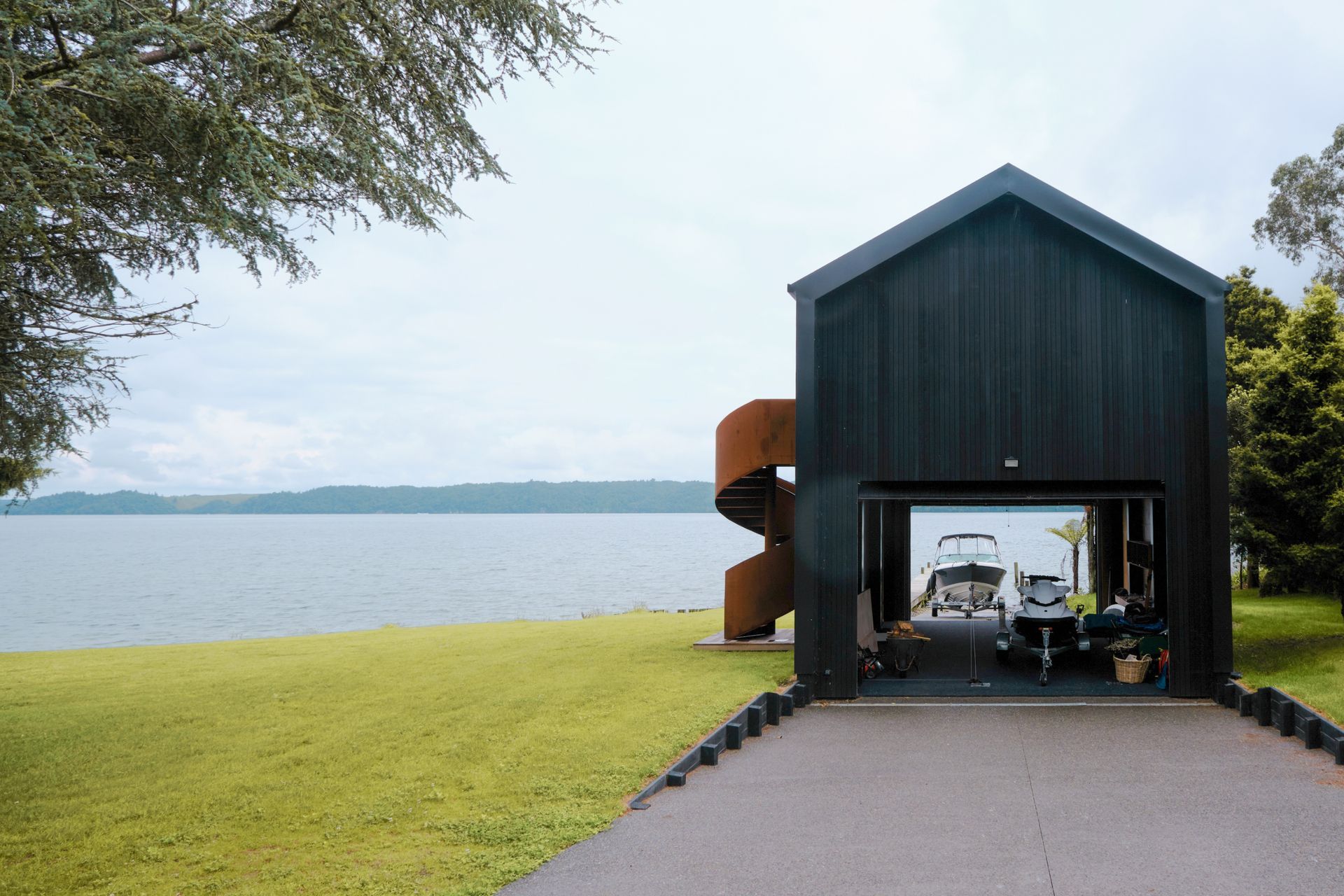
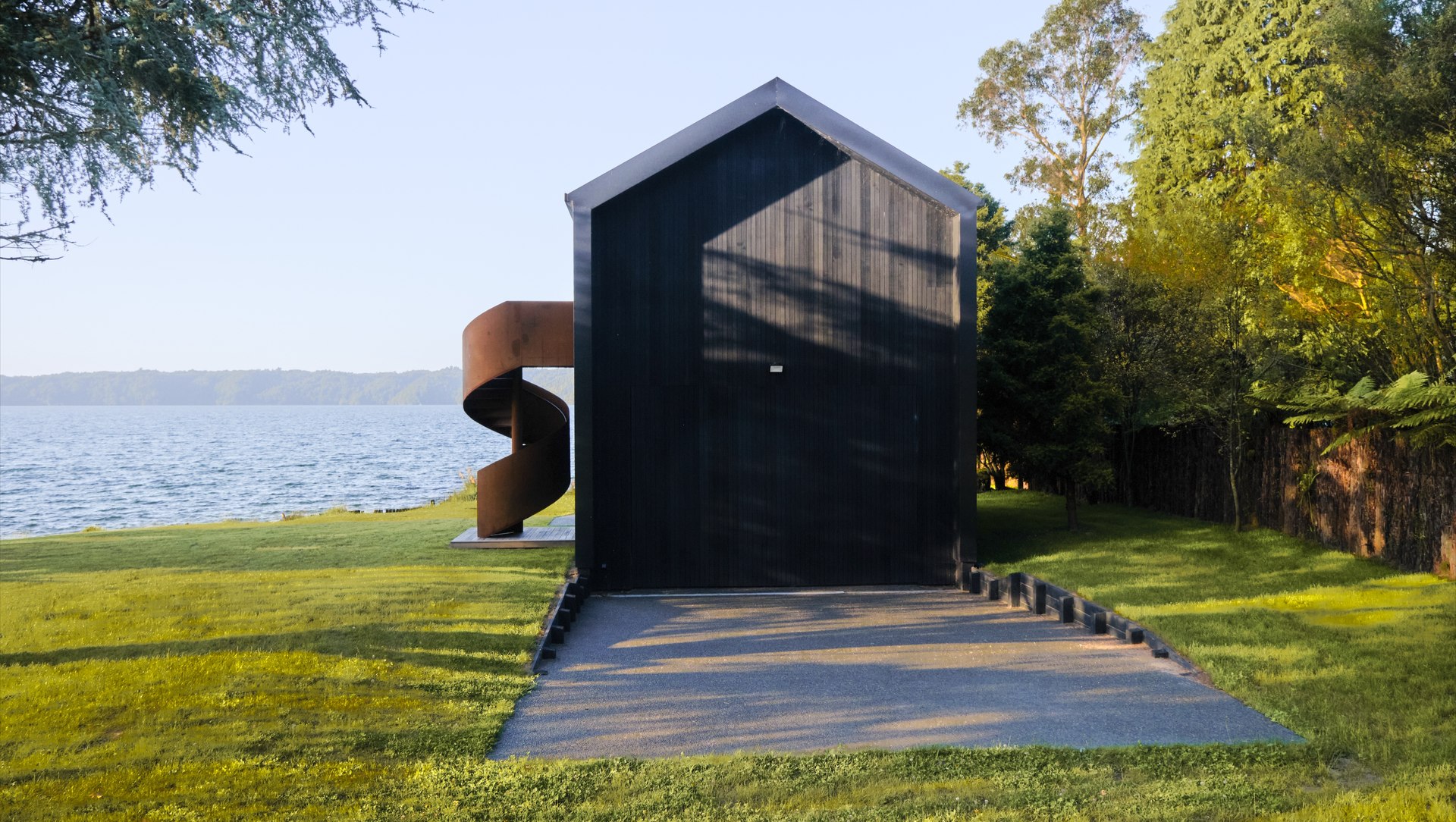
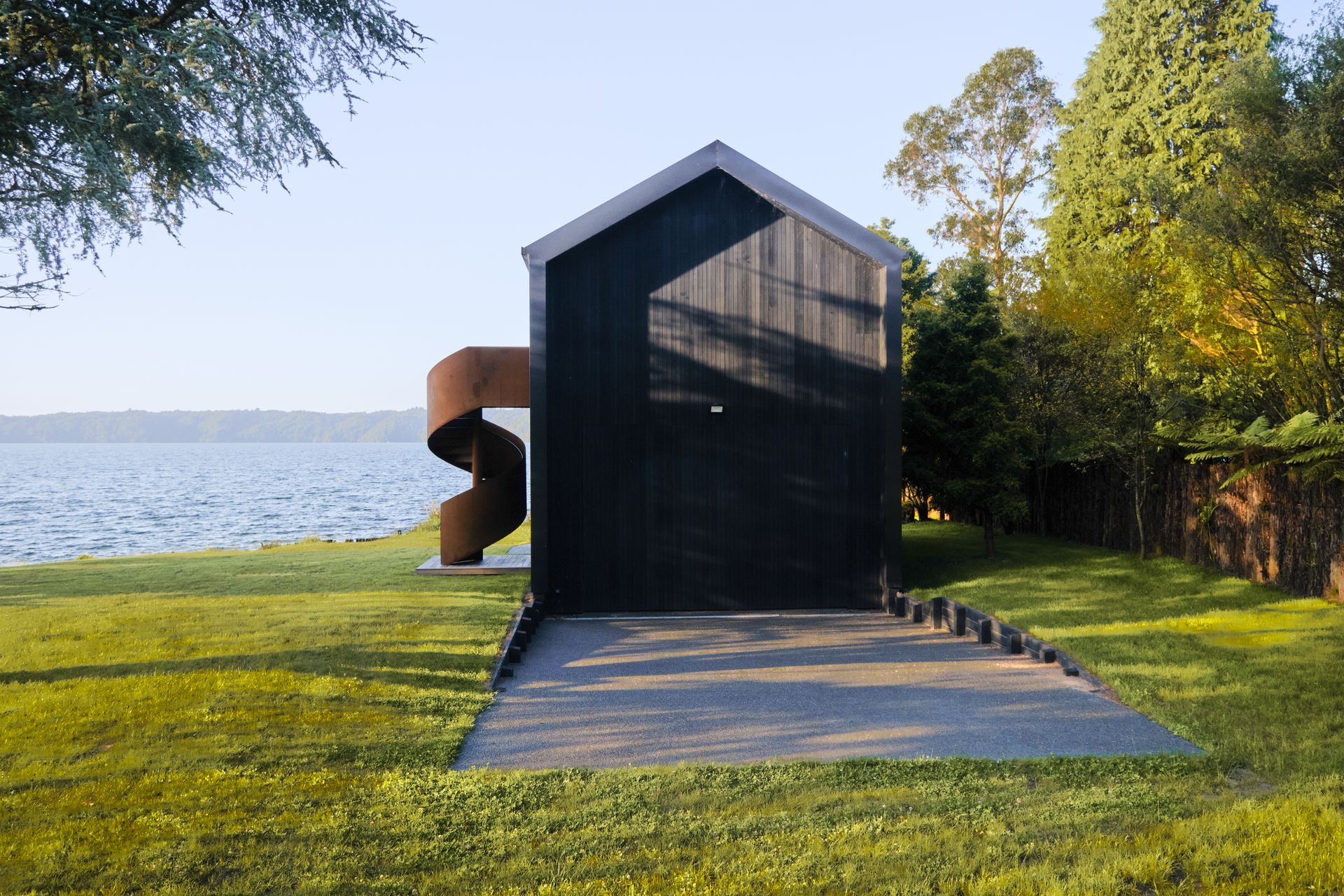
Seen only from the water, the boathouse on Lake Rotoiti does not immediately reveal itself. It sits rather enigmatically against the edge of the lake, a pared-back form that gives little away. There is no overt gesture to announce its purpose, yet a single architectural flourish—a sculptural spiral stair in corten steel—invites curiosity.
For John Durkin of ABRI, this sense of intrigue was not incidental.
“You can’t see it from anywhere else, you can only see it from the water,” he explains. “Because we designed the garage door to the shed to be flush with the cladding, at first, you may not know what it is.”
The project occupies a generous lakeside site, a property with a layered architectural history. Once owned by Lincoln Laidlaw, founder of the Lincoln Toys brand, the original house carried a distinctly stylised character. Its steeply pitched, almost tropical roofline drew on influences that felt part Fiji, part Hawaii. Over the past two decades, Durkin has worked closely with the current owners to evolve the property in stages. Recladding and reroofing the main house came first, followed by a new garage and a modest cottage. The boathouse is the latest chapter in this ongoing relationship.
What began as a modest request quickly grew in scope.
“The client asked, ‘Could you raise the lintel of the front door so I could get the boat in without having to dtop the canopy?’” Durkin recalls. “But the shed was just a wreck and would not have withstood any major alterations .”
Rebuilding became inevitable. Then an exploration of what that new building might look like transformed the brief entirely. The client was considering starting a new business and wanted a yoga studio and office that could be built on top of the boat shed, looking out at the lake.
From that moment, the project shifted from a pragmatic fix to a more ambitious proposition. The new structure occupies much the same footprint as the original boatshed, sitting only a few metres above the lake’s flood level, but extends slightly in length and intention. Below, a functional boatshed remains. Above, a layered programme unfolds, comprising a yoga studio, a small bathroom and a compact office space.
Despite this expanded brief, the architectural language is deliberately restrained. Durkin sought a form that would sit comfortably alongside the existing house while maintaining its own identity.
“We wanted it to be quite simple,” he says. “To make it similar to the lines of the house in terms of the steel cladding, but also make it look like a shed.”
This balancing act between familiarity and distinction is central to the project’s success. The boathouse does not attempt to replicate the house, nor does it depart from it entirely. Instead, it operates in a dialogue with its context.
“It doesn’t look like it’s a copy of what’s up there on the site, but it does look like it’s related, and it has its own personality,” Durkin reflects.
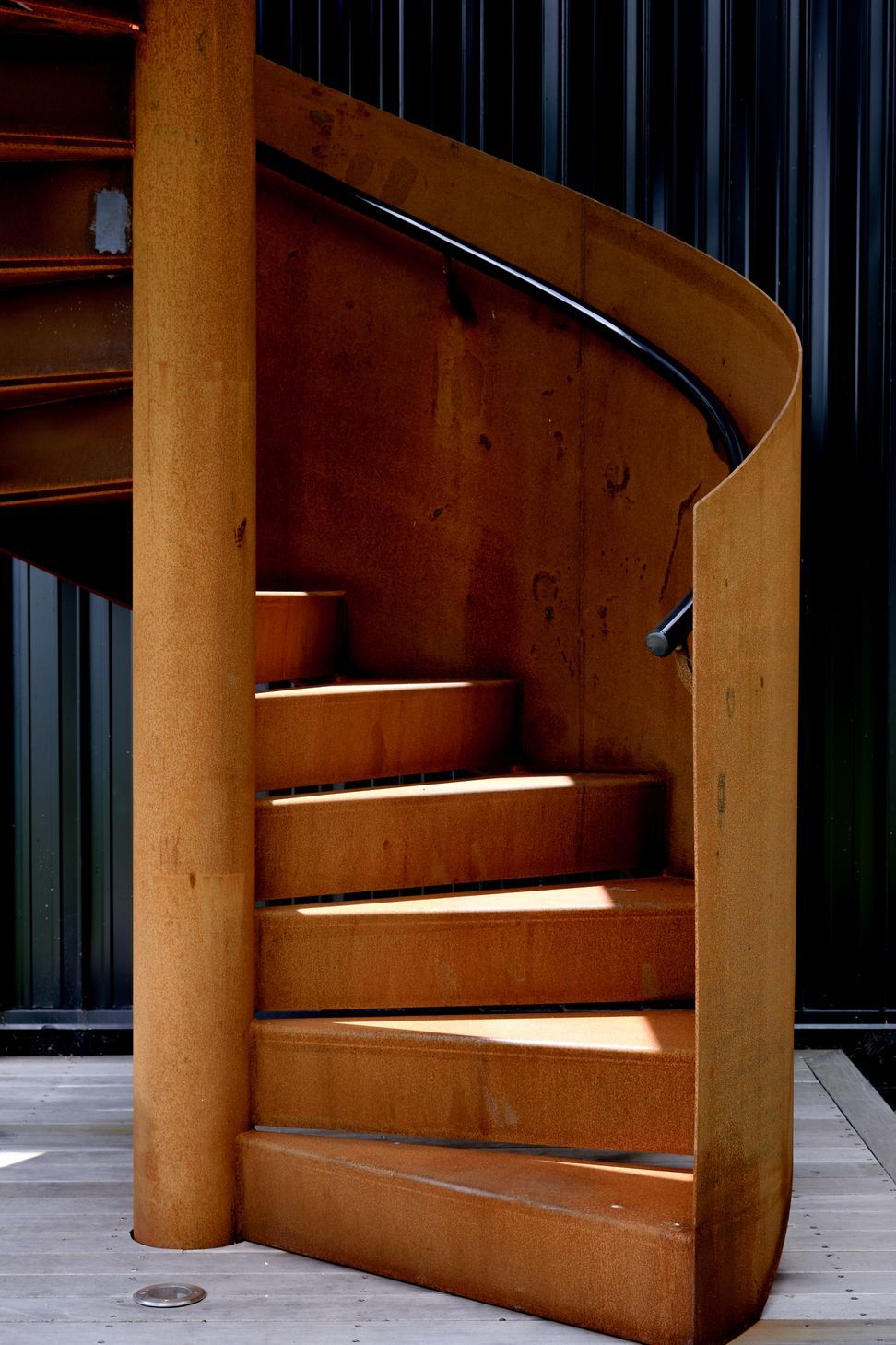
It is this restraint that makes the building’s most expressive element all the more striking. Rising from the exterior, a sculptural spiral staircase in corten steel wraps upward to the upper level. It is both functional and symbolic, marking the transition from utility to retreat without interrupting the simplicity of the main form.
The material choice introduces a raw, weathering quality that contrasts with the clean lines of the shed. Over time, it will continue to patinate, embedding the structure further into its lakeside setting.
The decision to locate the stair externally was equally considered.
“It came about from wanting to access the space without going through the garage,” he says. “Rather than just have an ordinary stair, we thought we’d do something a bit clever.”
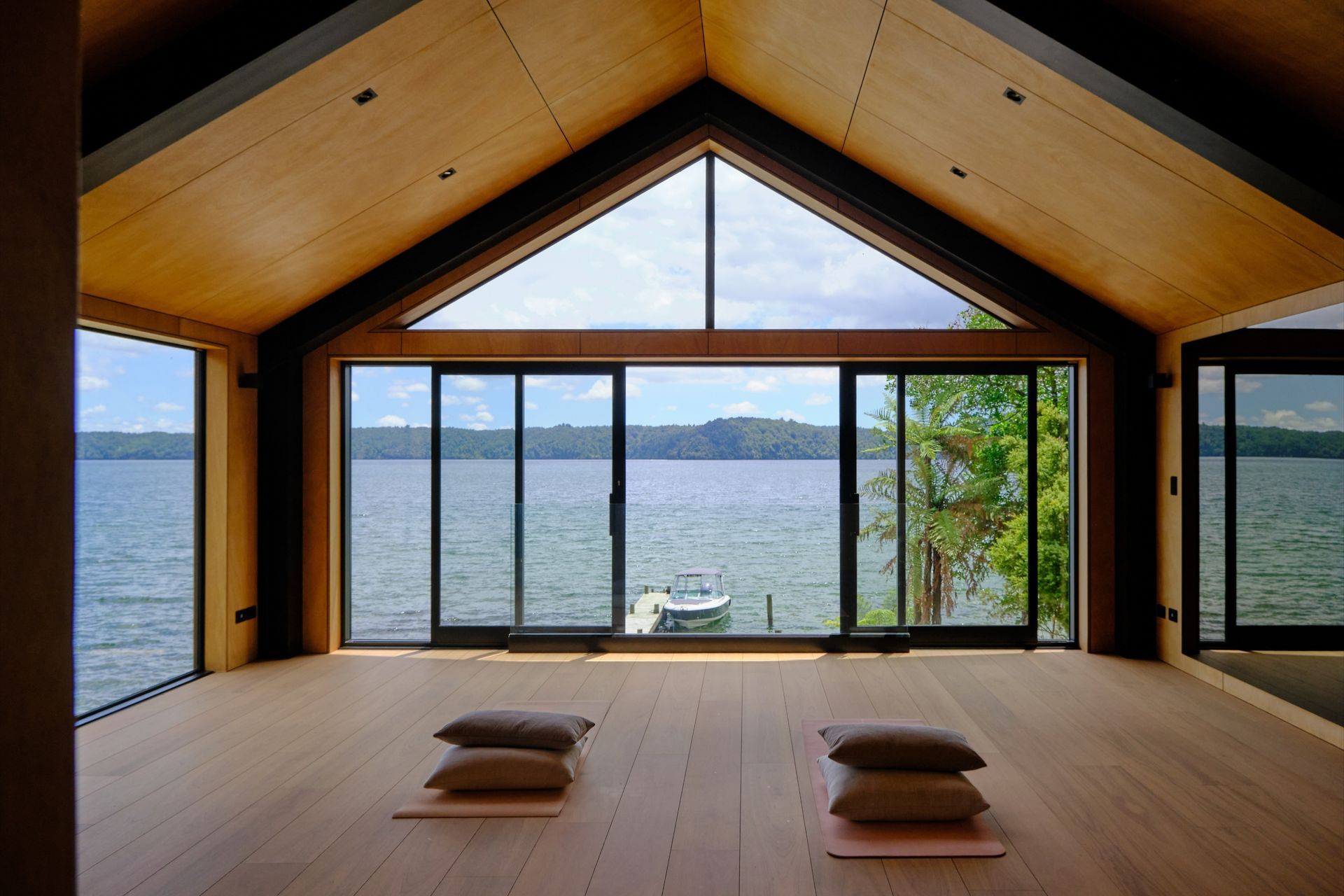
Inside, the atmosphere shifts again. In the yoga studio, natural light, filtered views of the lake, and the tactile quality of the materials combine to create a space that feels both grounded and serene. The walls are lined in gaboon plywood, a material selected for both its economy and its warmth. Exposed steel framing remains visible, reinforcing the honesty of the structure. Timber flooring underfoot adds to the sense of calm.
“The idea of lining it all in plywood and timber floors was to give it a warm, soft, welcoming feeling,” shares Durkin. “It has that lovely smell of timber, it’s quite an atmospheric presence.”
In many respects, the boathouse is defined by its simplicity. Its form is direct, its materials unpretentious, its programme clear. And yet, it is precisely this clarity that allows it to resonate more deeply.
“It’s a very simple design,” Durkin says. “But when dealing with simplicity of form and the use of tactile materials, it actually becomes something really special.”