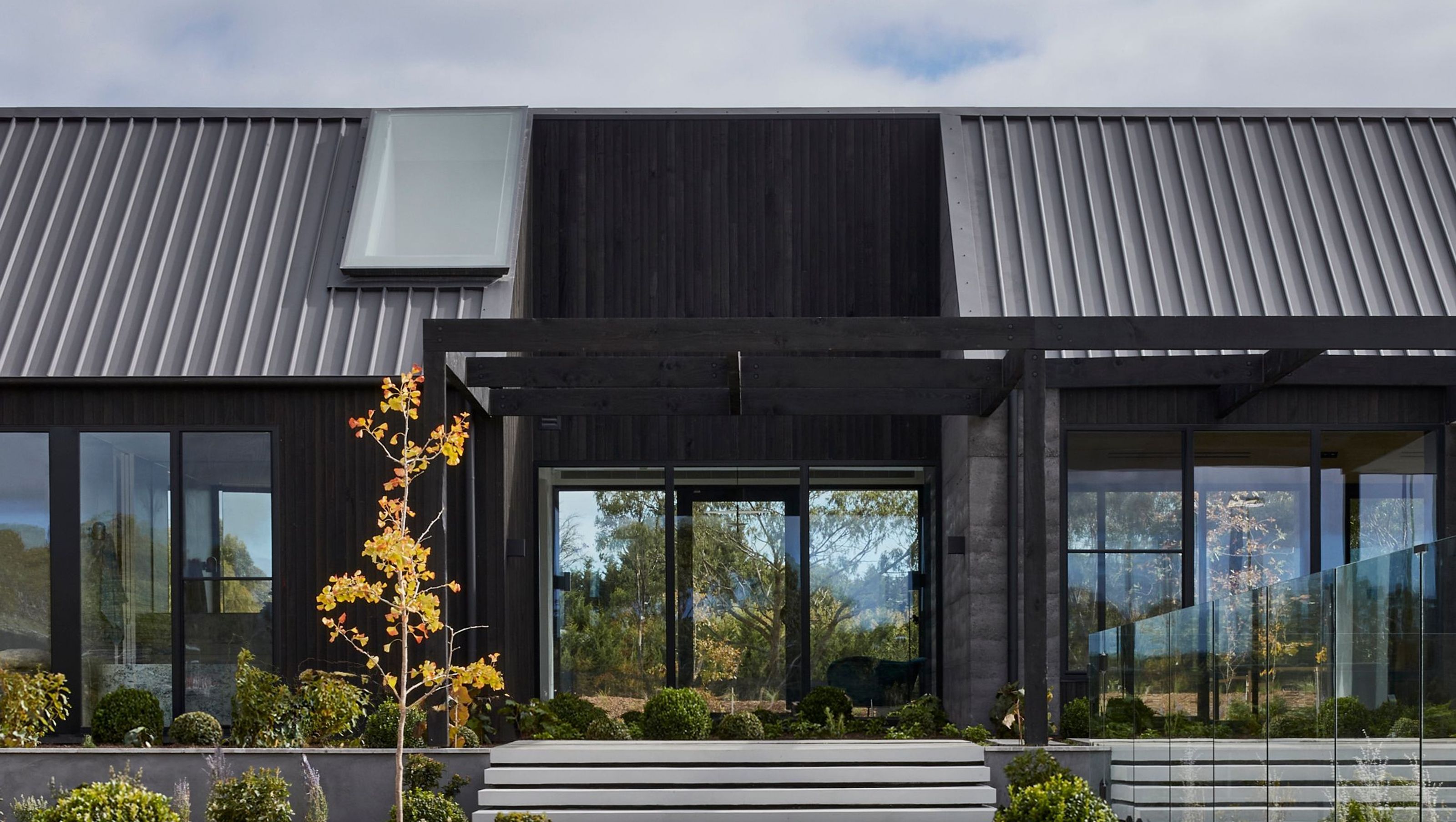

On Victoria’s Mornington Peninsula, this gabled family home conceived and designed by Studio Griffiths, developed in collaboration with DX Architects, embodies barefoot living, internal sightlines and an alluring blend of country, coastal and city sophistication.
Where the house creates its own views
A little inland from the shoreline of Mount Martha, the landscape begins to loosen. The salt air still lingers, but the setting shifts into something slightly more rural. From the outset, Studio Griffiths envisioned a home grounded in simplicity and ease — a place where life could move fluidly between indoors and out, where shoes felt optional, and where the architecture would frame its own composed outlook rather than borrow distant views.
The clients were raising a young family and sought a house that felt expansive without formality. Entertaining was central to the brief, as was durability and a sense of relaxed refinement. A swimming pool, tennis court and pavilion would anchor the external amenity, while the architectural language was to reference rural typologies without becoming literal.
“‘Not too fancy’ were their words at the time,” recalls interior designer Gillianne Griffiths. “They wanted something barn-like in style and quite casual to enjoy. It’s truly a family home – lived in, loud and full of life.”
“The design was more about trying to create a lot of internal views and a strong integration, interiors, landscaping, and architecture to create really well-resolved and complex spaces,” says Daniel Xuereb. “Studio Griffiths provided the overall design direction and intent, which we then worked to document and detail.”
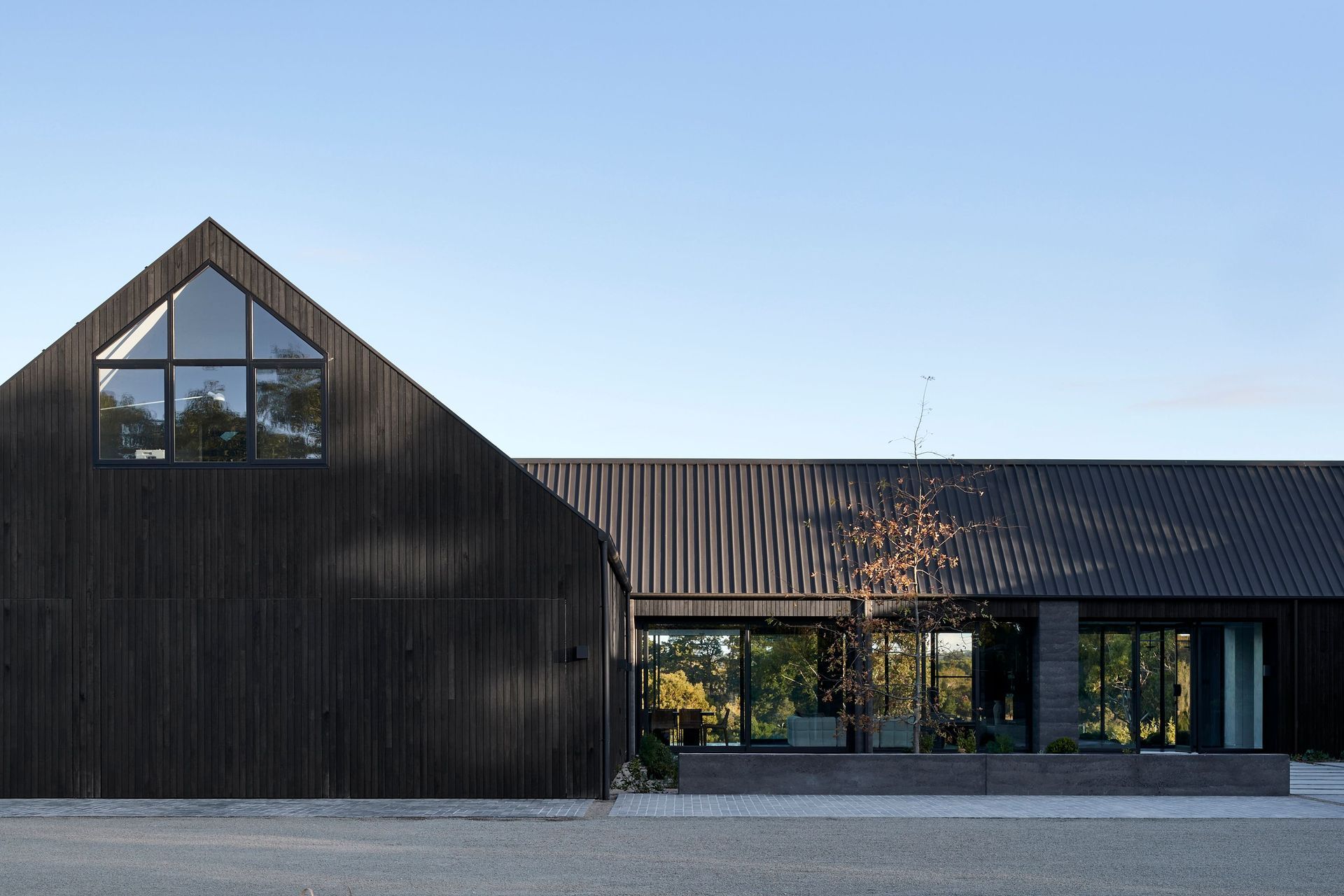
From this thinking, a composition was conceived that is both simple and highly considered. Three volumes organise the house into a plan that reads like the letter H. Two vertical wings frame a third horizontal element, binding them together. The arrangement of gabled forms gives clarity to the programme while also referencing the rural vernacular.
The architecture carries the silhouette of a contemporary barn and references rustic materiality. A pitched metal roof rises above dark timber cladding and rammed earth walls give the house both weight and presence. Windows sit deep within the rammed earth structure, their thickness emphasising the sense of shelter, while also offering window seats to enjoy the garden.
“Rammed earth is normally more of a clay-based product, but this particular one has a little bit more of a concrete, darker grey look,” shares Daniel. “The combination of the rammed earth, which has a heaviness, the charred timber, with its natural beauty, and the metal roof creates a really clear, logical configuration between these materials and the mass transparency of the windows.”
Located in the horizontal volume, the arrival space is the hinge between the worlds of public and private spaces. Upon entry, there is an immediate and enticing viewing pane through the building and into the garden beyond with its pool, lawn and tennis court. “I love walking up to the front door and seeing that grand, sculptural light, then looking right through to the tennis court and the pool area,” says Gillianne. “It’s always a surprise and such a wonderful feeling to walk into a space that just opens up like that.”
From there, the house unfolds in two directions. To the left, the living areas widen and stretch outward. To the right, the mood softens into the privacy of bedrooms and quieter spaces.
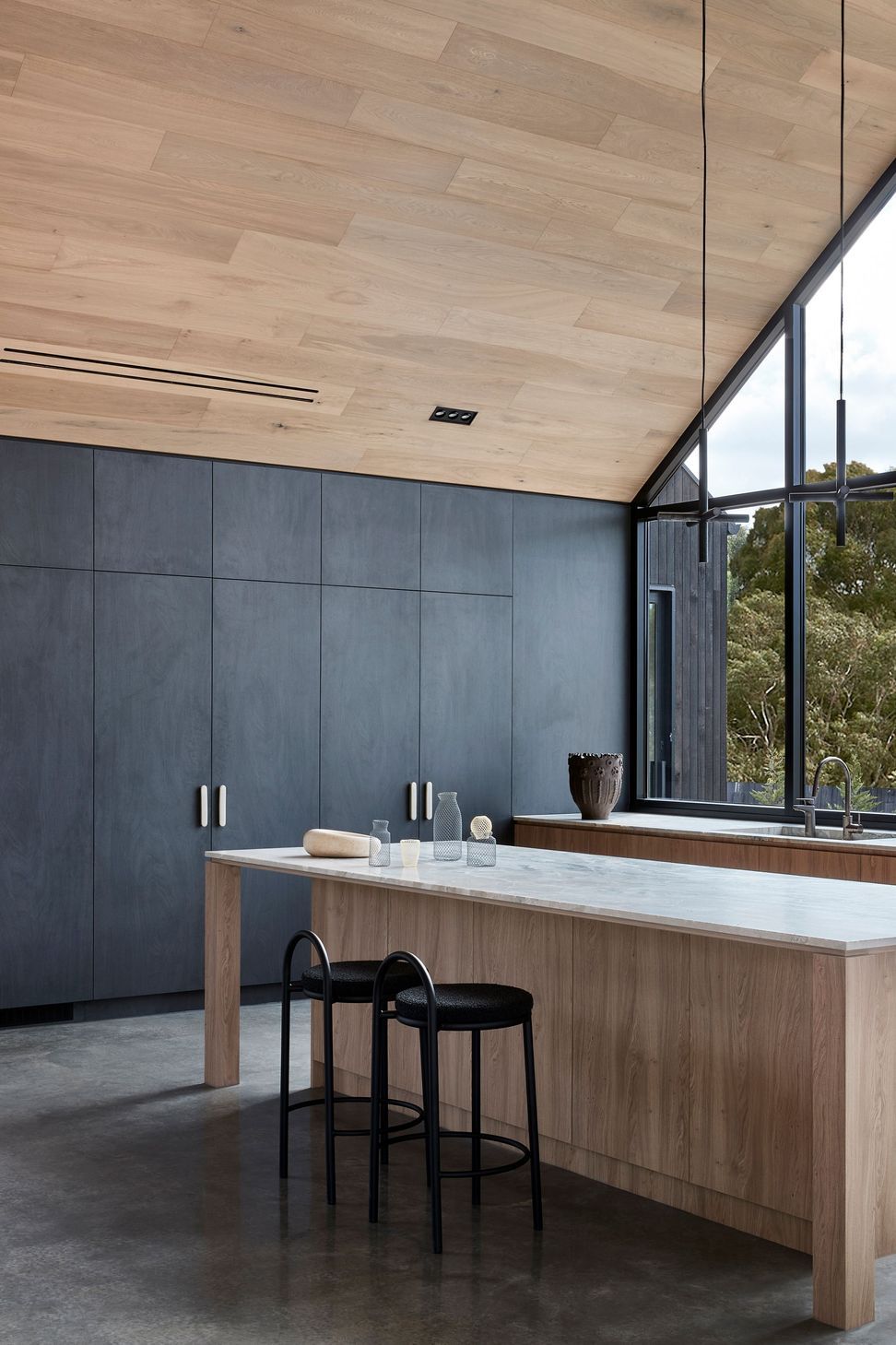
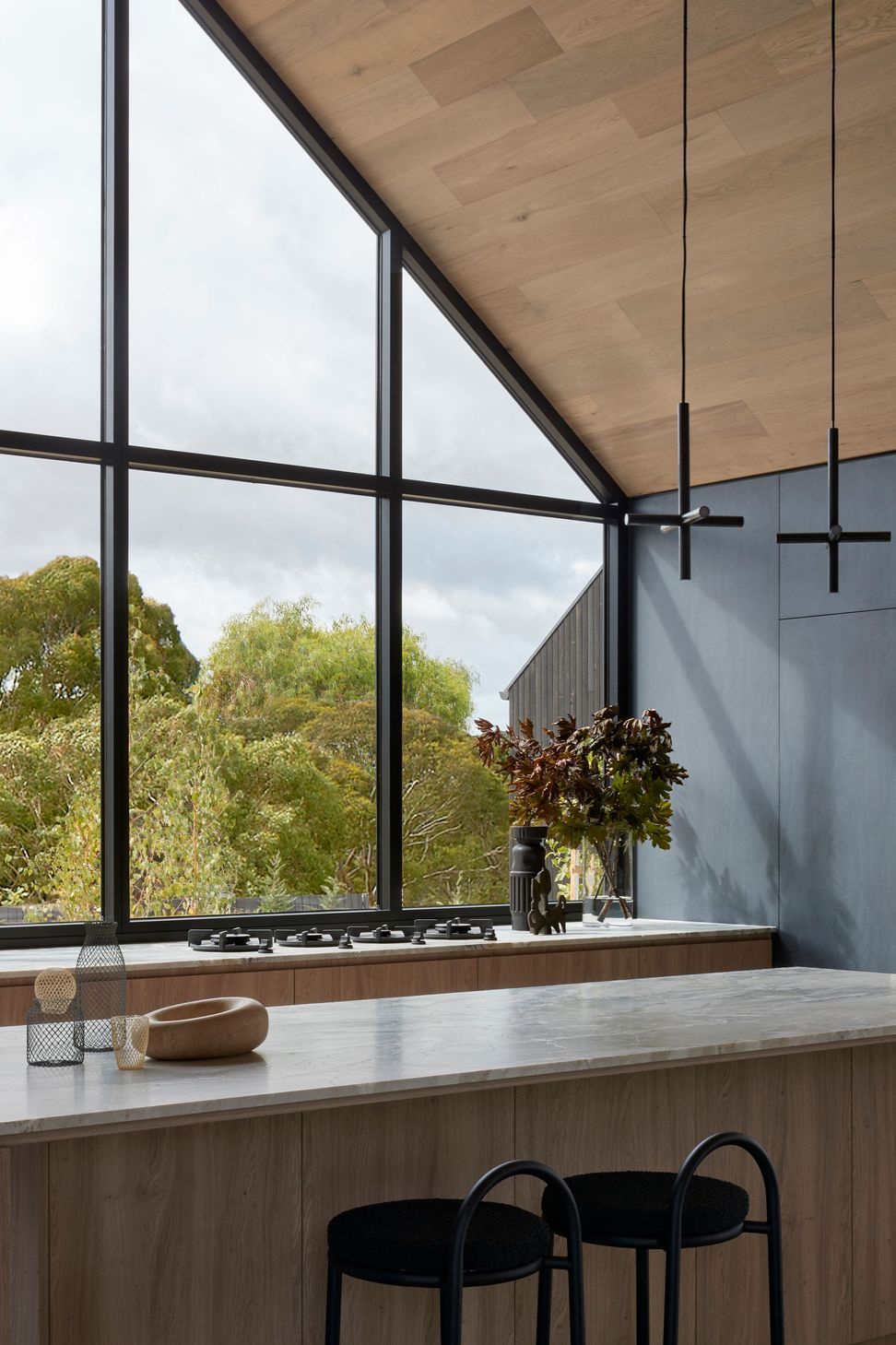
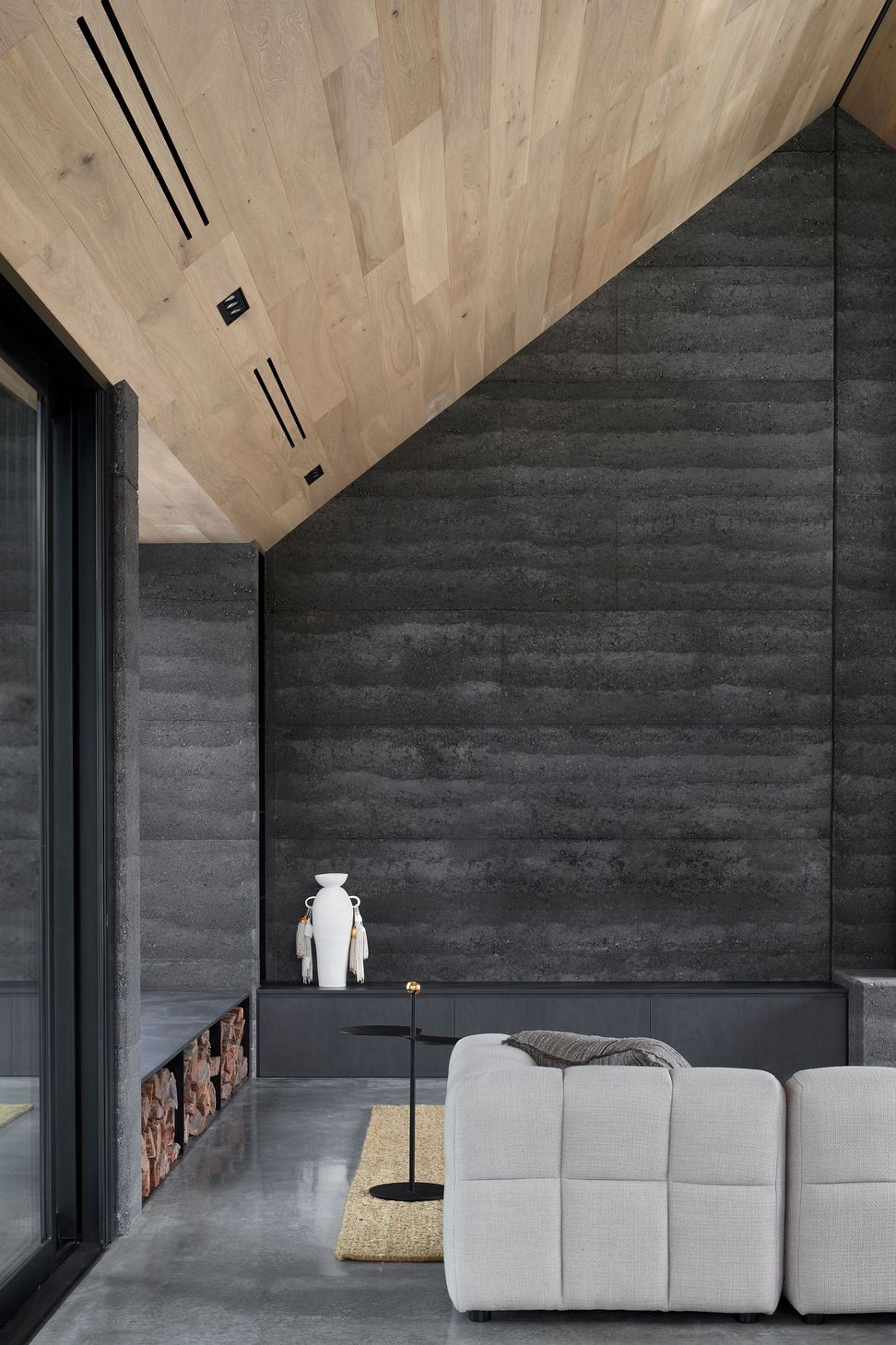
The material language of the two wings takes in the rustic materiality of the exterior, bringing it into the interior spaces. The rammed earth walls extend right from the entry into the heart of the home, where they form a dramatic backdrop to the main living space and fireplace. Concrete floors run through the communal areas, chosen for their durability and their affinity with the earth-toned palette, while timber-lined ceilings soften the composition. The juxtaposition between dualities creates a tension that Daniel says is one of the defining qualities of the interior.
“The contrast between bright and dark, heavy and light materials is dynamic —there’s light colours, warm timber and lots of natural light and then against that there’s the rammed earth which is really quite heavy and cool and sits nicely with the darker timbers.”
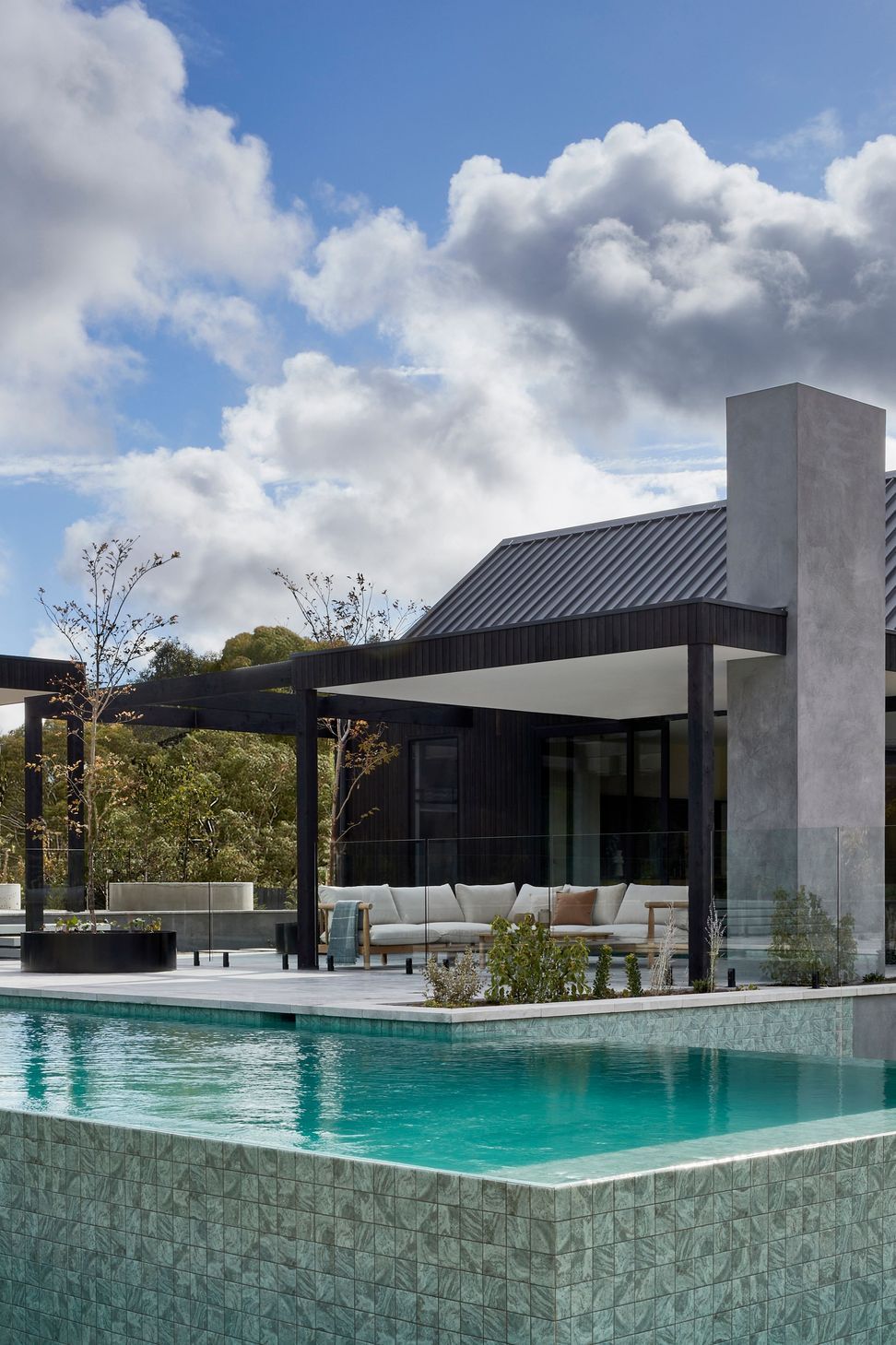
The interplay between light and weight becomes a defining element of the home. Sunlight shifts across textured walls while deep thresholds frame glimpses of garden and sky. Outdoor spaces extend the architecture into the landscape, reinforcing the seamless indoor-outdoor relationship.
Subtle geometry informs the placement of windows and doors, guiding views outward and drawing the landscape back into the house. Entertaining terraces spill toward the pool while pathways align on axes with the house, the tennis court, and the pavilion. Floor-to-ceiling sliding doors open wide to allow the house to breathe during gatherings and long summer evenings.
“It was a really holistic integration between interior architecture and landscape to achieve an exceptionally high-quality, well-resolved home,” shares Daniel.
“Great homes aren’t about singular gestures,” reflects Gillianne. “They’re about continuity – of vision, of material language, and of experience. When those elements are aligned from the outset, the house almost designs its own views.”
Although the original owners have since moved on, the house continues to leave an impression. Locals recognise it, visitors ask about it, and both Studio Griffiths and DX Architects are often approached by people hoping to create something similar. The project continues to stand as an example of deeply integrated architectural and interior design, where structured spatial arrangements, carefully considered materials, and thoughtful detailing combine to create a home that is both refined and comfortable, delivering a lifestyle of connection and ease.
Words: Joanna Seton
In close collaboration with:
Architecture & Interiors: Studio Griffiths
Landscape: Plume Studio
Construction: Cahill Building Group
- Completed
- 2024
- Price range
- $2m - $3m
- Building style
- Contemporary







Project team

Daniel Xuereb
Director - Architect

Jonathan Cahill
Director
Like this Project?
Hire DX Architects
Professional Reviews
The products behind the project
Twelve products specified into this build from nine suppliers, verified ArchiPro members. Tap through to specifications, suppliers and lead times.


Professionals used in
this project
The practices and trades credited on this project.






More projects from
DX Architects
Other work by DX Architects, across every category they build in.


More in
Rural / Estate / Lifestyle
Everything else in Rural / Estate / Lifestyle, from every practice on ArchiPro.


Next Project
Keep scrolling