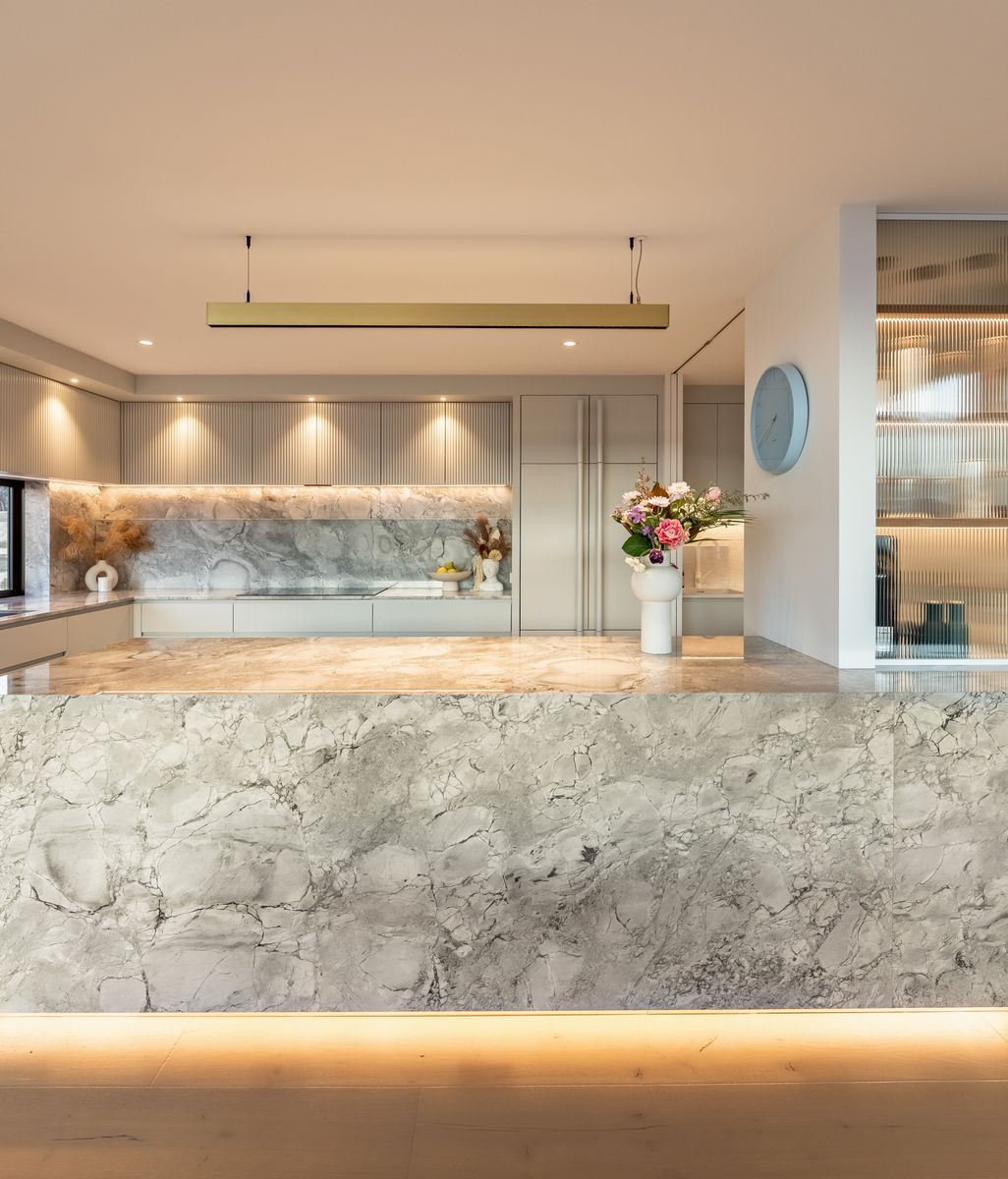
Why beautiful homes still get condensation

Written by

13 April 2026

 • 

6 min read

banner
Even the most beautiful homes can struggle with condensation when the hidden system behind the windows fails to balance airtightness, ventilation and sealing.

Strangely, condensation tends to show up in homes that, on paper, should be performing well. Spaces like new builds and architecturally designed homes with carefully considered glazing often still have moisture beads on glass, damp corners, and in the worst cases, mould.

It is easy to blame the windows, yet they are only one part of the system that governs condensation. Double glazing has become shorthand for comfort, as though it alone can resolve the complex relationship between warmth, moisture and air quality. But as Siegware CEO Chris Fodor explains, that view is incomplete.

“It takes at least three legs for a table to stand,” he says. “And preventing condensation is the same. The glass is important, the frame material is important, and the hardware is important. If one of those isn’t right, the whole system doesn’t stand.”

A window is not a singular product, but a system embedded within the wider building envelope. And within that system, hardware plays a defining role in how the window performs over time, particularly when it comes to airflow, sealing and moisture control.


Airtightness is only half the story


In contemporary residential design, airtightness is often positioned as a marker of quality. A well-sealed home retains heat more effectively, reduces energy demand and improves overall comfort. But without a considered ventilation strategy, airtightness can quickly become part of the problem.

Warm air holds moisture. Everyday activities such as cooking, showering and even breathing introduce water vapour into the home. In a tightly sealed environment, that moisture has fewer pathways to escape. When it meets a cooler surface, such as glass or framing, condensation forms.

Fodor says this balance is critical. “If you have air leakage, you’ve got cold air coming in and warm air meeting it, and condensation forms. But if you make a house very airtight without thinking about how moisture gets out, you can still have issues.”

The role of window hardware sits directly within this tension. The way a window opens, how tightly it seals, and whether it can be finely adjusted over time all influence how much uncontrolled air enters or escapes. Hardware, in this sense, becomes a key mediator between airtightness and ventilation.

Daily activities like cooking, showering and even breathing add moisture to the air, which in tightly sealed homes has nowhere to go and condenses on cooler surfaces like glass and frames.

The unseen role of window systems


While glazing is often credited with thermal performance, the way a window opens, seals and locks plays an equally important role in how air and moisture move through a building.

Sliding systems, for example, can struggle to achieve the same level of compression sealing as hinged or tilt and turn alternatives. Where seals are not fully engaged, small but consistent air leakage can occur. Over time, this affects both temperature regulation and moisture behaviour.

By contrast, systems that actively compress seals create a tighter, more controlled barrier. 

“Multi-point locking systems pull the sash in evenly,” Fodor explains. “They create consistent pressure around the frame, which improves the seal and reduces unwanted air movement.”

This is where considered hardware solutions become critical. Multi-point locking, adjustable hinges and compression systems are not simply functional additions. They are what allow a window to perform as intended, maintaining consistent pressure on seals and reducing the likelihood of gaps forming as materials move or settle over time.

Seals themselves also contribute to performance. Multiple layers can trap pockets of still air, improving insulation and reducing the likelihood of condensation forming at the interface between inside and out. But without the right hardware to engage those seals properly, much of that performance can be lost.

It is a level of detail that is rarely visible once a home is complete, yet it has a direct impact on how that home feels to live in.

Condensation often signals a breakdown in the wider system, where gaps in design, sealing or hardware let moisture and air move where they shouldn’t.

When systems fall short


Condensation is often a symptom rather than a cause. Poorly resolved systems, whether through design, specification or installation, can create conditions where moisture has nowhere to go.

Air leakage around window perimeters, insufficient sealing, or mismatched components within the wall assembly can all contribute. Even high-performance glazing can underperform if it is installed into a building that has not been detailed to support it.

“You can have the best window system in the world,” Fodor says, “but if it’s installed into a wall without proper sealing or air barriers, you’re still going to get air exchange where you don’t want it.”

Hardware again plays a role here. Without the ability to adjust or maintain pressure over time, even well-installed windows can begin to lose their effectiveness. Simpler hardware systems, often selected for cost or familiarity, may lack the adjustability required to respond to movement in the building, leading to gaps, drafts and, ultimately, condensation risk.

This is where high-performance systems can sometimes be misunderstood. When placed into buildings without the supporting detail or appropriate hardware, their performance is judged in isolation rather than as part of a broader system.


Designing earlier, performing better


Perhaps the most consistent theme in discussions around condensation is timing. Decisions about windows are often made late in the design process, once forms and materials have already been resolved. By that stage, opportunities to optimise performance can be limited.

“What we see often is that window choices are made early in drawings, but the detail behind them comes much later,” Fodor says. “If those decisions aren’t considered as part of the whole system, it can lead to compromises.”

This is particularly true of hardware. The type of opening, the weight of the glazing, the orientation of the building and the desired level of airtightness all influence what hardware solutions are appropriate. These are not decisions that can always be retrofitted without consequence.

Early engagement allows for alignment between window systems, hardware, wall assemblies, ventilation strategies and orientation. It enables designers to consider how moisture will move through a home, not just how light will enter it.

It also opens the door to more nuanced choices. The right system for a coastal, wind-exposed site may differ significantly from one in a sheltered urban environment. Likewise, larger openings or oversized glazing require carefully specified hardware to ensure they continue to perform over time.

Condensation isn’t visible in architectural drawing, yet it is one of the clearest indicators of how well a home is truly performing.

Addressing it requires a shift in thinking. Away from isolated products, and towards integrated systems where hardware is considered as critical as glass and frame.

As Fodor puts it, “It’s not just about one component. It’s about how everything works together to create a comfortable living environment.”