What to know before choosing a Roller Door motor

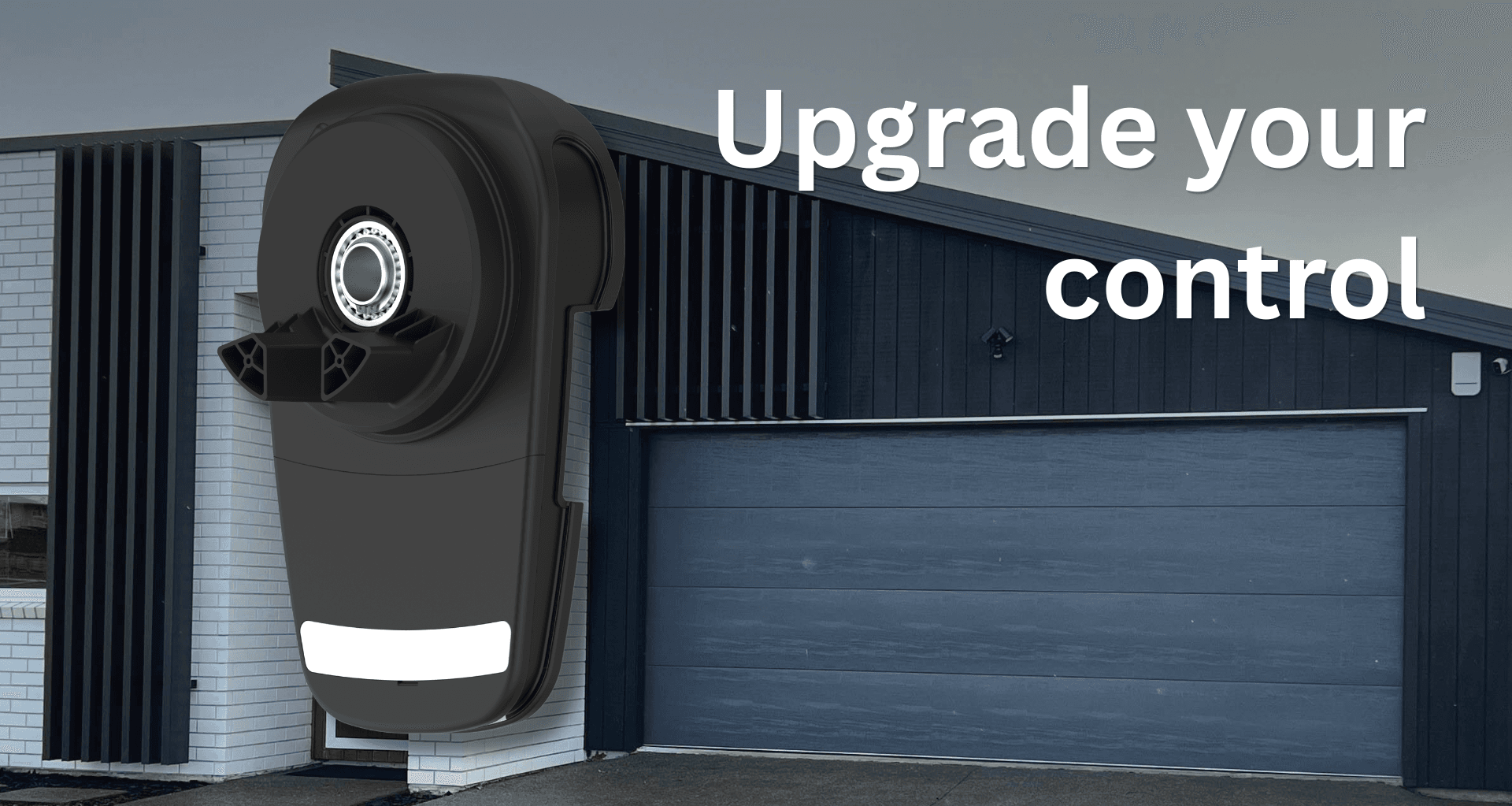
The motor controls how smoothly your door moves, how much noise it makes and how long the system holds up, especially through a few years of New Zealand weather. Getting the right one means matching power to your door, choosing the right drive type and knowing which features are worth paying attention to. Here's how to work through it.
What does a roller door motor actually do?
A roller door motor drives the door curtain up and down through a mechanism connected to the rolling drum. When you press a remote, tap a wall switch or use a smartphone app, the motor does the work of lifting and lowering the door.
Most modern garage door openers use DC motors, which enable features such as soft start and stop. This means the door accelerates and decelerates gradually rather than jerking to a halt.
How to match motor power to your door
Motor power is measured in Newton-metres (Nm), which refers to the motor’s lifting capacity. Every motor lists a maximum door size in square metres, so that's the key number to check against your own door.
A double garage door will need more power than a single, and door materials like Colorsteel®, aluminium and steel all carry different weights. If the motor isn't powerful enough, it works harder on every cycle and wears out faster. A garage door specialist can recommend a motor with the appropriate lifting capacity for your specific door and usage requirements.
If your existing door feels heavy or uneven, it's worth checking before installing a new motor. A professional can assess the balance and identify any issues that might affect the motor's performance.
Which garage door opener types suit your setup?
Not every garage door opener works with every garage door. Roller doors, sectional doors and tilt doors each need different types of openers, so it's important to match the right opener to your door type.
For roller doors, the motor mounts to the end of the drum wheel. The amount of space around the drum can affect which motor fits, which your installer will check during a site visit.
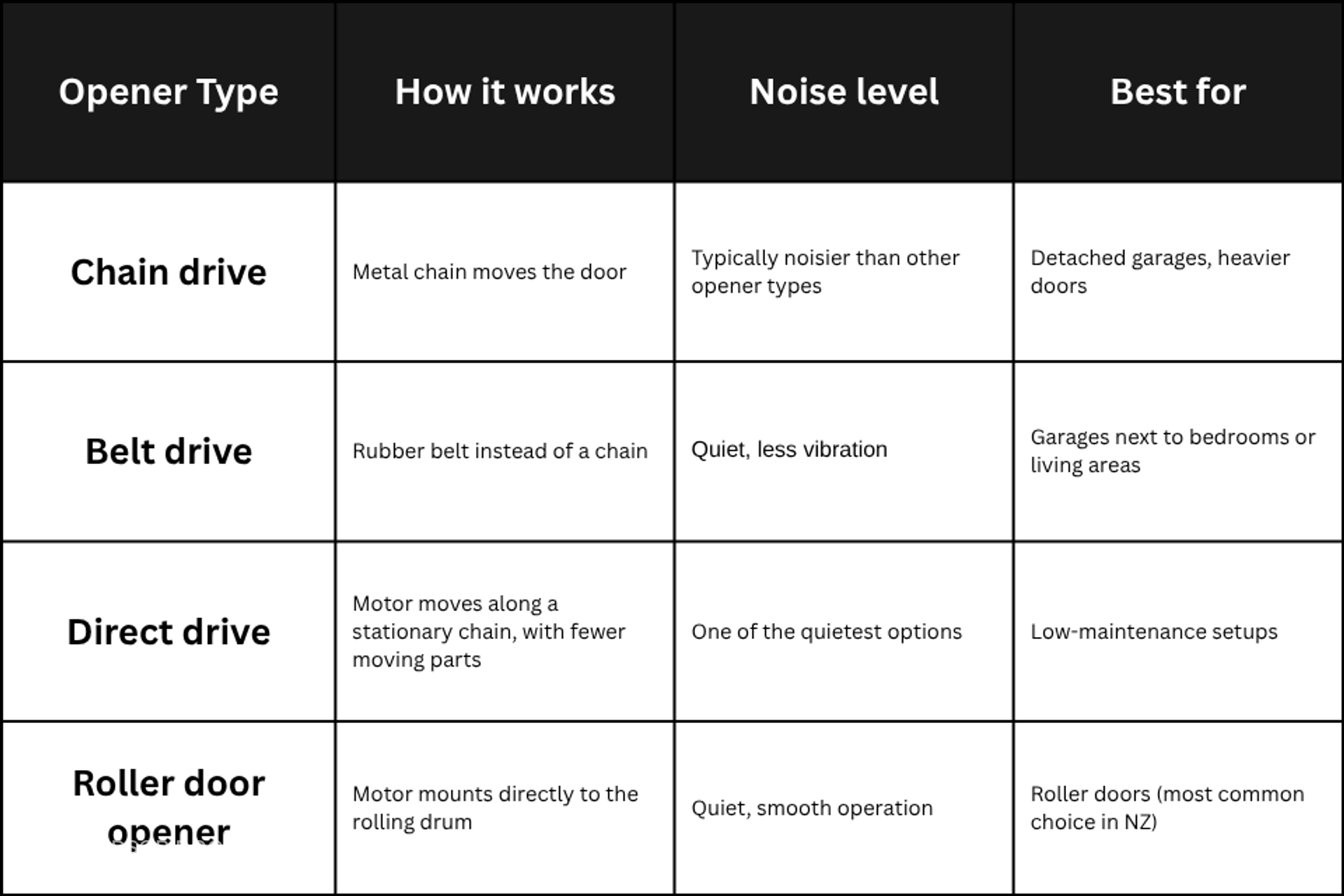
Here's how the main types of garage door openers compare.
Safety features for garage doors
Every modern garage door opener should come with a core set of safety features as standard, not as optional extras. When you're comparing openers, make sure the following are included:
- Auto-reverse, which detects obstructions and reverses the door's direction to protect people, pets and vehicles
- Photoelectric Beams (PE beams) that sense objects in the door's path before contact is made
- A manual release cord so you can operate the door by hand during a power outage
- Rolling code technology that generates a new access code with each use, so the signal can't be copied
Some models also include battery backup to keep the motor running during power outages, which is worth considering in areas prone to storms.
Smart features and modern convenience
Modern garage door openers can include smartphone control, allowing you to open, close and monitor your garage door remotely. Some models also offer features such as timer-to-close, courtesy lighting and smart home integration for added convenience.
Not every feature will matter to every household, so it’s worth considering which functions suit your daily routine and how you use your garage.
Will a new motor work with your existing door?
A new garage door opener needs to physically fit your setup and suit your door type and weight. For roller doors, the motor attaches to the drum, so the space around it matters. A professional assessment will confirm which motors are compatible with your garage layout.
It's also important that your door is in good working order first. If the door is stiff, sluggish or has worn components, a new motor won't fix that. Those issues need to be sorted out before adding automation. For older or non-standard doors, a professional assessment is the easiest way to confirm compatibility.
Why professional installation matters
Installing a garage door opener involves working with heavy components under tension. The springs, cables and drum assembly can be dangerous if handled incorrectly, which is why this is a job for a qualified professional.
Professional installation ensures the motor is correctly matched to your door, properly mounted and tested for safe operation. It also helps ensure compliance with relevant NZ electrical and safety standards. If anything isn't set up correctly, it can affect both the door's operation and the motor's lifespan.
At Windsor Doors, our installers are experienced with all types of roller door openers and can recommend the right motor for your specific door and setup.
Choosing the right motor for NZ conditions
New Zealand's climate puts extra demands on garage door motors.
When you're choosing a motor, think about where your property is and what it's exposed to. A motor that performs well in a sheltered inland garage may not be the best fit for a coastal property. Talking to a garage door specialist who understands local conditions can help you avoid choosing something that won't last.
Regular maintenance also significantly improves reliability. An annual check of your opener, including testing the safety sensors and lubricating moving parts, helps keep everything running smoothly.
Where should you start?
If you're not sure where to start, a conversation with a professional is the easiest way to narrow it down. They can assess your door, check compatibility and recommend a motor that fits your setup and your home.
Windsor Doors has been helping New Zealand homeowners with garage door solutions for more than 25 years. If you're ready to upgrade your roller door motor or want advice on what's right for your home, get in touch for a free measure and quote.
Frequently asked questions
How to know what garage door motor to buy?
The easiest way is to book a professional assessment. They'll measure your door, check the weight and recommend a motor that matches. From there, it comes down to your priorities, whether that's noise levels, smart features or battery backup.
What size roller door motor do I need?
It depends on the size and weight of your door. Standard single doors need less motor power than larger double doors, and heavier materials or insulated doors require more. Every motor lists its maximum door size, and your installer can confirm which motor size is right for your specific door.
Should I get a more powerful motor than I need?
A garage door specialist can recommend the right motor capacity for your specific door. Selecting a motor with suitable lifting capacity helps reduce strain on the system and supports long-term reliability.
How to pick a garage door motor?
It comes down to your door size, the type of opener that suits your setup and the features that matter to you. A garage door specialist can walk you through the options and make sure everything is compatible before installation.