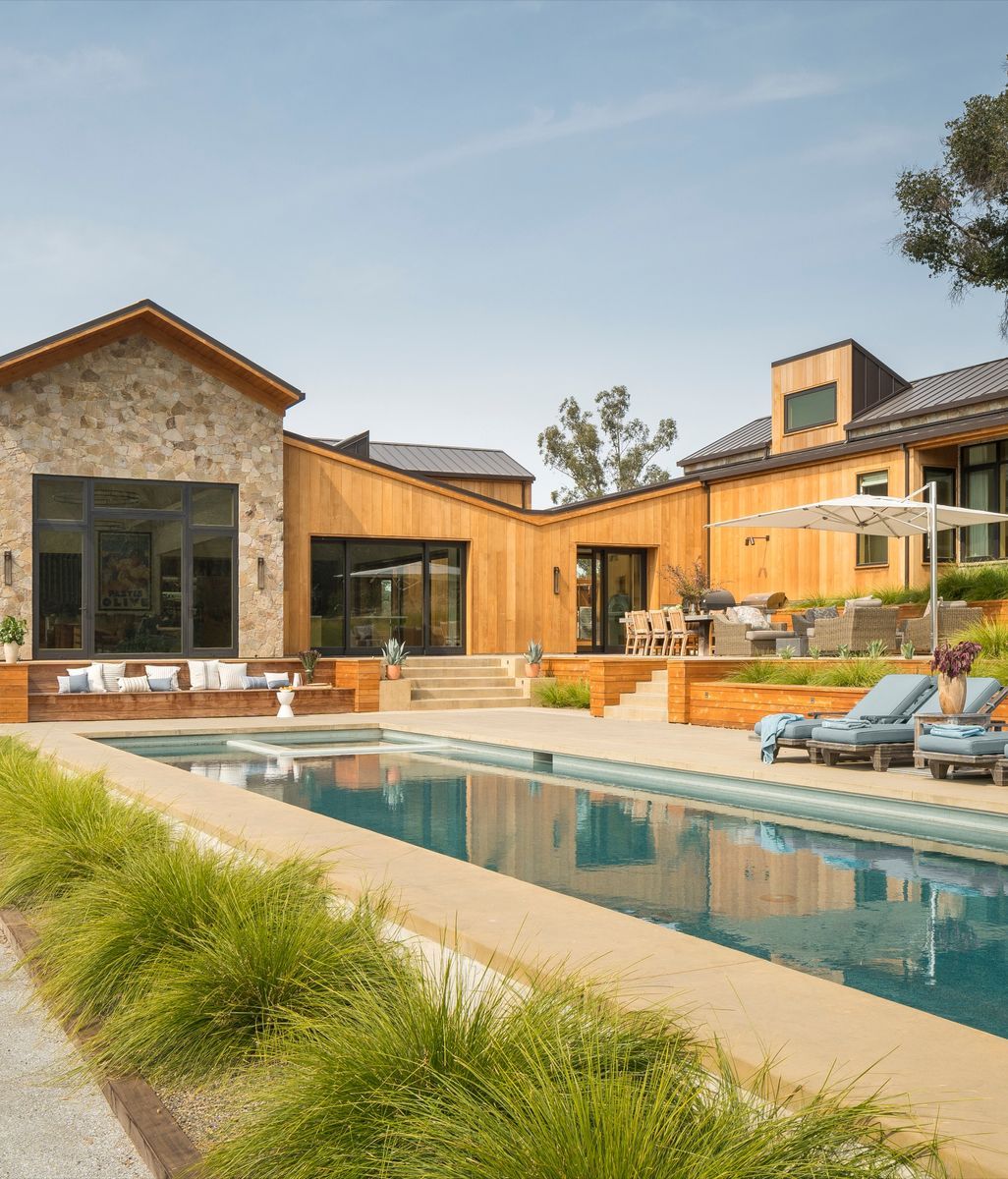
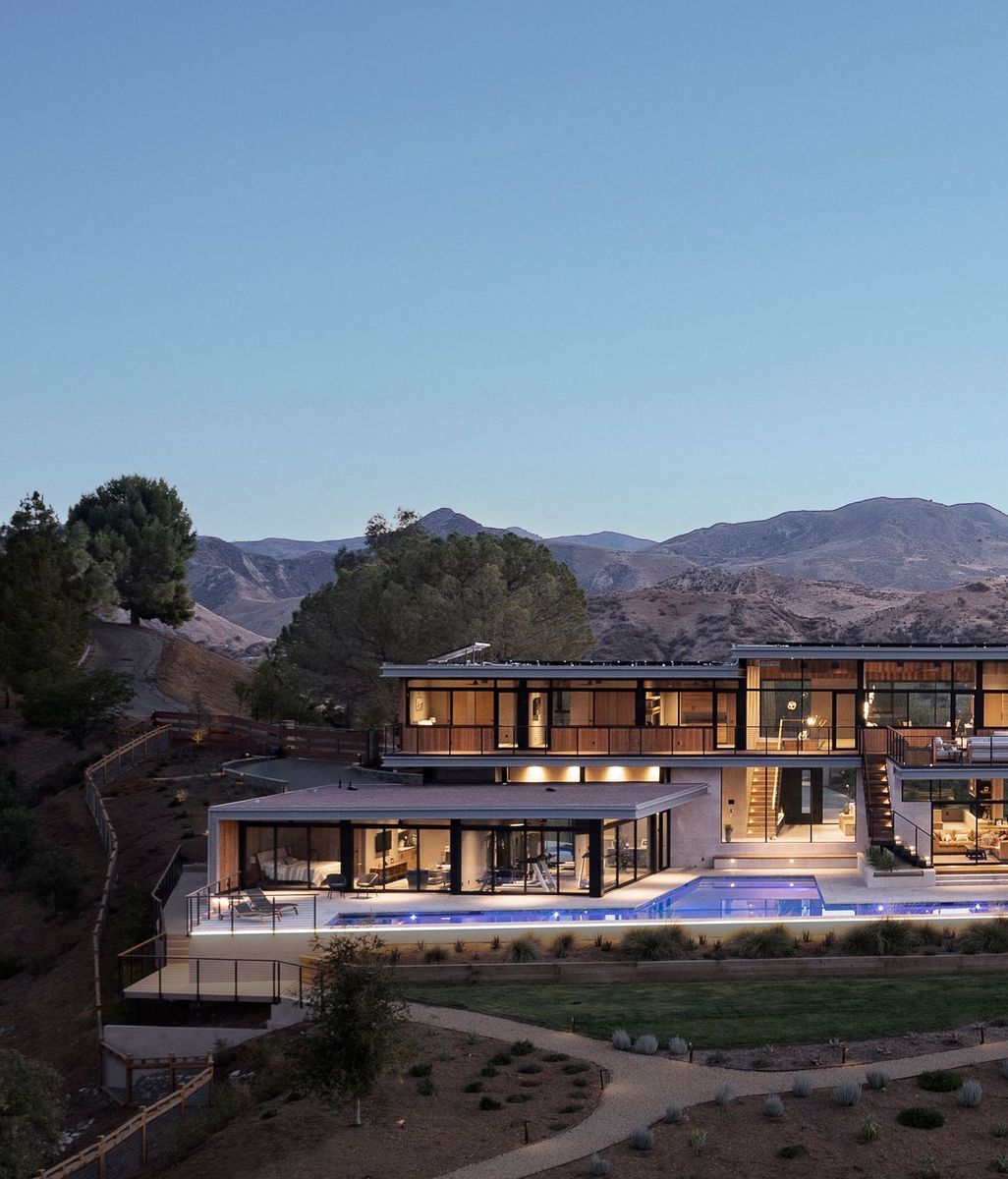
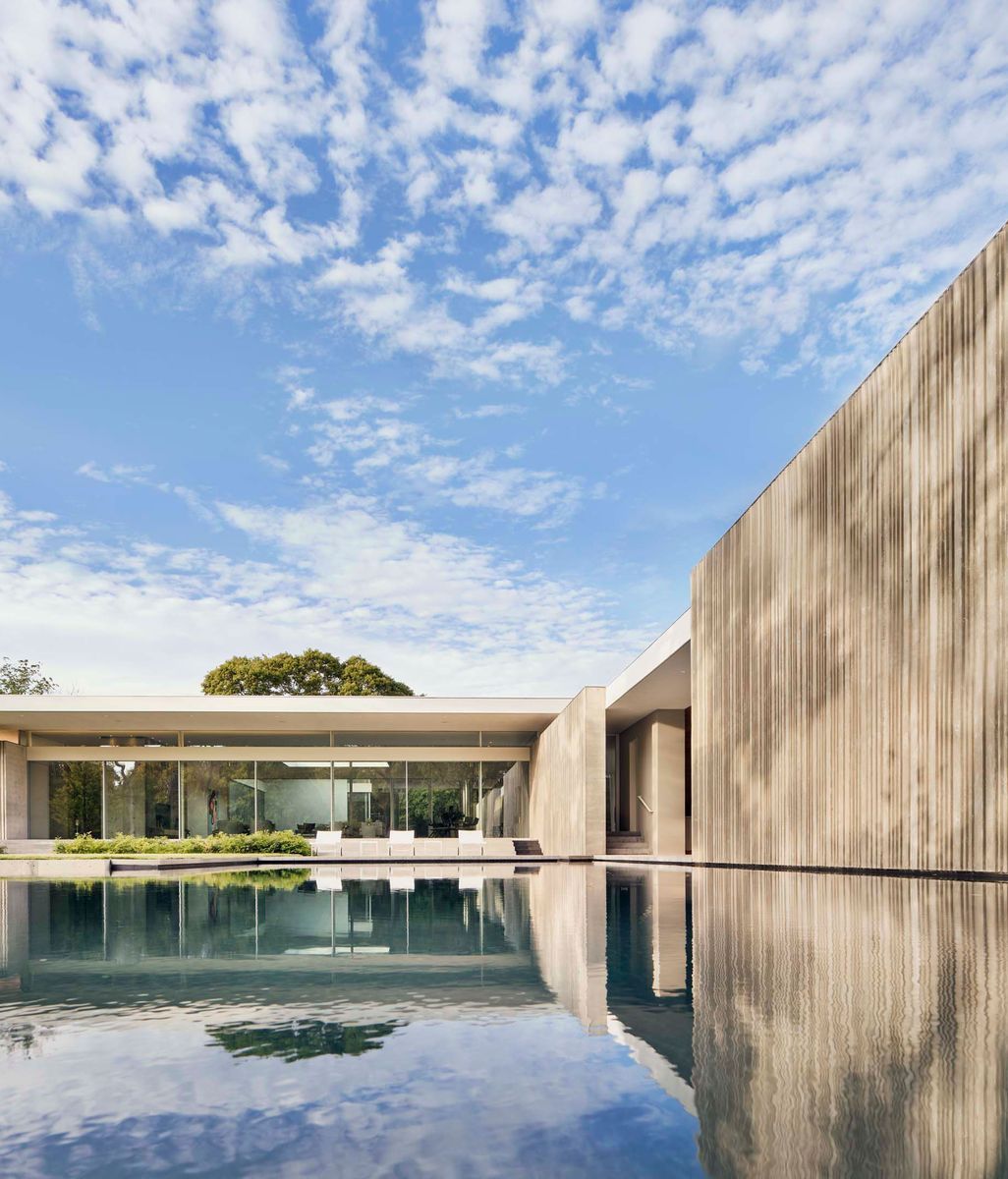
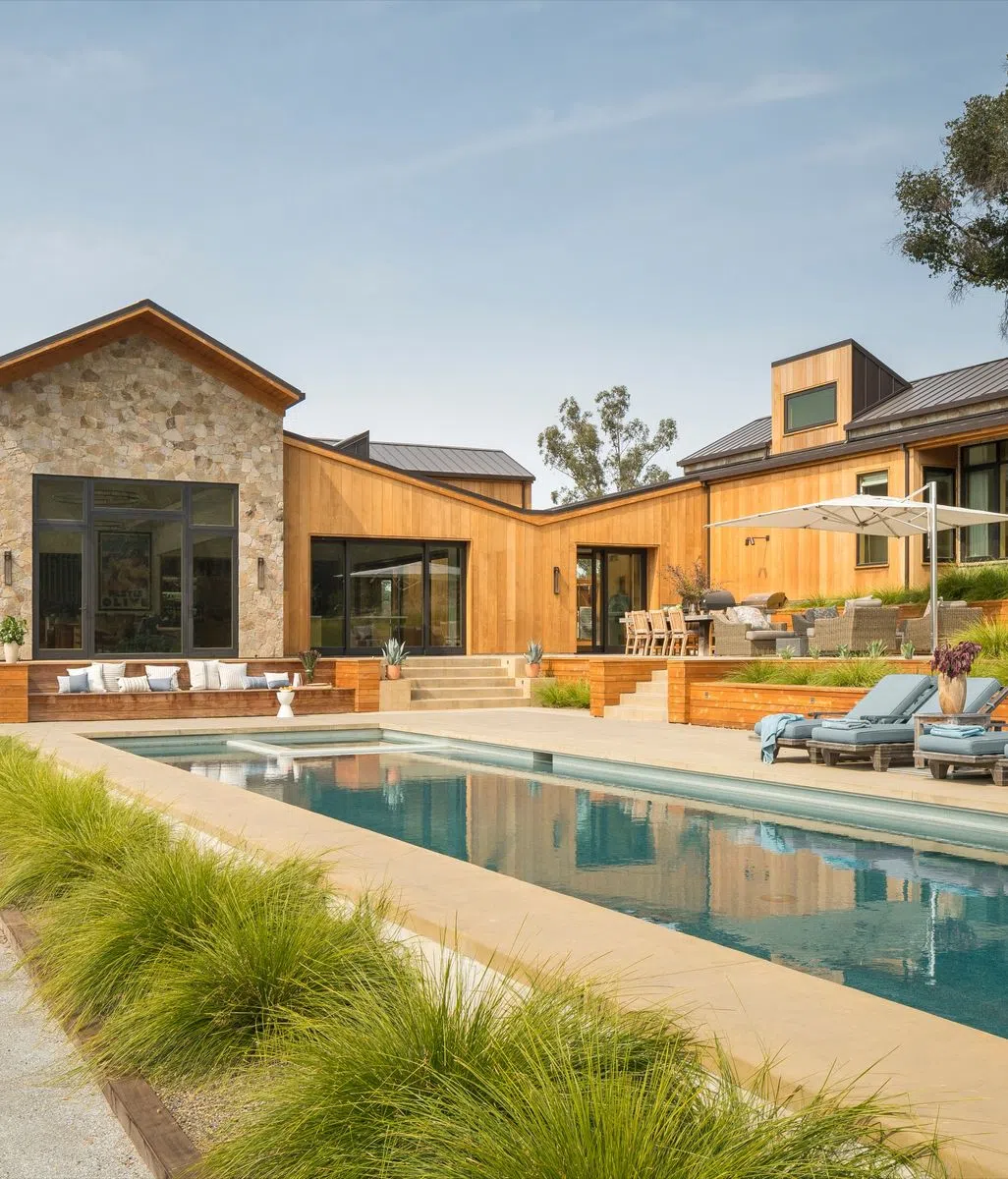
Stunning hillside pool installation on top of a steep hill in Wellington featuring innovative Maxirib™ technology, breathtaking views of the Cook Strait, and a focus on easy maintenance with a self-cleaning system and automated features.
Rethinking Pool Design on Complex Sites: Dispelling some common myths
For architects, a swimming pool is rarely just an add-on. Pools are often an intentional architectural element that must respond to site constraints, structural realities, aesthetics, and the lifestyle goals of the home.
On complex sites, such as sloping blocks, tight access, or integrated outdoor living spaces, the default response is often to specify a custom concrete pool. This is understandable given that concrete has long been perceived as the most flexible, robust, and architecturally pure solution.
However, advances in modern fibreglass pool systems are quietly reshaping what is possible. In many cases, fibreglass is no longer a compromise, instead, it can be a smarter, more durable, and more design-flexible solution, particularly on challenging sites.
Let’s explore some of the common assumptions that often influence pool specification decisions, and why they deserve a fresh look.
Myth One: Concrete is stronger and more durable
Concrete pools are often associated with structural strength and longevity. Yet, when durability is assessed through warranties, performance, and lifecycle costs, the picture becomes more nuanced.
Modern fibreglass pools are designed to last a lifetime, they come with structural warranties that offer a comprehensive level of protection for the homeowner and with engineering innovation, Compass Pools can offer installation options which extend far beyond simple inground pools.
In practice:
Concrete pools often come with relatively limited structural and surface warranties.
High-end fibreglass systems can offer significantly longer warranties on both structure and finish.
Fibreglass surfaces are non-porous, reducing the risk of cracking, staining, and chemical degradation over time.
For architects working in environments where long-term performance and risk mitigation matter, fibreglass deserves consideration not as a lighter option, but as an engineered system with measurable durability advantages.
Myth two: Concrete looks better and offers a superior finish
Historically, concrete pools have been associated with bespoke finishes and architectural prestige. Yet, contemporary fibreglass finishes have evolved dramatically.
depth of colour and light reflection which outshines high-end stone or tile,
a smooth, durable surface that is easier to maintain and more resistant to wear.
From a design perspective, the question is no longer whether fibreglass can look good. It is whether it can deliver a consistent, high-end aesthetic with less maintenance burden for the client.
For many homeowners, the answer is increasingly yes.
Although moulded fibreglass pools are manufactured in defined shapes and sizes, this does not limit what the finished pool can become. Compass Pools are designed to be adapted and enhanced, from simple upgrades through to highly customised architectural features.
Today, Compass fibreglass pools can incorporate:
beach zones and shallow lounging areas,
custom steps and ramps,
integrated spas and plunge pools,
vanishing edges and infinity details,
raised and out-of-ground installations,
concrete formwork, tiling, and architectural surrounds,
water features and lighting systems.
Instead of restricting design, a fibreglass pool can provide a strong structural base that architects and designers can build upon. Custom elements such as surrounds, edges, levels, and integrated features can be added to suit the architecture of the home and the character of the site.
In many cases, this approach delivers the same visual impact and design sophistication as a fully custom concrete pool, while offering greater certainty in engineering, construction, and long-term performance.
This 10.2 X Trainer includes a custom beach zone and bubbler feature to create the perfect space for young children.
Design for the site, not the default
Perhaps the most overlooked advantage of modern fibreglass pools is their ability to be specifically engineered for challenging sites.
On sloping or elevated sites, fibreglass pools can be:
structurally self-supporting (no need for extra retaining) and partially or fully raised,
integrated with decks and other structures,
installed with reduced excavation and structural complexity compared to full concrete builds.
In many cases, this results in:
faster build times,
reduced construction risk,
lower overall project costs,
and a pool that is tailored to both the architecture and the terrain.
Importantly, this does not mean compromising on design ambition. It means achieving it through smarter engineering.
As an absolute beachfront build, careful consideration had to be given to the coastal environment and aesthetic from the beachfront.
A new design conversation
The intention is not to suggest that concrete pools no longer have a place in architectural design. They absolutely do.
Rather, the opportunity is to expand the design conversation.
Compass Pools offer architects the ability to deliver:
better-looking outcomes,
longer-lasting solution,
site-specific engineering,
and often, significantly better value for clients.
In an era where clients expect both design excellence and practical intelligence, fibreglass deserves to be evaluated not as an alternative, but as a contemporary architectural solution.