In the California Desert, a Midcentury Home Finds New Depth and Dimension

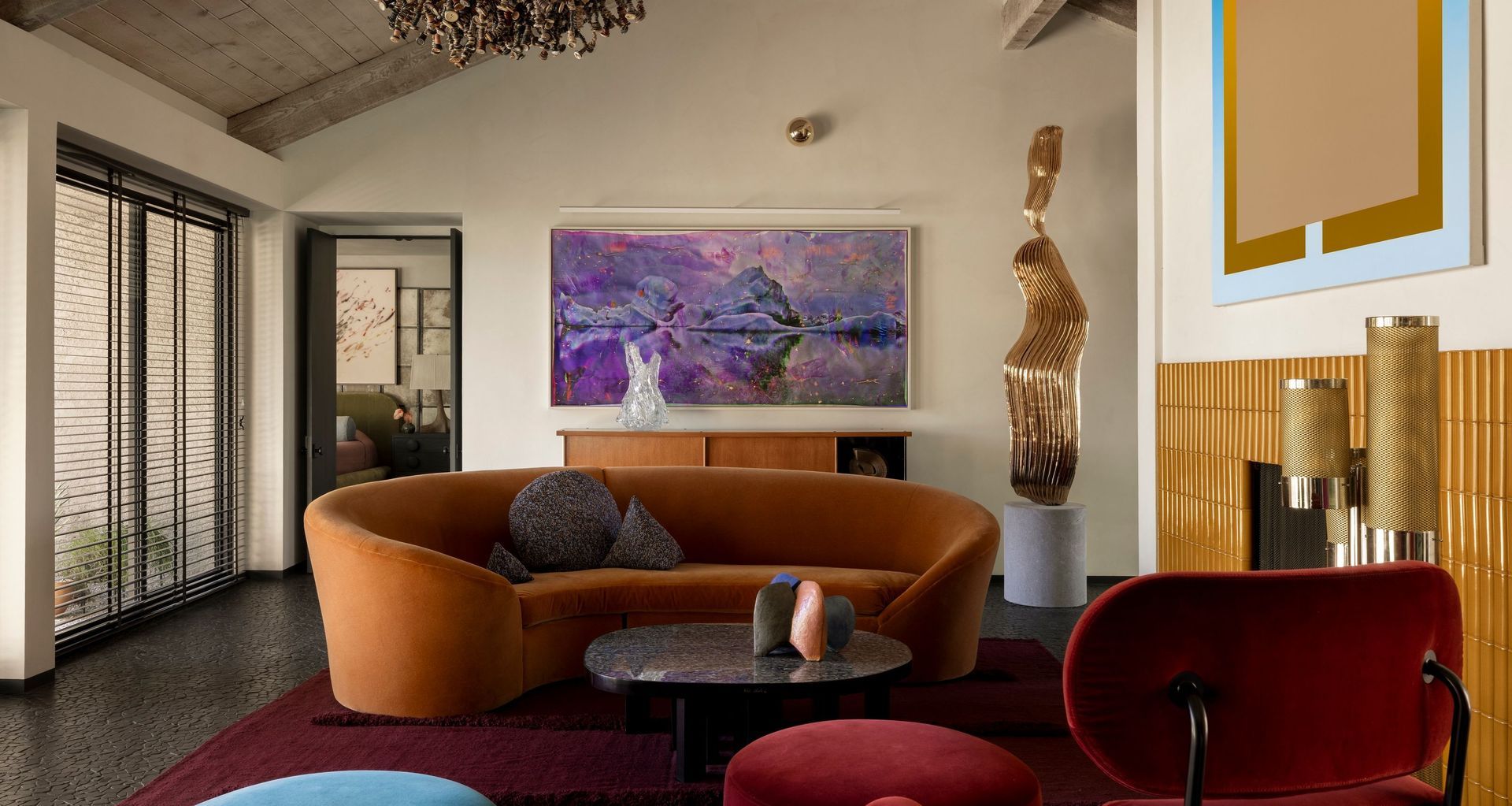
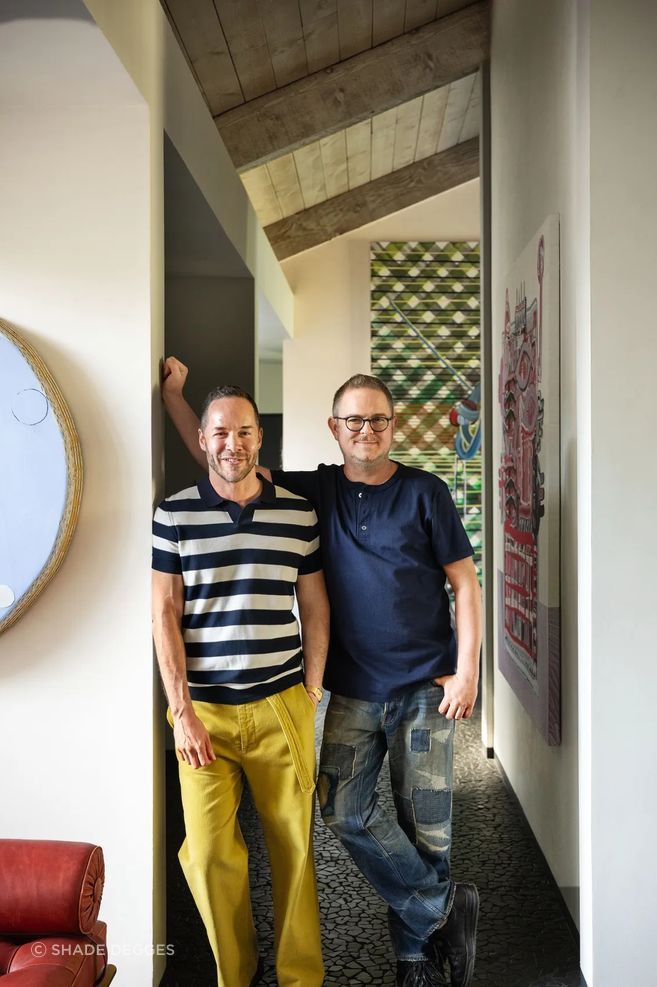
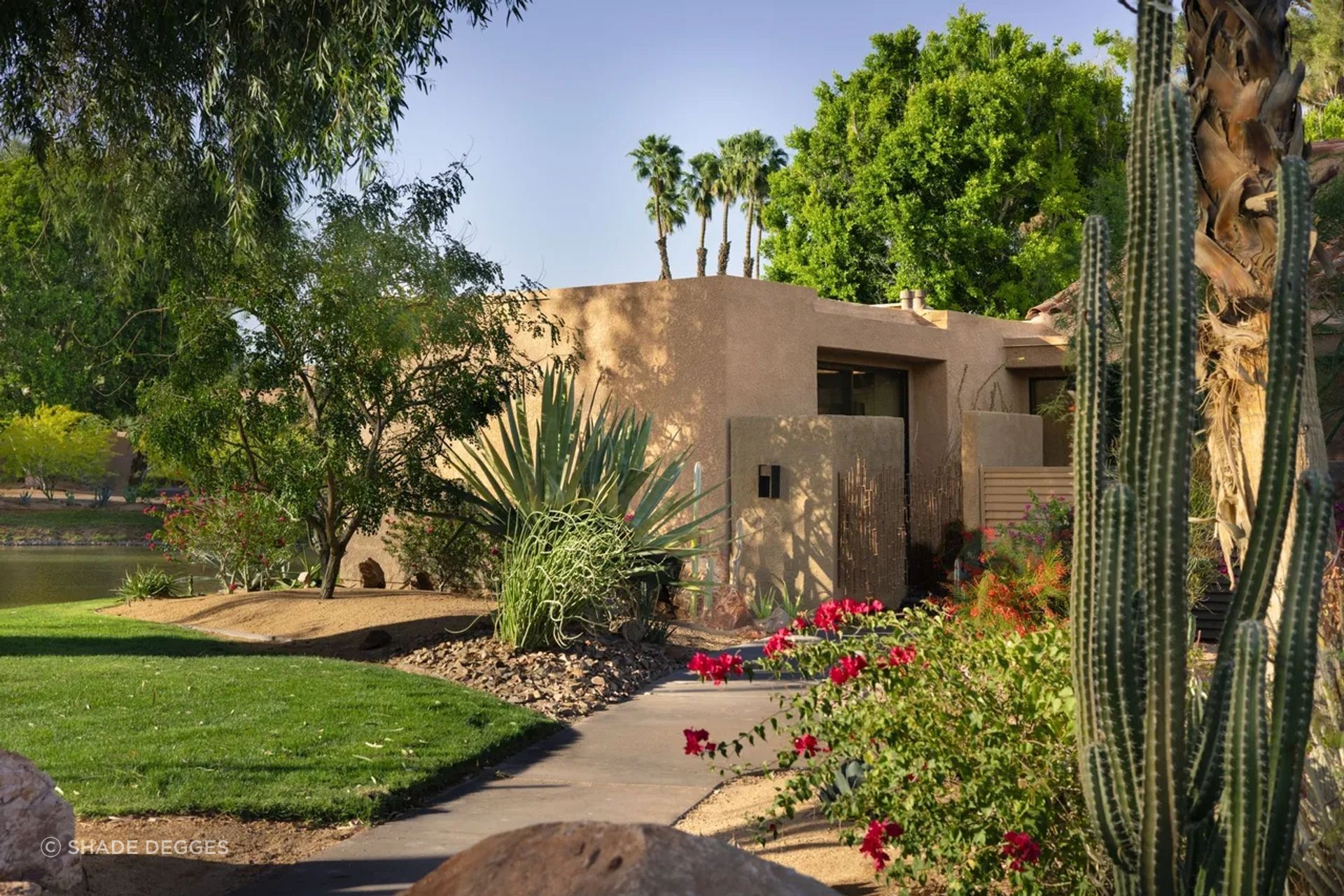
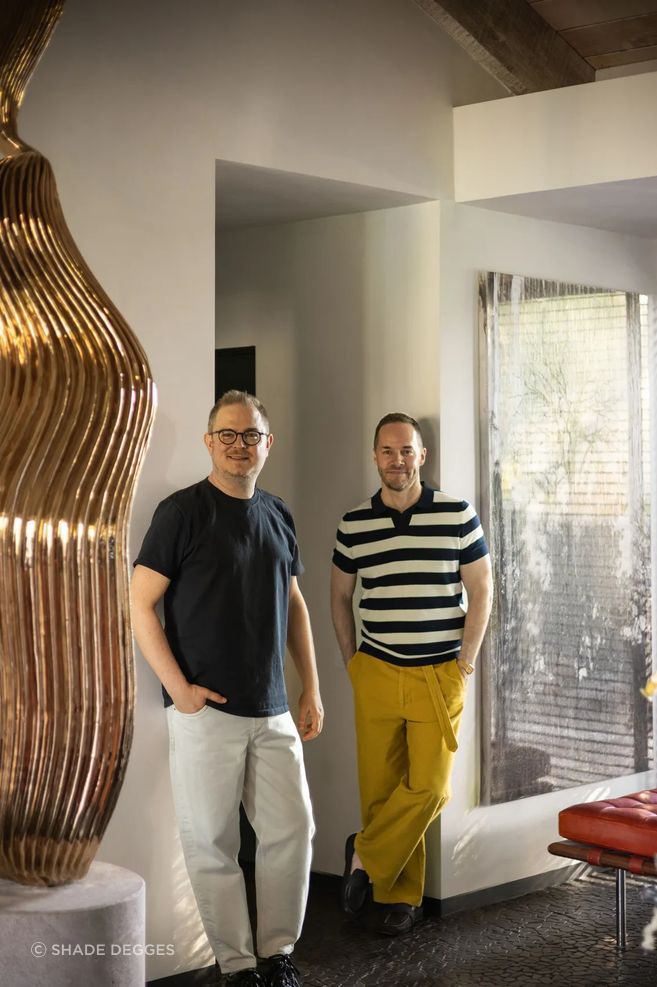
"In a sense it’s intuitive, but in another way it’s super studied,” says AD100 designer Ryan Lawson, reflecting on his creative approach. “One decision leads to the next set of decisions, and then those, once they’re made, lead to the next.” In the case of the Southern California getaway that he shares with Sean Robins—cofounder of the furniture showroom Studio Van Den Akker—that chain of choices began with the purchase of a midcentury Rancho Mirage residence, its architect unknown (and possibly unknowable, after town records perished in a fire). If the house was not, as Lawson recalls, “exactly in original vintage condition,” it had undeniably appealing qualities, including proximity to a lake and high angled ceilings with handsome beams and wood planks.
Those features—how they appear to glow softly rather than reflect light—became one of Lawson’s primary inspirations for the couple’s desert home. “The sun here can be so harsh,” he says. “Harnessing that light, minimizing its glare and directness, is an important thing.” Today, the house is all about gradations of shine and shadow. Chalky limewash-painted walls, satin-finished cabinetry, occasional stretches of stone, glazed tilework, ceramic fireplace surrounds—these surfaces and more animate the interiors’ planes and angles. All the while, broad windows, one added and others expanded, frame views of trees, plantings, and water. Filtering those vistas are aluminum blinds, their two-inch bands yielding a dappled glow.
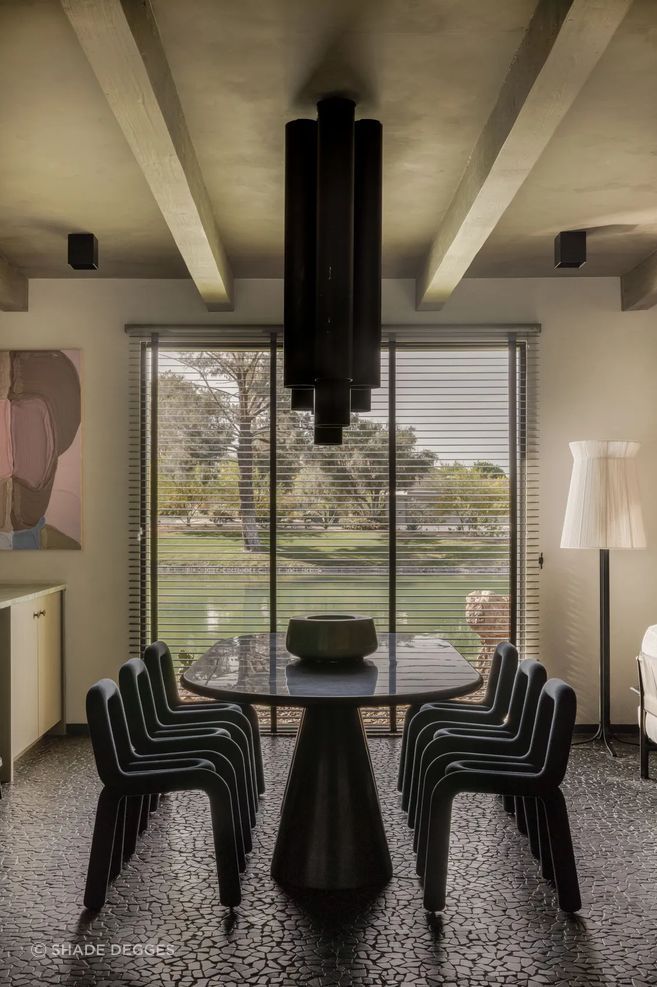
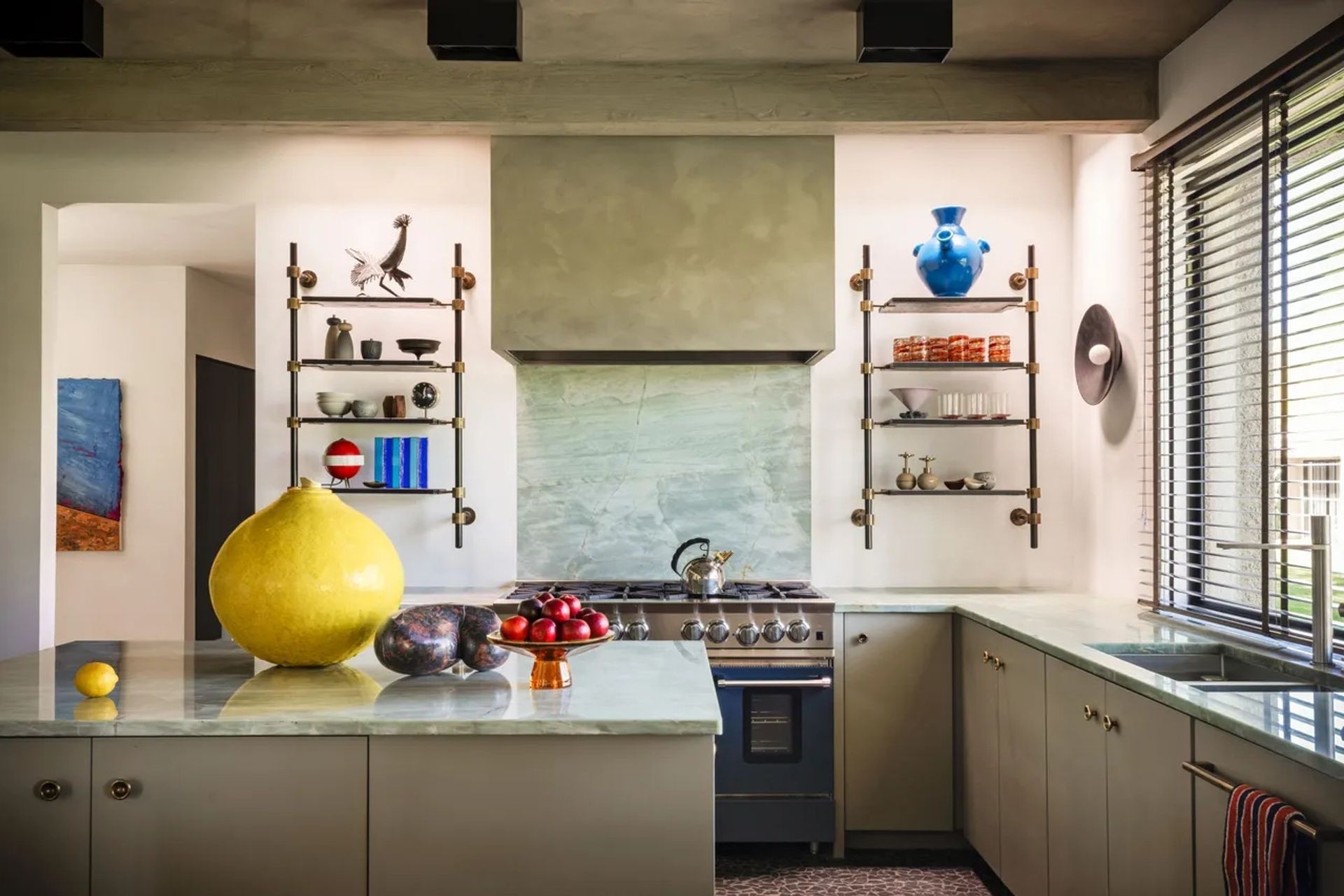
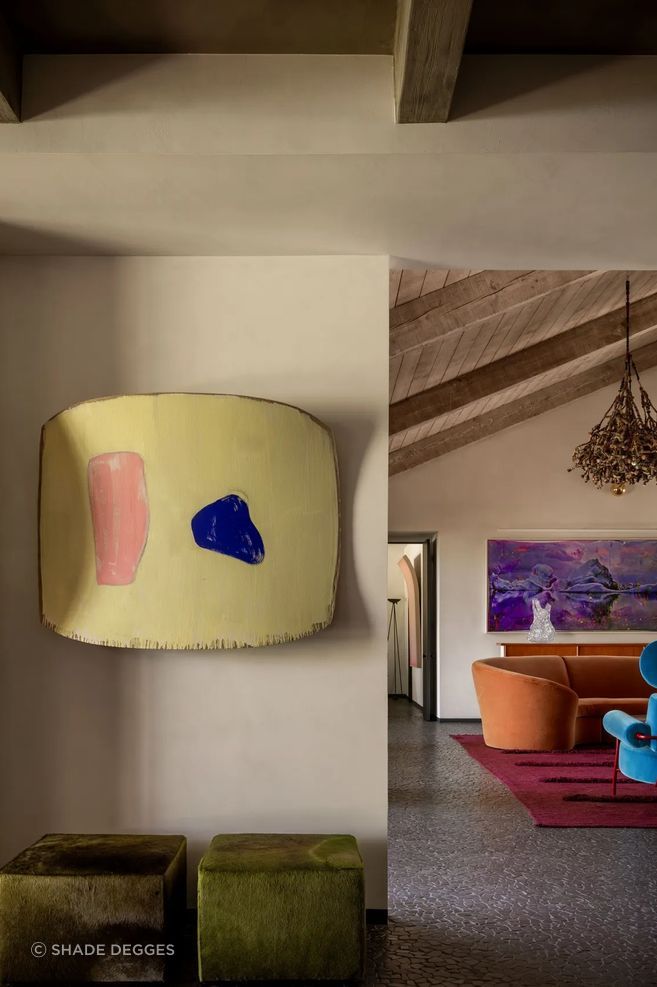
To adapt the house for casual entertaining, the couple reshuffled the separate dining room, kitchen, and family room into one long space, with new ceiling beams that echo the originals. The boldest choice may have been the floors, previously dominated by wall-to-wall carpeting (“even in the bathrooms!” Lawson laments). In its place, the couple added expanses of sliced black river stones, their polished surfaces resembling elephant skin or, perhaps more to the point in an arid climate, the cracked earth of a dry lake bed.
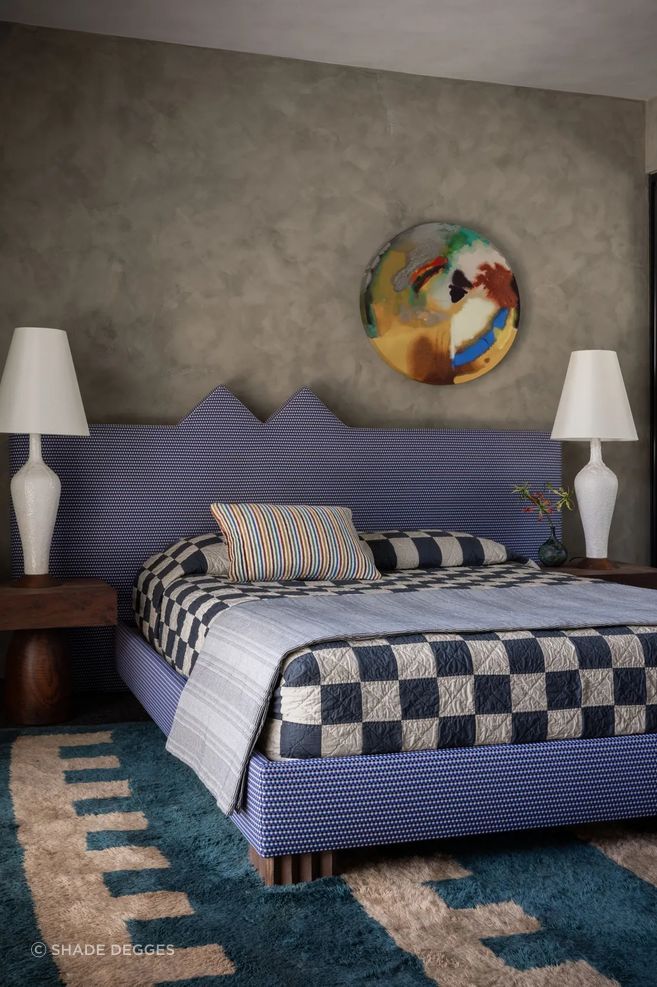
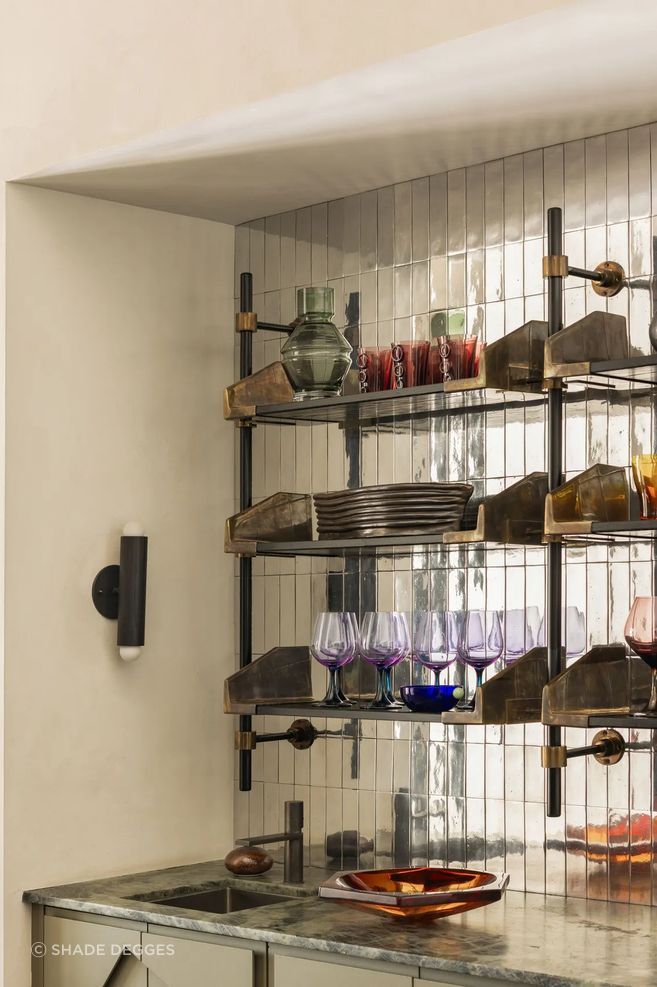
That foundation forms a steady baseline for Lawson’s harmonic vignettes of artworks, design pieces, and custom installations, many of them by makers close to the couple. The project also functioned as something of a laboratory for the couple’s own bespoke ideas. Upholstered beds, for instance, became prototypes for Lawson’s upcoming furniture collection, Very Ryan Lawson. And Studio Van Den Akker now offers the mirror designed for the guest bath and shelving conceived for the kitchen and bar.
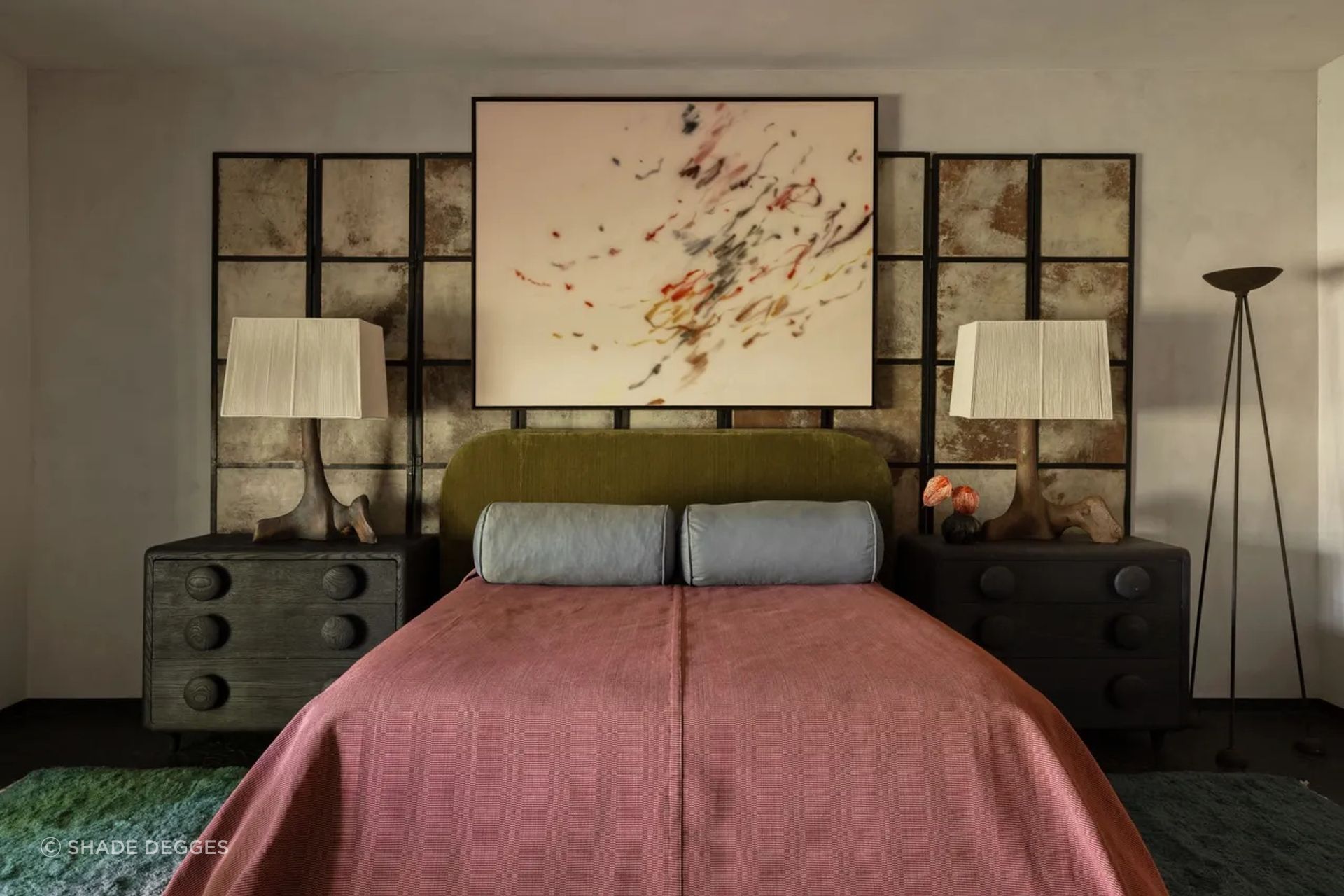
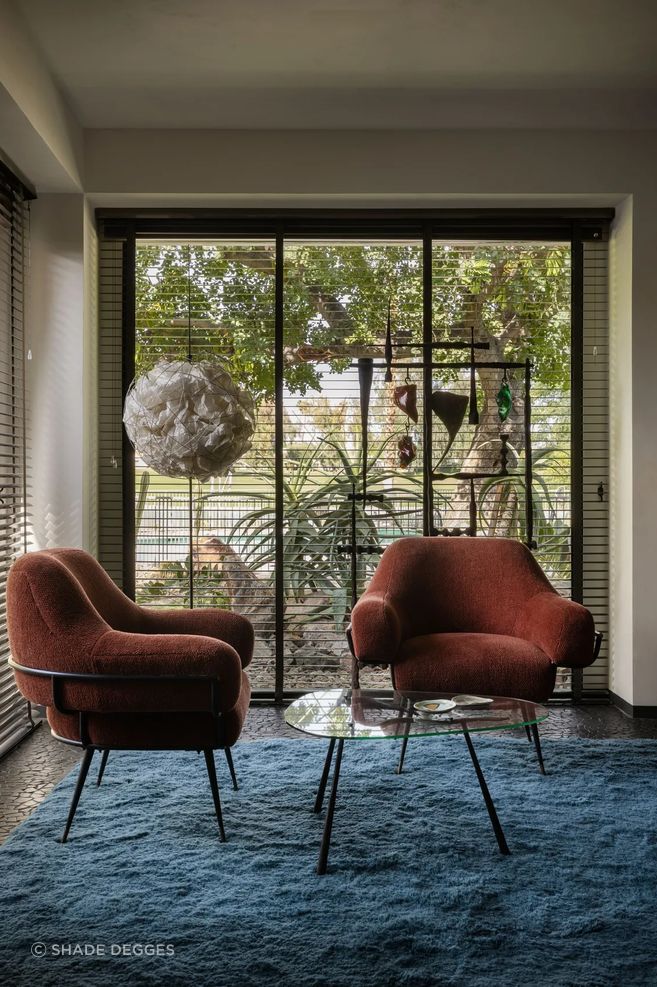
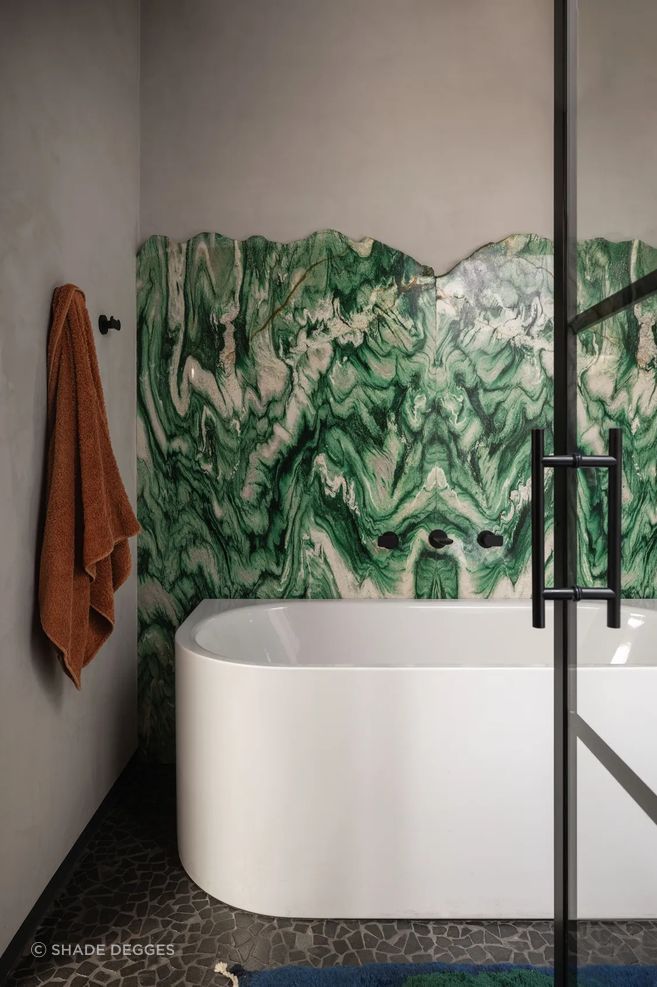
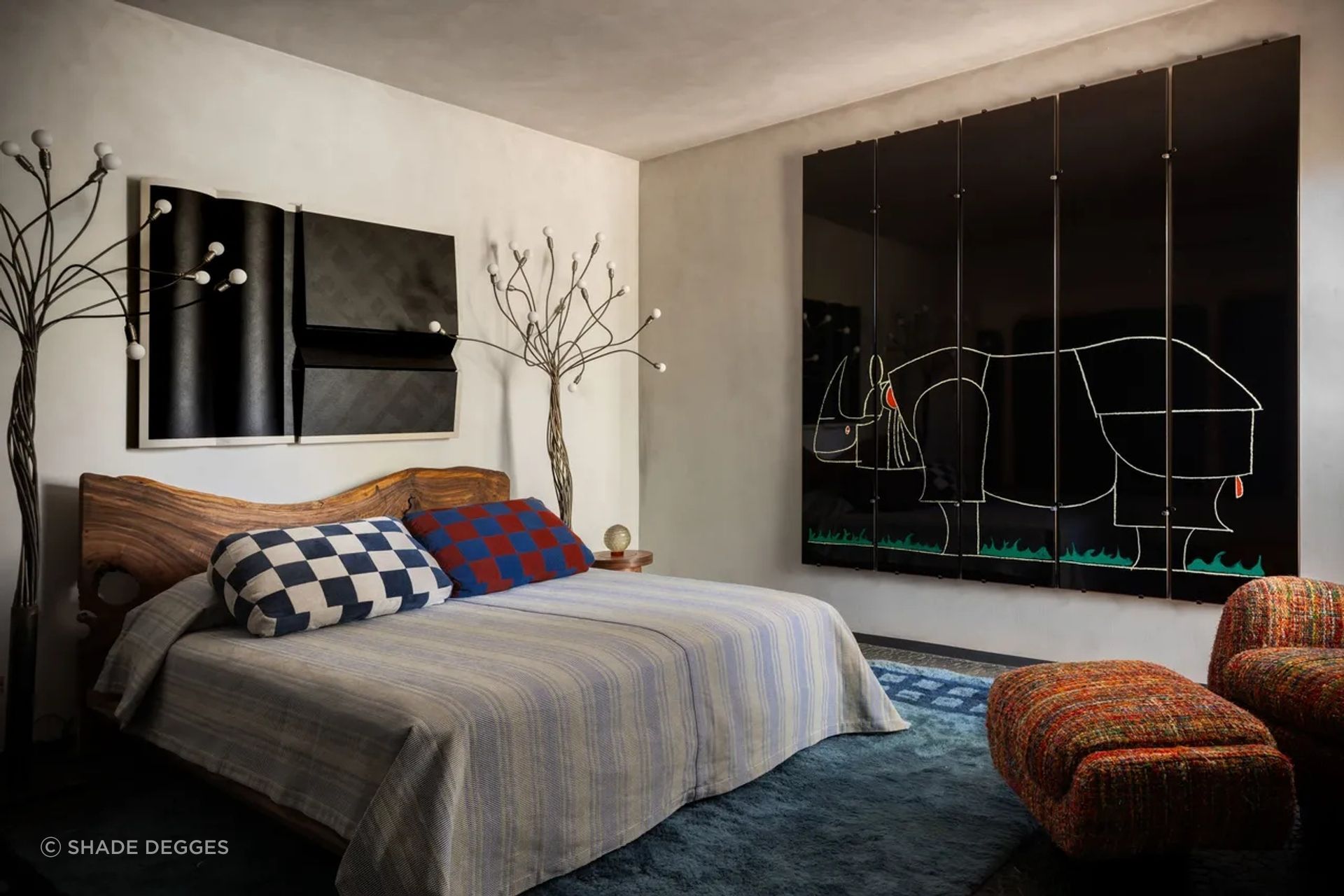
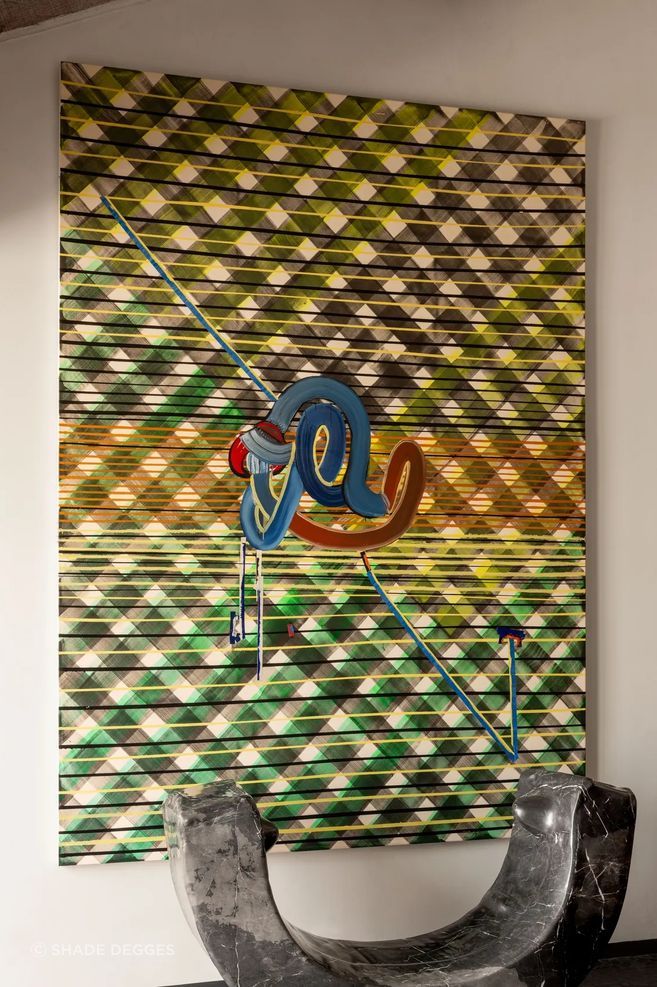
Despite the dwelling’s spare, scrupulously edited rooms, a careful look around reveals no shortage of dramatic moments. The bookmatched marble slabs that back a soaking tub exude an almost baroque extravagance. Fashioned out of twisted and twined metal tubes, bedside floor lamps by Enzo Catellani look like trees of life or perhaps relatives of the tentacled hydras studied in high school biology. Hanging in the living room are bushy sculptures by Los Angeles craftsman Clare Graham, their chandelier-like form crafted from individually strung buttons. Around every corner, in fact, there are wondrous works of art to behold, from round paintings by Otis Jones to tectonic sculptures by Alma Allen, who for many years worked out of his studio complex in nearby Joshua Tree.
Robins and Lawson’s retreat is a colorful house, without seeming so. “When you walk in the door,” Lawson muses, “you see a blue chair, and you see a red chair, and you see an orange sofa, and you see a purple photograph of a glacier, and you see a burgundy rug.” Yet the assembled hues aren’t discordant or Day-Glo. Instead, the palette repeats the tones of the desert and Palm Springs environs.
The area had long been a favorite destination for Robins, who visited with his family growing up. Lawson, too, had come to love its trove of modernist architecture and flamboyant scenery. “We’ve tried to make a setting for our lives,” Lawson says, “a place to be able to live with the things we love.” And a lasting place at that. Their home is intended to change and evolve, while reflecting its heritage and the spirit of its place—which it does, beautifully, even as it manages to be something entirely new and unique.
This story appears in the April issue. Never miss a story when you subscribe to AD.
Written by Kyle Hoepner for Architectural Digest