How to Choose the Right Window Furnishings | Insights from Redgraves

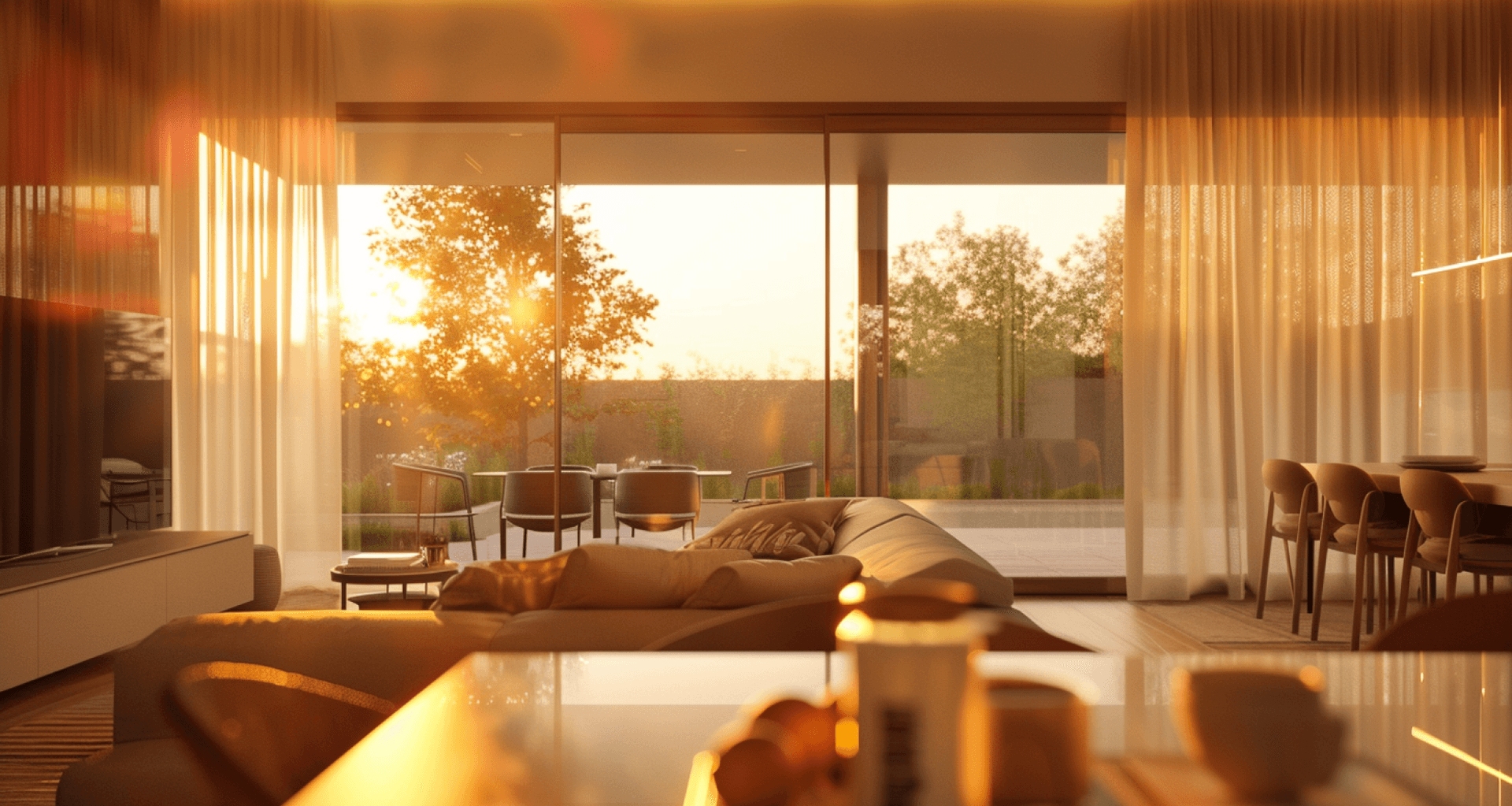
Expert insights on choosing window furnishings
When you’re planning new window furnishings, it’s easy to focus on what you can see: fabric and colour. In practice, the right combination of custom curtains, blinds and shutters has to resolve function, light control, privacy, thermal performance and architecture all at once. At Redgraves Home Fabrics, our team has specialised in made-to-measure window treatments for more than 60 years, working with homeowners, architects and interior designers across Auckland and throughout New Zealand.
Unlike retailers who lead with a product catalogue, Redgraves starts with how you live, how the building performs and what the space needs to feel balanced over time. By combining deep textile knowledge with careful site assessment, we help you choose window furnishings that look beautiful on day one and continue to perform for years.
1. Start with function, light and privacy
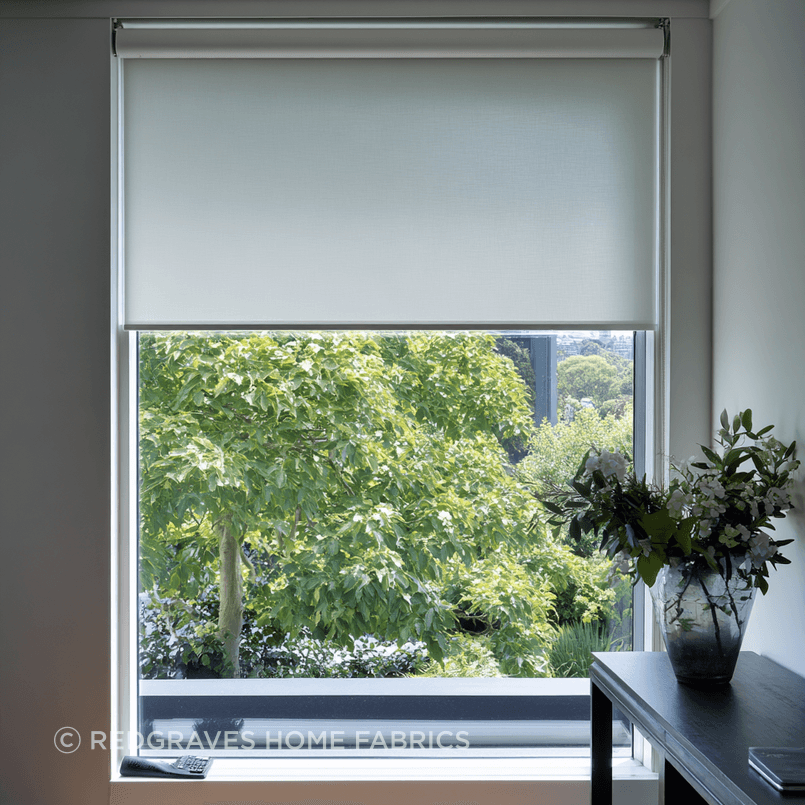
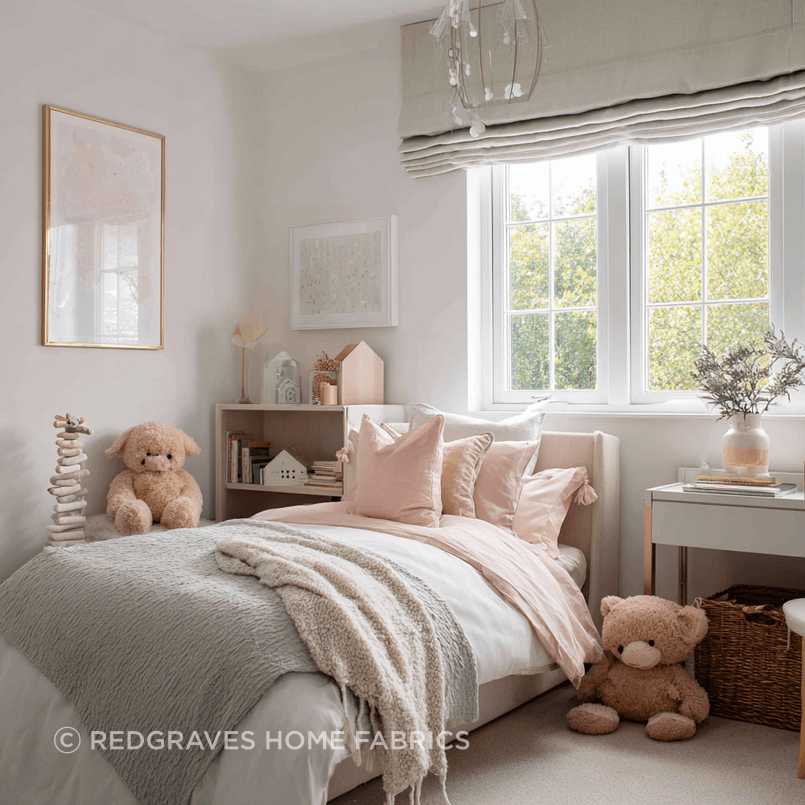
The first decision is not “curtains or blinds?”, but what each room needs to do at different times of day. Bedrooms generally call for strong light block, privacy and acoustic softness, while living spaces often benefit from layered sheers, dim-out and view management rather than full darkness.
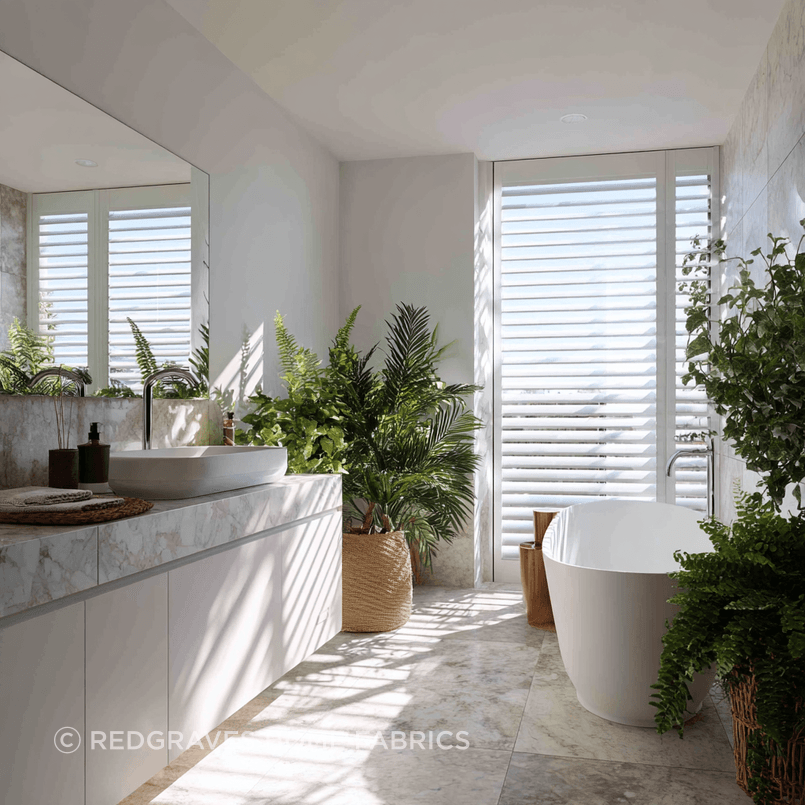
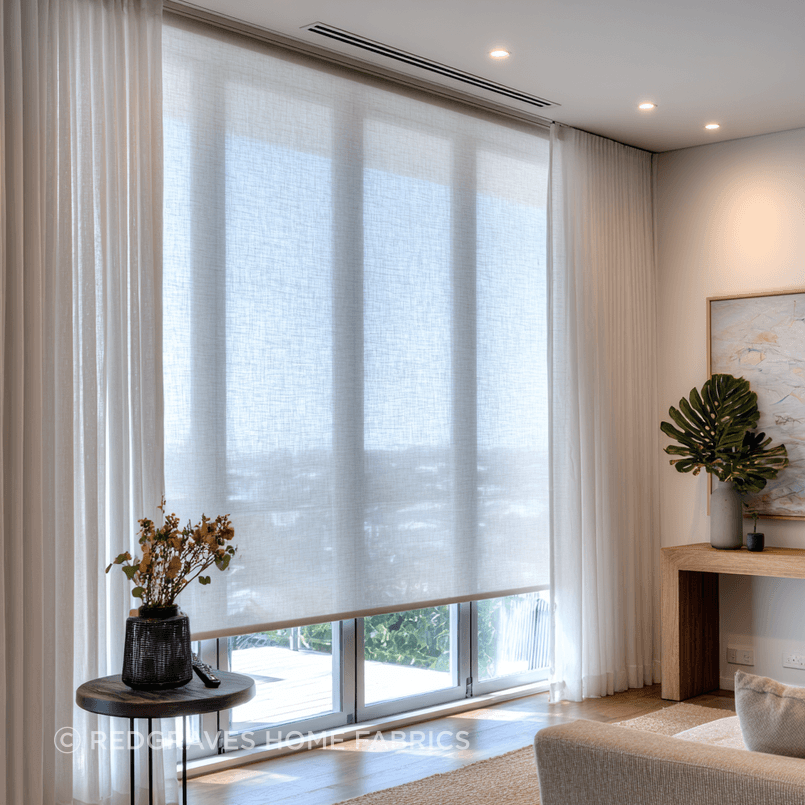
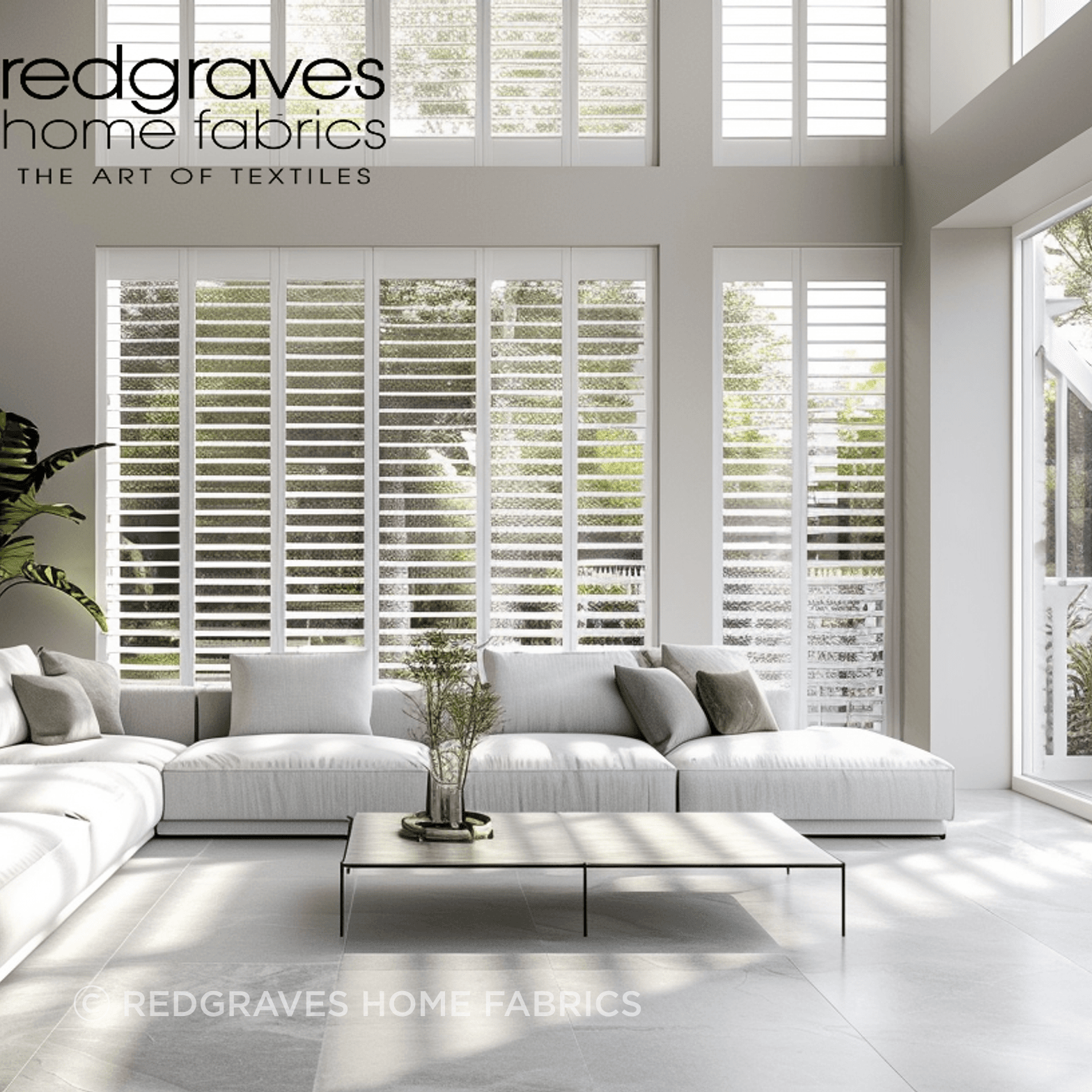
In bedrooms, we often specify custom blockout curtains with hotel-grade bespoke linings to deliver strong light blocking, privacy and acoustic softness, paired with a fabric that suits your room’s colour palette and style. Alternatively, a soft, flowing textural sheer layered over a discreet roller blind can provide additional blockout and thermal performance while keeping the room light and relaxed. Living spaces typically benefit more from modern designs, colours and textures with light-filtering qualities rather than full darkness, maintaining connection to views while controlling glare. In moisture-prone areas such as bathrooms and laundries, moisture-resistant shutters or high-grade aluminium and polymer Venetians provide privacy and durability without warping, and can be specified in core-stabilised profiles that deliver a refined, coastal-inspired look
For each space, your Redgraves consultant will consider:
- Orientation and natural light.
- How you want your home to feel and function
- Privacy and curb appeal
- How often you want to operate the window furnishings.
- Whether automation or manual operation is best for you
- Glare control, light filtering or full darkness requirements
- How to each room to life with window furnishings that add softness, colour and texture, flowing naturally with the palette of your home.
2. Design window furnishings to your architecture
Well-chosen window treatments support the architecture rather than compete with it.
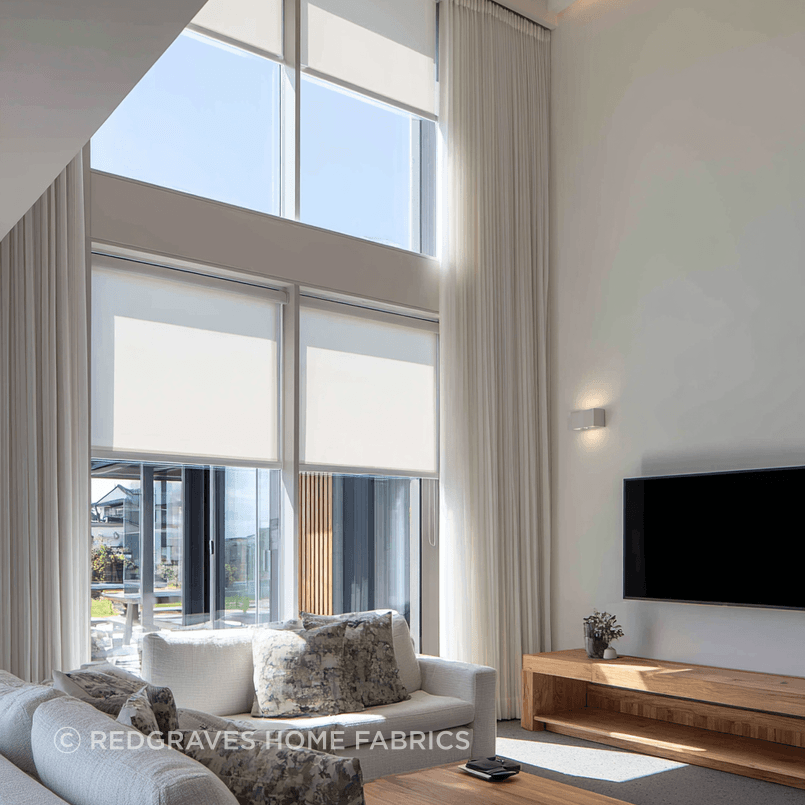
Large sliding doors and floor-to-ceiling glass often call for wall-to-wall custom curtains on ceiling tracks, while character villas may be better suited to shutters or tailored drapes that respect original proportions.
Redgraves frequently collaborates with architects and designers at early planning stages, advising on recesses for flush curtain tracks, pelmets, pockets for blinds and integration with built-in joinery so window furnishings sit seamlessly within the architecture. When we’re involved at the drawing stage, we can also resolve stack-back allowances, sill details and how best to conceal hardware, helping the finished room read as calm, cohesive and beautifully considered rather than cluttered by visible tracks and fittings.
Our point of difference is a textile-first approach: with our team hand-sourcing fabrics directly from mill to home, we understand how each fabric behaves over wide spans, in double-height voids and on complex corner windows, and can calibrate headings, fullness and lining to suit.

3. Use textiles, colour and texture to shape mood
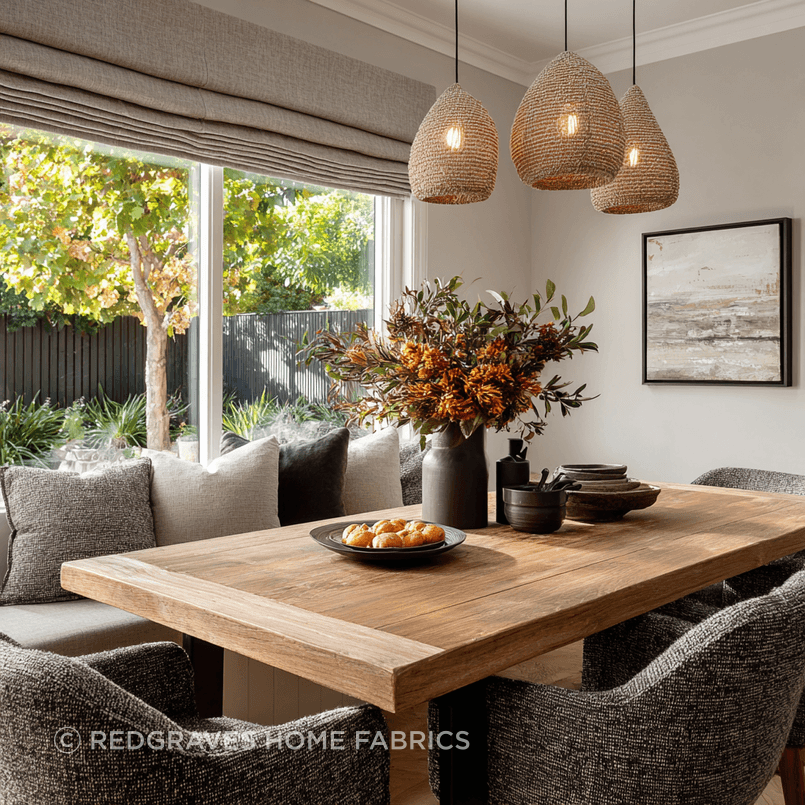
Once function and architecture are resolved, textiles and colour create the emotional tone of a room. Sheer curtains in soft neutrals can make an open-plan living space feel calm and light-filled, while rich velvets and textured weaves can bring intimacy to a media room or formal lounge.
At Redgraves’ Textile Gallery & Showroom in Mairangi Bay, fabrics are curated rather than stacked, making it easier to compare options from leading local and international textile houses.
Our design specialists will help you decide whether your window furnishings should quietly support your existing palette or become a focal point, and how linings, headings and hardware can further refine the look.
Because we work closely with architects and designers, we can also match or complement upholstery, wallcoverings and soft furnishings to create cohesive schemes across entire homes.
4. Plan for integration, automation and installation
Early planning is essential when you want concealed tracks, recessed blinds or hard-wired automation.
Our team regularly works with builders and electricians to coordinate:
- pocket sizes, negative details
- power locations for motorised curtains and blinds
- Integration with switches, remotes or smart-home systems.
Where wiring is not possible, discreet rechargeable or solar battery-powered automation offers convenience - especially on high or hard-to-reach windows.
We pay close attention to stack-back, drop lengths and fixing points so that, your window furnishings feel effortless to live with
5. Why architects, designers and homeowners trust Redgraves
Redgraves has been crafting custom curtains, blinds, shutters, upholstery and soft furnishings since 1958, giving professionals and homeowners confidence that complex briefs will be understood and executed correctly.
Our work ranges from heritage restorations and coastal homes to inner-city apartments and commercial spaces, with consistent feedback on quality, communication and attention to detail.
Key points of difference include:
- A textile-led approach, backed by one of New Zealand’s most experienced curtain and blind teams.
- A curated Textile Gallery & Showroom that makes material selection efficient and inspiring.
- In-home and on-site consultations across Auckland, where we study light, views, architecture and lifestyle before recommending products.
- End-to-end service – from design advice and sampling through to measure, manufacture and installation – with accountability sitting with a single, trusted specialist.