How to Choose a Bed That Anchors the Room


The bed is the largest piece of furniture in most bedrooms, yet it's rarely given the same level of attention as the rest of the home. Sofas get styled, dining tables get debated, but beds tend to be chosen on comfort alone and left at that. It is worth more thought than it usually gets, because the bed sets the tone for the whole room before anything else is added.
Start with form, not just fabric
Upholstered and wooden beds do different jobs in a room, and the choice comes down to what kind of bedroom you are building.
An upholstered bed softens a room. A tall, panelled headboard in bouclé or linen gives the eye somewhere to rest and adds warmth to a space that might otherwise feel hard-edged, especially where floors are timber or stone. Look for clean, tailored lines rather than heavy tufting. A simple channel or panel detail reads as considered rather than fussy, and ages better in photos and in person.
A wooden bed does the opposite. It grounds a room and gives it structure. Solid timber in a low, simple form, oak or walnut, works well where a room already has softness elsewhere through rugs, linen and curtains. The timber becomes the quiet, structural note in the room rather than the decorative one.
Neither is the better choice. It depends on what the rest of the room is doing.

Let texture do the work
Once the form is decided, texture is what makes the bed feel intentional rather than incidental.
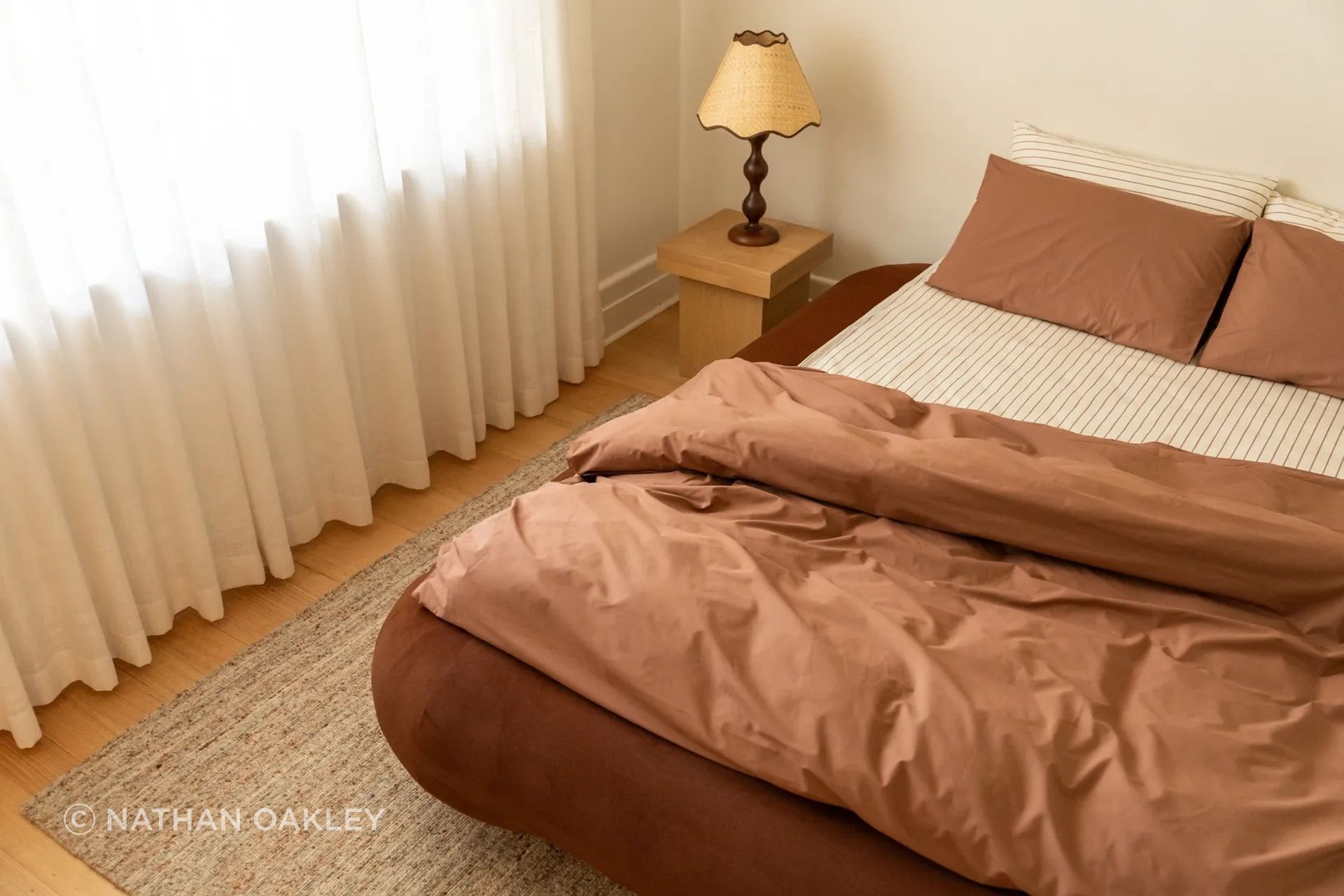
For upholstered beds, fabric does most of the work in setting the mood. A tighter, more tailored weave reads as calm and architectural, while a looser, more textural weave brings warmth and softness to a room. Velvet can work too, but it wants a restrained room around it. Available in Eden, Marnie and Fossil, each finished to hold its shape and its colour over time.
For wooden beds, finish matters more than species. A raw or lightly oiled finish keeps the timber feeling honest and unfussy. A darker, more lacquered finish brings a bed closer to furniture-grade formality, which suits a more tailored bedroom.

Style around the bed, not on top of it
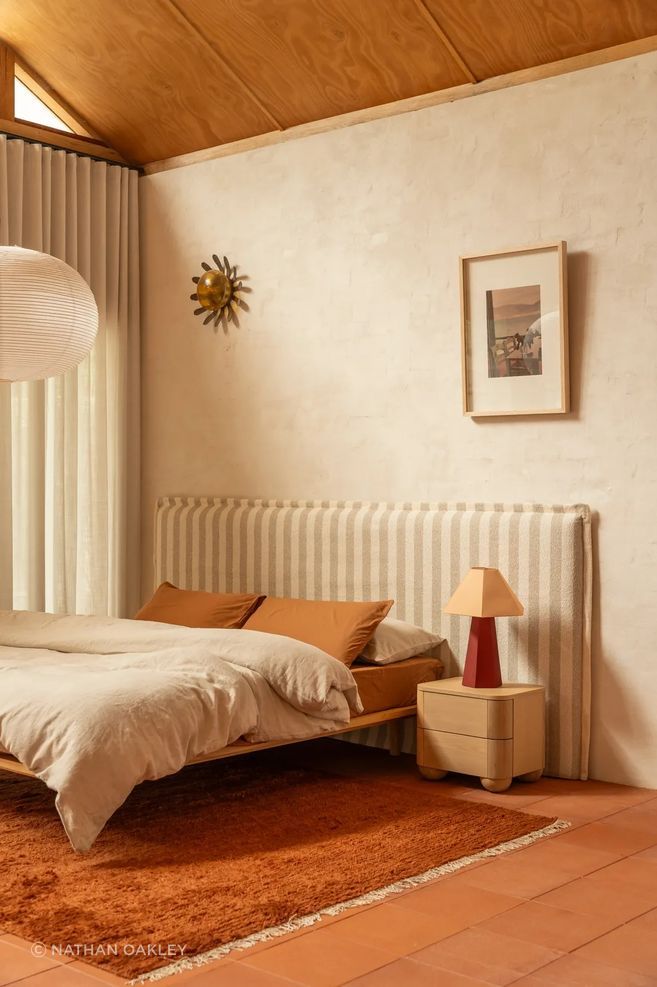
The most common mistake is over-dressing the bed itself instead of the room around it. A well-made bed does not need much. Layer two or three cushions at most, choose one throw rather than several, and let the headboard or timber frame stay visible rather than buried under linen.
The better opportunity is in what sits either side of it. Bedside tables in a contrasting material, a single lamp with a warm, low glow, and a rug that extends well past the edges of the bed do more for the room than another cushion ever will. The bed should read as the anchor. Everything else should feel like it was chosen to sit alongside it, not to dress it up.
