Exploring Cavity Sliding Door Configurations

When most people picture cavity sliding doors, they imagine the familiar single door panel that disappears smoothly into the wall to save space and create flow. While this classic configuration remains a staple in Australian homes, the team at Triline designs and manufactures far more than the standard option.
For builders, architects, and designers looking to maximise space, improve circulation, or introduce flexible room layouts, the configuration options available today open the door to far more creativity. From custom sliding doors built around architectural features to multi-panel systems designed for large, multifunctional spaces, Triline offers cavity slider solutions engineered to elevate both functionality and design.
Below, we break down the main cavity slider configurations we manufacture—along with real examples of where each option excels.

1. Single Cavity Slider – The Classic and Still the Most Versatile
The single cavity unit remains the go-to for many interior layouts. This system houses one door panel that slides neatly into the wall cavity, making it ideal for bedrooms, ensuites, pantries, hallways, and tight areas where a hinged door becomes intrusive.
Where it shines:
- Compact homes or apartments where floor space is at a premium
- Minimalist interiors where hiding the door leaf keeps lines clean
- Floor-to-ceiling door applications for a seamless architectural finish
For builders, single cavity sliders offer fast installation, clean detailing, and long-term reliability—especially when paired with soft-close hardware and a quality track system.
2. Bi-Parting Double Cavity Sliding Door System
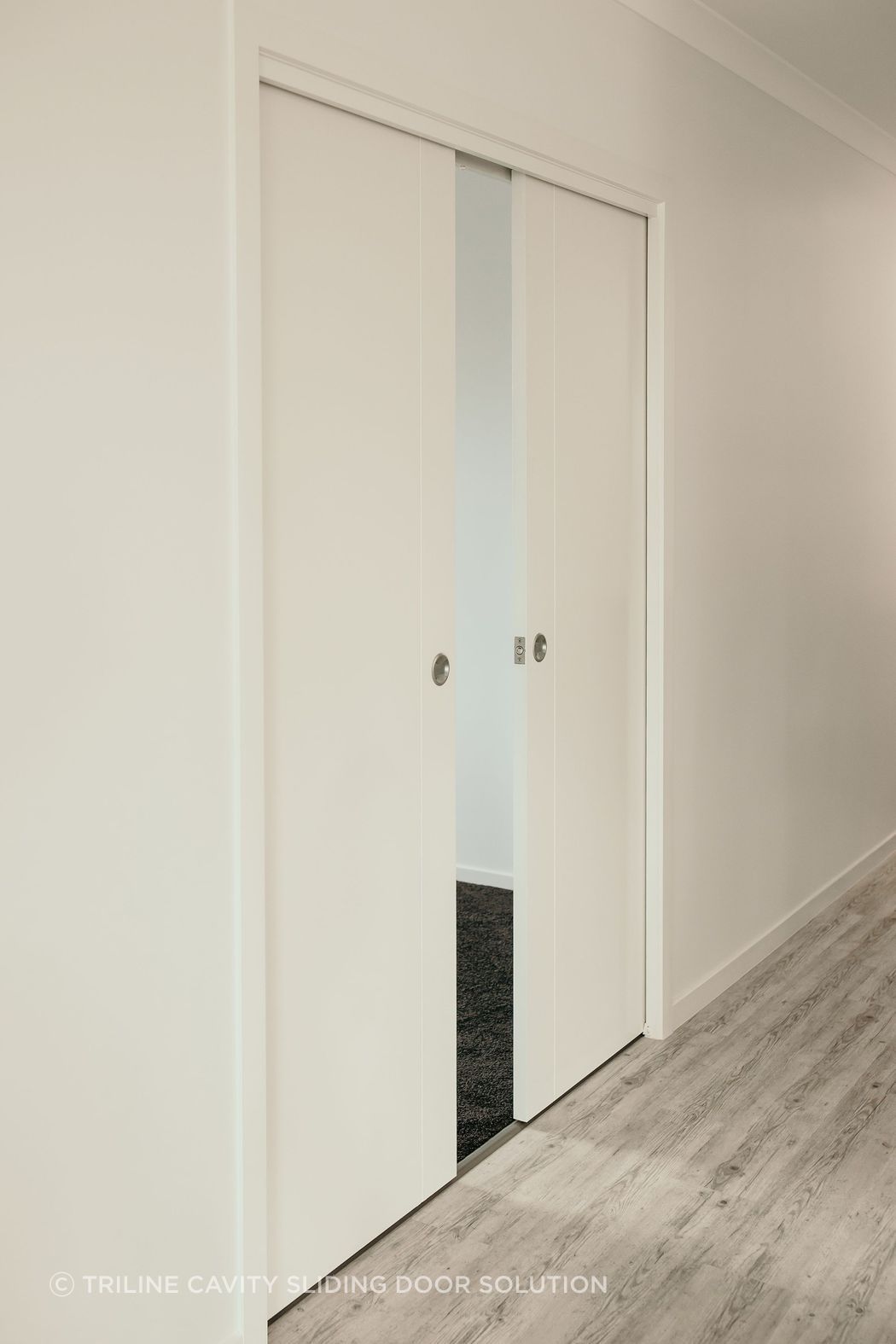
When you want to make a statement or open up a shared space, the bi-parting configuration is hard to beat. This system houses two door panels, with each panel sliding into a cavity pocket on either side of the opening.
The result is a double sliding door that creates a wide, inviting transition between rooms—perfect for entertaining areas, family rooms, dining spaces, and formal lounge rooms.
Best used for:
- Large openings leading to living or dining spaces
- Homes needing improved flow between frequently used rooms
- Designs aiming for symmetry, balance, or a grander entry experience
With both panels disappearing fully into the walls, the opening feels unobstructed—almost like merging two rooms into one.

3. 90-Degree Corner Sliding Door System
For projects involving open-plan living, corner rooms, or spaces requiring flexible privacy, our 90-degree corner configuration offers a uniquely practical solution.
This system allows two sliding panels to meet at a corner when closed, then glide away into separate cavity pockets positioned at right angles. We manufacture these units with a precision-mitred head track, ensuring straightforward installation and smooth panel operation.
Where this configuration excels:
- Corner rooms that need the ability to open fully to adjoining spaces
- Interior designs focused on maximising movement, visual connection, and natural light
- Projects requiring adjustable zone control, such as separating a kitchen from a living room
4. Multi-Panel Stacking Systems
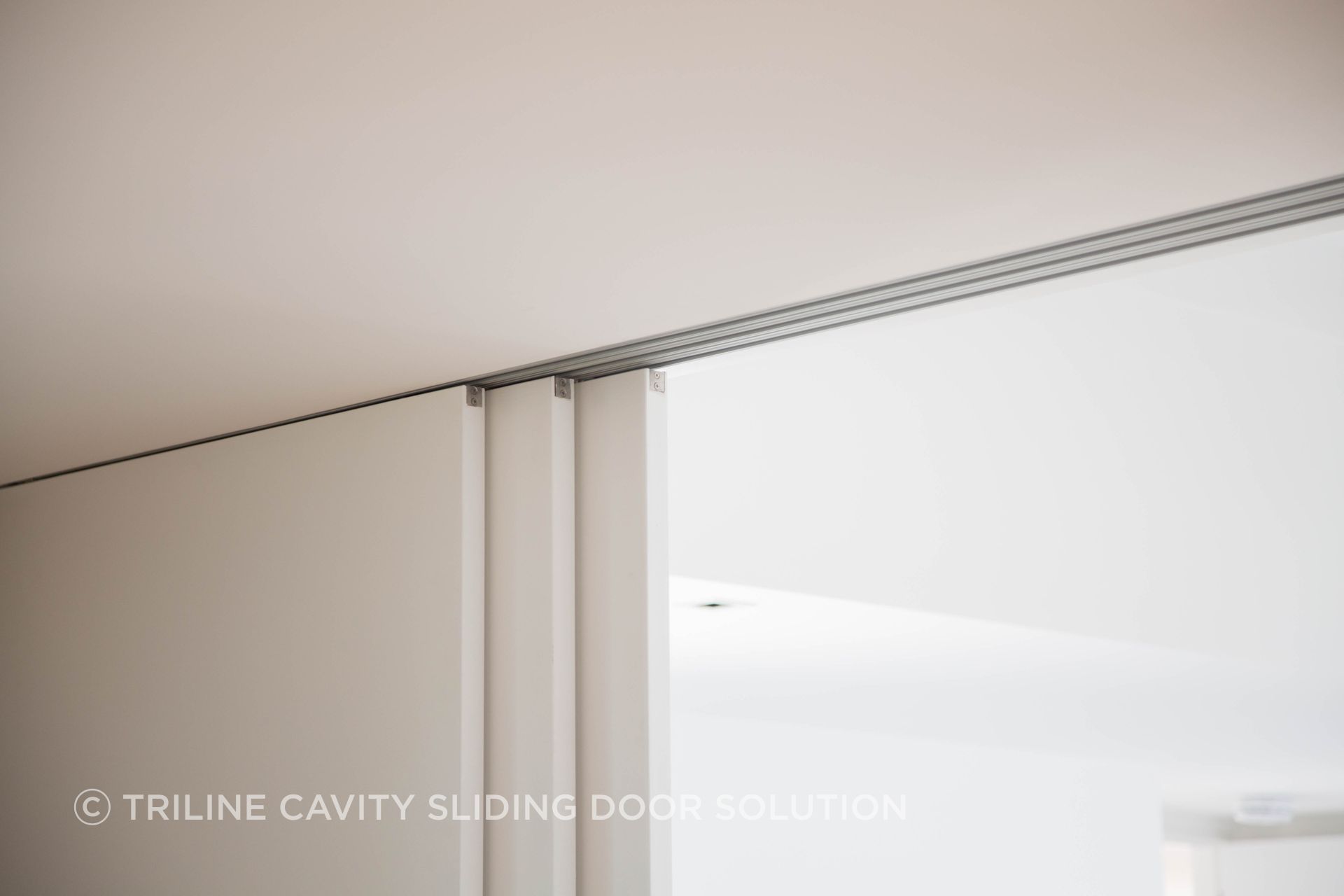
For the ultimate in flexible space design, our multi-panel stacking systems allow two to six door panels to slide and stack into a single oversized cavity pocket. This creates an exceptionally wide clear opening without taking up much wall space for the wall cavity.
Typical applications include:
- Rumpus rooms or games rooms
- Open-plan family areas that occasionally need privacy
- Home offices that convert into guest spaces
- Large living zones where airflow and movement are priorities
No two builds are the same. That’s why our team works closely with builders and designers to engineer custom sliding doors and cavity systems that fit the project, not the other way around. Whether you’re matching a ceiling height for floor-to-ceiling doors, integrating wider openings, or planning for complex architectural layouts, we build frames that meet exact specifications with structural integrity and ease of installation.