Designing within character areas: how architecture negotiates historic suburbs
Written by
15 March 2026
•
4 min read
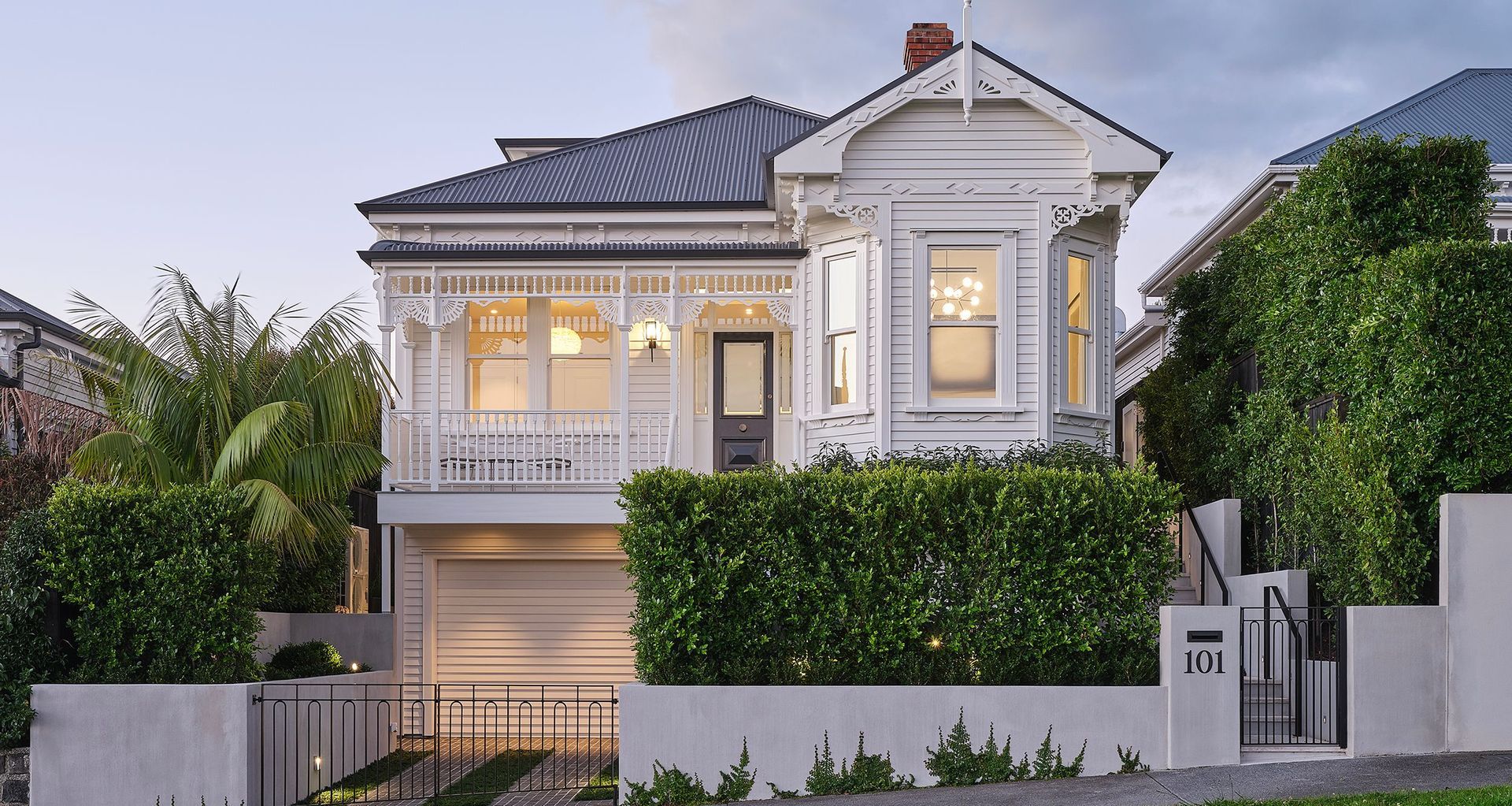

Across Auckland’s older suburbs, architecture is a careful conversation between past and present. Villas and early 20th-century houses line many streets, their gabled silhouettes forming the backbone of what planners describe as character areas. For architects, the challenge is rarely just preserving what exists, it is about adapting these older buildings to the needs of contemporary life.
That process, however, is different from working with formally protected heritage buildings. Museums, landmark houses, and other significant sites are designated as heritage structures and subject to strict preservation rules. Character areas, by contrast, are defined less by individual buildings than by the collective appearance of a street.
“Heritage buildings are special monuments,” architect Paul Leuschke explains. “Character areas are simply streets where the buildings share a certain form.”

In practical terms the focus falls on the front of the house, where the building contributes to the public streetscape. Behind that façade, architects usually have greater freedom to rethink the plan and create spaces suited to contemporary life.
“The council cares a lot about what happens at the streetfront,” he says. “They really do not worry too much about what happens at the back.”
This creates a familiar architectural strategy across Auckland’s villa suburbs. The original street-facing structure is carefully retained or restored, while a new extension unfolds behind it.
For Leuschke, this process is not about freezing history in time. It is about respecting the visual rhythm of a street while acknowledging that houses must continue to function as homes.
“My father used to say, ‘You live in a house,” he says. “It is not an art piece. It is where life happens.’”
Ironically, original villas were never particularly comfortable by modern standards. They offered generous ceiling heights and decorative details, but they were often cold, dark and disconnected from outdoor spaces.
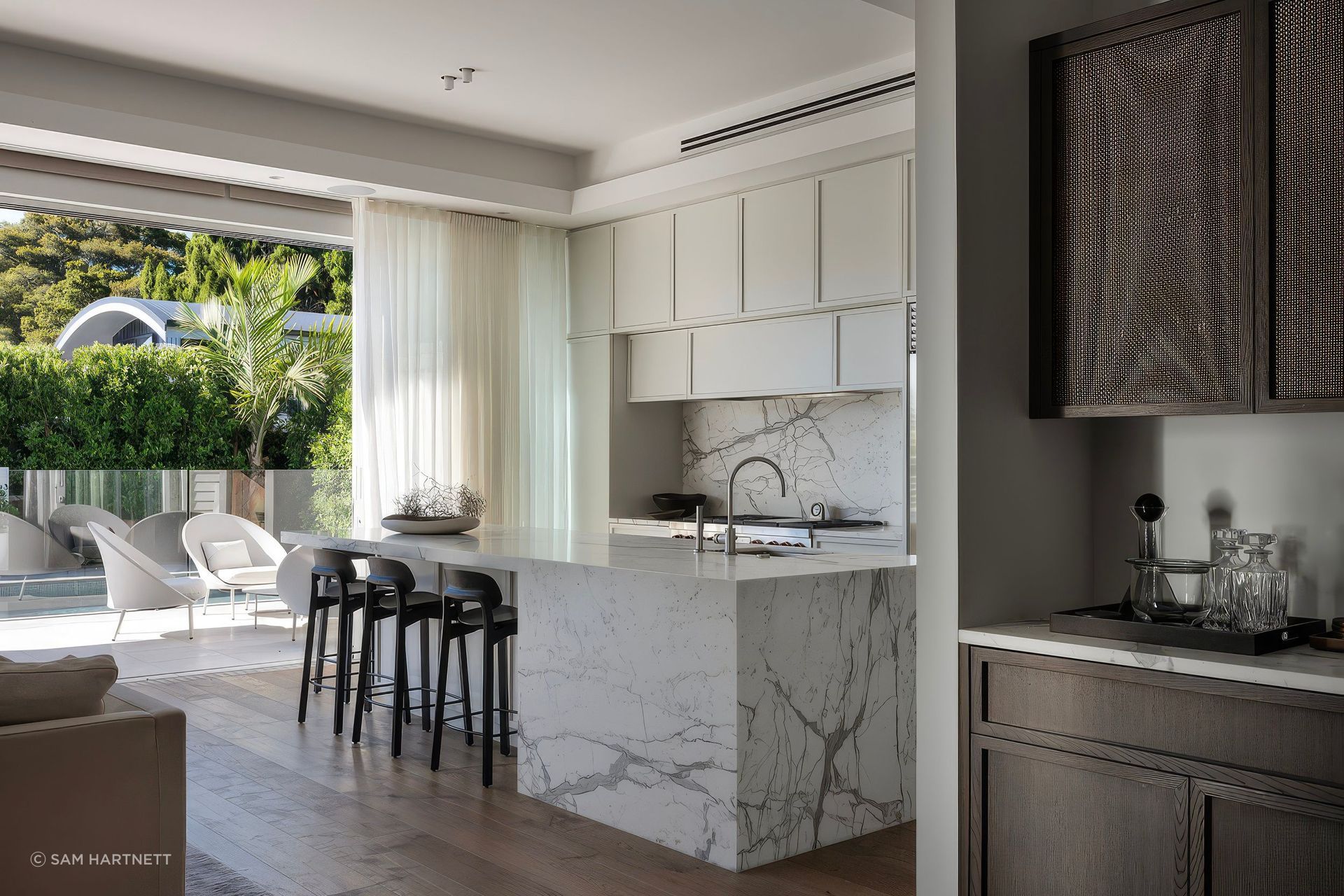
The role of the architect is therefore to balance restoration with transformation. Interiors are often reorganised to introduce sunlight, outdoor connections and contemporary living spaces.
“Most people want light, warmth and sun,” he says. “Bedrooms are bedrooms, but today kitchens and bathrooms are very different from those of the 1920s.”
Orientation and views also play a crucial role in shaping additions. Even a modest outlook can change the perception of space within a home.
“If you look out of a window and you can see a view in the distance, the house suddenly feels bigger,” Leuschke says.
Creating these views or connections to moments in the landscape is a great way to modernise character architecture, and improve a sense of integration with the external environment. Introducing or improving outdoor living is another strategy, Leushcke says, which can be in the form of covered verandas, sheltered terraces and semi-outdoor rooms.
“People here want to be outside but still under cover,” he says. “That has been happening more and more over the last couple of decades.”
Consents in character zones
Working within character areas also requires architects to navigate an often complex planning environment. Heritage advisors, planners and building inspectors all have different priorities.
“There are actually very few clear rules about character areas,” Leuschke says. “It often comes down to interpretation.”
One principle is the distinction between old and new. In the past, additions were often designed to mimic the original house. Today, the preference is usually for contemporary extensions that clearly read as a later intervention.
“Heritage assessors now prefer the new part to look different,” he says. “That way people can see which part is original and which part is new.”
Ironically, by the end of a renovation process, the entire structure is often completely new, due to the fabric of older houses frequently proving too deteriorated to retain.
“By the time you remove the linings and the weatherboards, you sometimes find that you are rebuilding most of the house anyway,” Leuschke says.
The end result may appear identical from the street, yet much of the structure has been renewed to meet modern building codes and insulation requirements.
That complexity is part of the challenge architects face when working with older housing stock. Building codes, heritage expectations and practical construction constraints can conflict with each other.
Even so, Leuschke believes the effort is worthwhile. Auckland’s villa neighbourhoods possess a richness and variety that newer developments often struggle to replicate.
That subtle diversity gives these streets their appeal. Each house contributes a variation on a familiar theme, creating a streetscape that feels layered rather than uniform. And for architects, the task is to extend that story rather than erase it.
“The most successful projects do not attempt to recreate the past,” shares Leushcke. “Instead, they allow historic forms and contemporary living to coexist within the same structure.”