Beyond the Straight Line: How Solid Surface Is Shaping a New Era of Curved Design


For years, contemporary interiors have been defined by clean lines, sharp corners and rigid geometry.
But across architecture and interior design, those lines are beginning to soften.
Curved vanities, sculptural benchtops, rounded waterfall edges, integrated basins and flowing architectural forms are bringing a more organic design language into bathrooms, kitchens, hospitality spaces and commercial interiors.
For architects and designers exploring this shift, material selection becomes critical.
A curve may begin as a simple line on a drawing, but successfully translating that line into a manufactured architectural element requires both a material and a fabrication process capable of following the original design intent.

Where solid surface changes the possibilities
One of the defining characteristics of acrylic solid surface is its ability to be thermoformed.
Through a controlled heating and forming process, solid surface can be softened and shaped into two- and three-dimensional forms, allowing fabricators to create curves, radiused edges and complex profiles.
This opens an entirely different conversation during specification.
Rather than designing around the limitations of a conventional rigid surface, architects and designers can explore softer transitions, curved waterfall ends, integrated components and more sculptural forms.
Combined with precision fabrication and inconspicuous joining, individual components can be brought together with minimal visual interruption, creating the appearance of a continuous surface.
Curves without compromising function
The appeal of curved design isn't purely aesthetic.
Removing abrupt transitions can create a softer visual language throughout a space, while integrated fabrication can reduce the number of visually disruptive junctions between individual components.
In bathrooms and wet areas particularly, solid surface offers the ability to combine form and function within the same material.
Vanity tops can incorporate integrated solid surface basins, custom profiles, upstands, waterfall edges and other project-specific details while maintaining a cohesive material palette.
The result is an architectural feature that can be both expressive and highly functional.
From a subtle radius to a statement piece
Thermoforming doesn't necessarily mean creating an extravagant sculptural installation.
Sometimes, it is a single detail that transforms the entire piece.
A heavily curved waterfall edge can soften a vanity.
A radius can continue the geometry established elsewhere within an interior.
An integrated basin can remove unnecessary visual transitions.
A reception counter can become an architectural feature rather than simply another piece of joinery.
At the other end of the spectrum, solid surface can be used to create complex three-dimensional forms and highly customised architectural elements.
It is this flexibility that makes the material particularly interesting: the same fabrication principles can be applied to both restrained detailing and bold design statements.
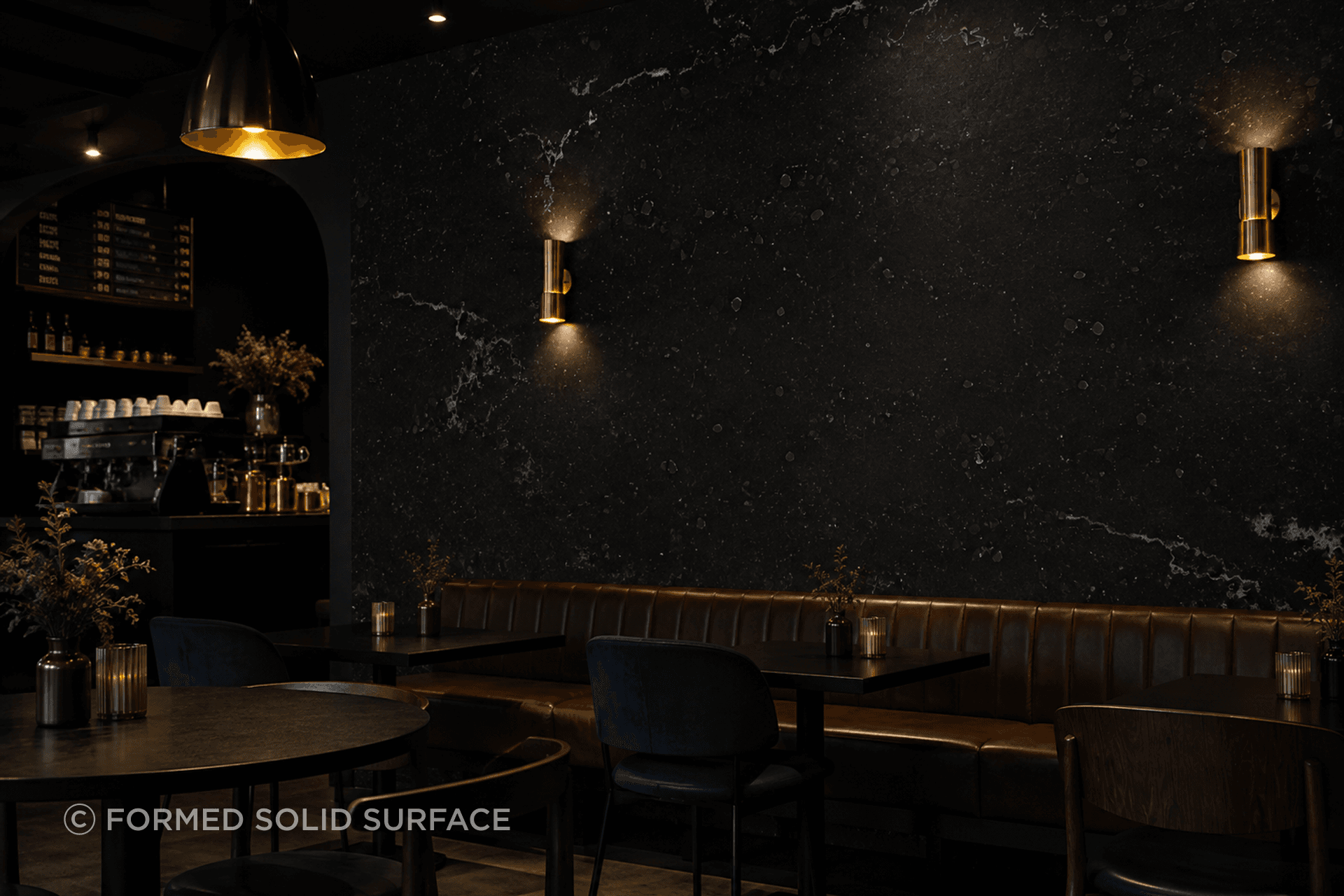
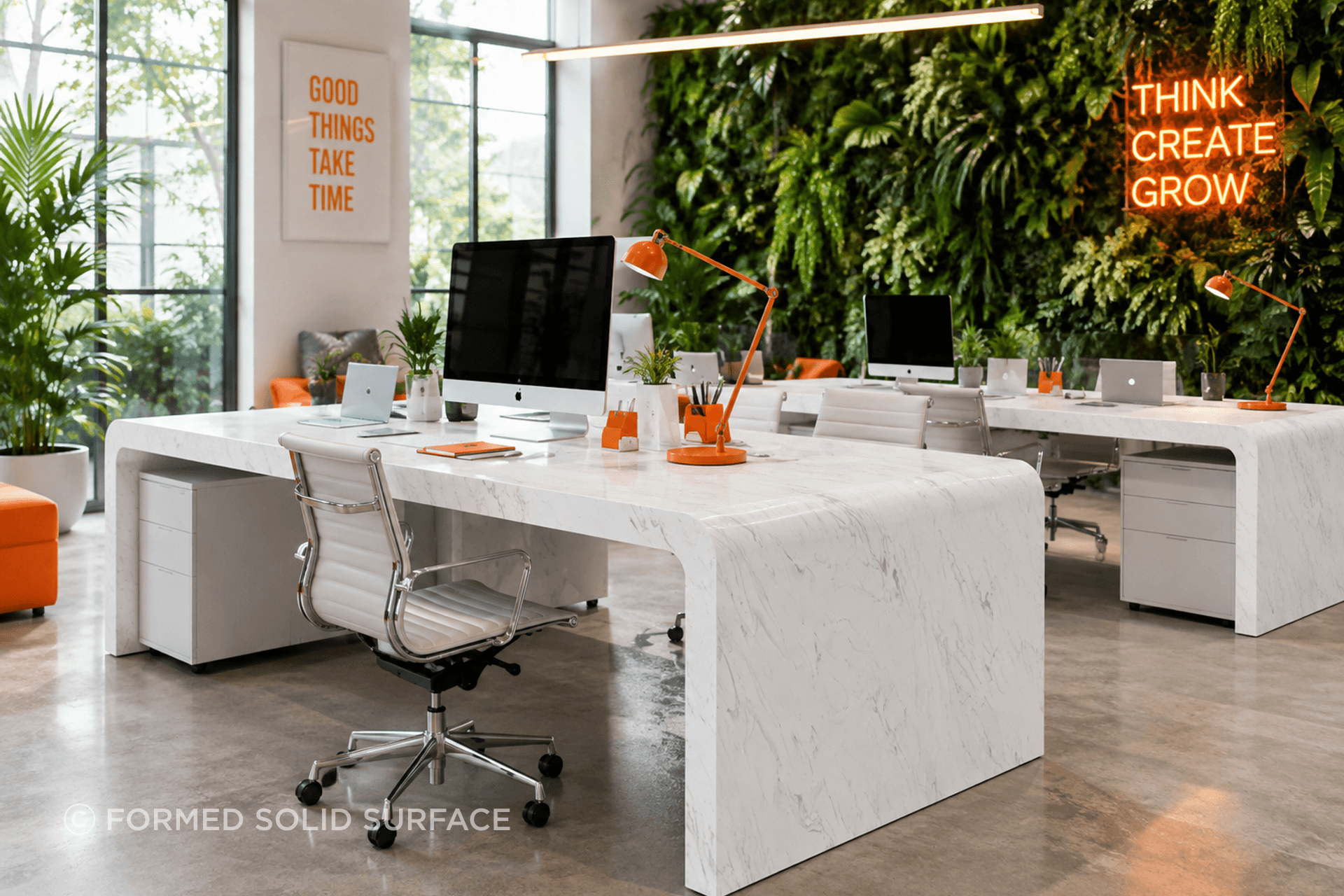
Design first. Manufacture second.
At Formed Solid Surface, we believe some of the most interesting outcomes occur when manufacturing capability is considered early in the design process.
Our role isn't simply to receive a drawing and manufacture what's on the page.
Working collaboratively with architects, interior designers, specifiers and project teams allows us to consider how a concept can be fabricated, where joins can be positioned, how curves can be formed and how the finished element can retain the original design intent while remaining practical to manufacture and install.
Using Meganite® acrylic solid surface, Formed manufactures custom vanity tops, integrated basins, shower bases and bespoke solid surface components for residential, multi-residential, commercial and architecturally specified projects.
Meganite® is a 100% acrylic solid surface, with manufacturer technical documentation specifically covering thermoforming and fabrication for shaped applications.
From CNC fabrication and inconspicuous joining through to thermoformed components, the objective is the same:
Allow the design to dictate the form — rather than allowing the material to dictate the design.
As architecture continues to embrace softer, more organic forms, solid surface gives designers another way to move beyond the straight line.
And sometimes, that's where the most interesting designs begin.
Have a curved or complex solid surface concept in development? Engage us early to explore what's possible.